Enugu, UK Launch AI Smart Metering to Curb Energy Theft and Boost Power Revenue
Orjiani Peace Essien
By Peace Orjiani
The Enugu State Government has partnered with the United Kingdom to introduce an AI-enabled smart metering system aimed at tackling energy theft and reducing revenue losses in the power sector.
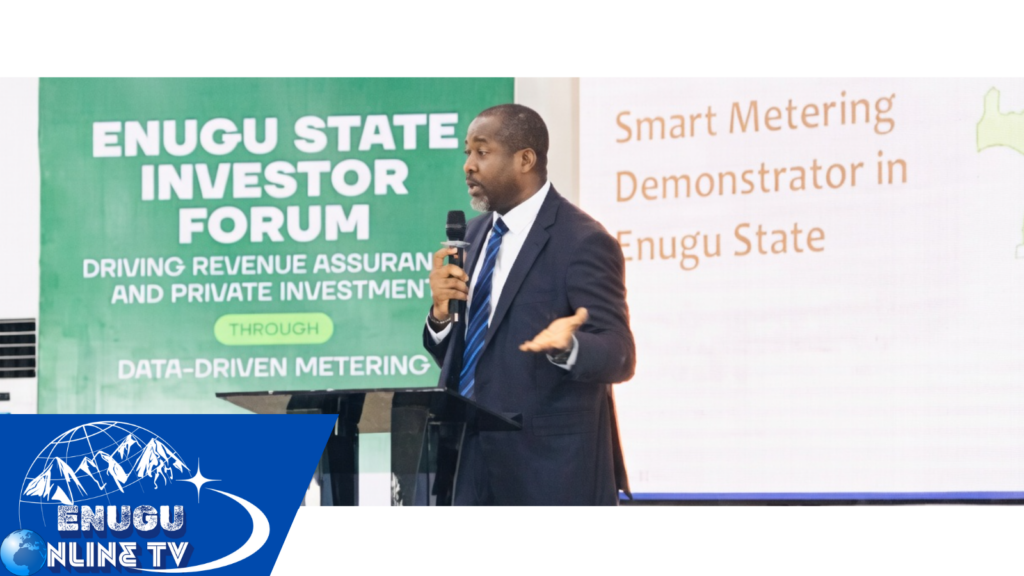
The initiative, implemented through the United Kingdom Nigeria Infrastructure Advisory Facility (UKNiAF), was unveiled during the Enugu State Investor Forum held at the International Conference Centre in Enugu. The forum, themed “Driving Revenue Assurance and Private Investment through Data-Driven Metering,” brought together key stakeholders, including electricity distribution companies, investors, and policymakers.
The program, funded by UK International Development and executed by Tetra Tech, is designed to improve electricity access, enhance transparency, and strengthen Nigeria’s capacity for sustainable and climate-smart infrastructure.
Speaking at the event, the Chairman and Chief Executive Officer of the Enugu State Electricity Regulatory Commission, Chijioke Okonkwo, revealed that a pilot phase of the project has already been completed.
According to him, a total of 846 smart meters were installed in the Ugwuaji axis of Enugu, covering nearby semi-urban communities.
He explained that the system allows for full monitoring of electricity consumption, from transformers down to individual households.
“This system allows us to drastically reduce, if not eliminate, commercial and collection losses, which have long hindered the growth of the power sector,” Okonkwo stated.
How the Smart Metering System Works
The AI-powered meters provide real-time data on electricity usage, enabling both consumers and operators to monitor consumption effectively.
Key benefits include the following:
Detection of energy theft and illegal connections
Quick identification of faults and equipment issues
Improved billing accuracy
Better transparency in revenue collection
The system also helps prevent infrastructure vandalism by identifying irregular patterns in electricity flow.
Opportunities for Investors
Okonkwo noted that the initiative opens new opportunities for private investors and energy companies to participate in Enugu’s electricity market.
“We are inviting investors to deploy smart meters, expand distribution networks, and even establish embedded power generation within the state,” he said.
He added that the current cost of smart meters is approximately the following:
₦130,000 for single-phase units
₦230,000 for three-phase units
Flexible payment plans, he said, are being considered to encourage wider adoption.
Also speaking, the team leader of UKNiAF, Frank Edozie, described the project as a strong example of how artificial intelligence can improve accountability in the power sector.
“The system ensures that all revenues due to the sector are properly collected and accounted for. It also detects any breach in energy or financial flows,” he said.
He explained that Enugu was selected for the pilot program because of its leadership in implementing reforms under the Electricity Act 2023, which allows states to develop independent electricity markets.
Since its launch in November 2025, the pilot has already recorded significant improvements in revenue recovery and a noticeable reduction in energy losses.
Managing Director of MainPower Electricity Distribution Limited, Dr. Ernest Mupwaya, emphasized that the initiative tackles two major issues in the sector—metering gaps and revenue protection.
He noted that without efficient metering systems, investments in electricity infrastructure would remain difficult to sustain.
“Smart metering combined with advanced monitoring systems gives utilities better visibility across their networks, making it easier to detect losses and improve efficiency,” he said.
Mupwaya added that improved revenue collection would encourage private financing, as investors would have confidence in recovering their investments.
Earlier, the Enugu State Commissioner for Trade, Investment, and Industry, Sam Ogbu-Nwobodo, stated that the state was selected for the project due to ongoing reforms in its electricity sector.
He explained that the success of the pilot program demonstrates how smart metering can ensure revenue assurance across the entire electricity value chain, from generation to distribution.
“The system assures investors that they will recover their investments, which is critical for attracting funding into power infrastructure,” he said.
Conclusion
The introduction of AI-enabled smart metering marks a significant step toward transforming Enugu’s power sector. By reducing energy theft, improving billing efficiency, and ensuring transparent revenue collection, the initiative is expected to strengthen investor confidence and expand electricity access across the state.
As the government continues to push reforms, stakeholders believe that smart technology will play a key role in building a more reliable and sustainable energy system in Enugu.