


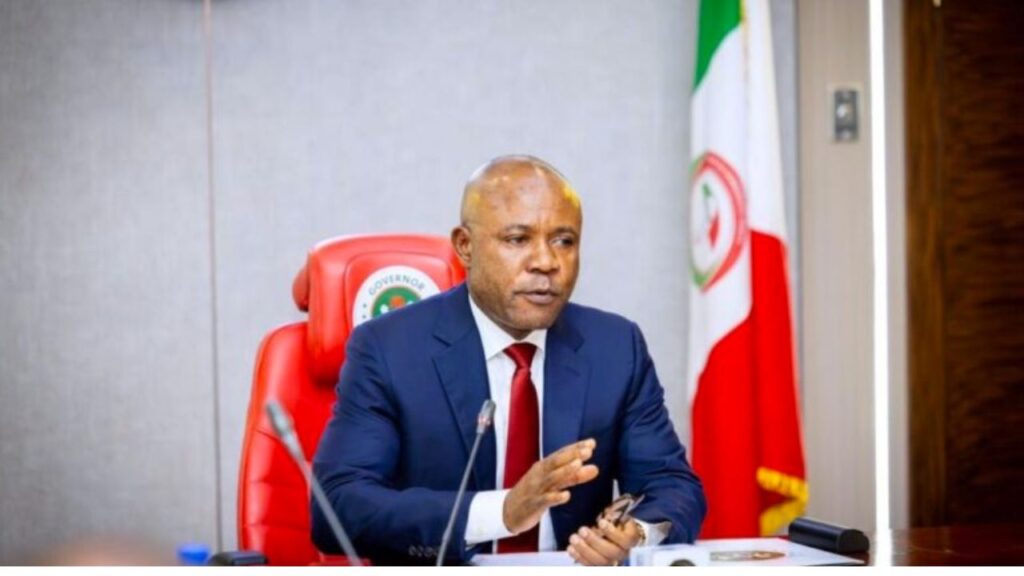
When Peter Ndubuisi Mbah assumed office as governor of Enugu State on May 29, 2023, the state was widely known as a civil service-driven economy, heavily dependent on government jobs, federal allocations, and limited industrial activity. Basic challenges such as water scarcity, weak infrastructure, and the disruption caused by sit-at-home orders affected daily life and economic growth, while many young people left in search of better opportunities elsewhere.
Less than three years later, the situation is changing rapidly. Enugu is gradually repositioning itself as a destination for business, investment, tourism, and improved living standards. The state is moving away from a consumption-based system toward one driven by productivity, innovation, and private-sector participation. This transformation has led many observers to compare Governor Mbah’s leadership approach to that of Lee Kuan Yew, who transformed Singapore into a global economic powerhouse through discipline, infrastructure development, and strong governance.
Before 2023, Enugu reflected the structure of many post-colonial economies, with a heavy reliance on the public sector and limited diversification. Infrastructure such as roads, healthcare facilities, and schools required major upgrades, while tourism potential remained largely untapped despite attractions like the Nsude Pyramids, Ngwo Pine Forest, and Awhum Waterfalls.
Governor Mbah, who had a strong background in the private sector before taking office, came in with a clear economic vision aimed at expanding the state’s economy, reducing poverty, and making Enugu a leading hub for investment and tourism. One of the most noticeable changes under his administration has been the rapid increase in the state budget, which has grown significantly since 2023, with a strong emphasis on capital expenditure. A large percentage of the budget is consistently directed toward infrastructure and development projects, reflecting a shift away from heavy recurrent spending.
Internally generated revenue has also seen major growth, driven by reforms such as the use of technology, improved tax systems, and better management of government assets. These changes have helped the state generate more income independently and reduce reliance on federal allocations.
Infrastructure development has been a key priority, with over 1,000 kilometers of roads constructed or rehabilitated across urban and rural areas, improving connectivity and access to markets. Water production has also increased significantly, helping to address long-standing shortages in the state. In the transport sector, modern terminals have been developed, and new buses introduced to improve mobility and reduce transportation challenges.
The state has also made notable progress in aviation and urban development. The launch of Enugu Air marked a major step toward positioning the state as an aviation hub, while the New Enugu City project reflects a long-term plan to create a modern, investment-friendly environment with residential, industrial, and commercial zones.
Education has received strong attention, with the introduction of Smart Green Schools across all wards in the state. These schools are designed to provide modern, technology-driven education, while significant budget allocation to the sector reflects a commitment to long-term human capital development. In healthcare, new facilities have been established, health workers recruited, and a major international hospital project is nearing completion to improve medical services and reduce the need for treatment abroad.
The administration has also invested in technology and youth development, equipping young people with digital skills and creating opportunities in the growing tech sector. Partnerships with international companies are supporting local manufacturing and job creation, helping to diversify the economy further.
Efforts to improve the business environment have included reforms in land administration, making it easier for investors to access land and carry out business activities. New laws and digital systems have reduced bureaucracy and increased transparency, encouraging both local and foreign investment.
Tourism development is another focus area, with improvements to key attractions and hospitality infrastructure aimed at attracting more visitors. At the same time, agriculture is being strengthened through modern farming initiatives, mechanisation, and structured programs designed to boost productivity and create value chains.
Security has also improved, with the government taking steps to address disruptions and enhance safety through technology-driven systems and rapid response units. These efforts have contributed to a more stable environment for residents and businesses.
Governor Mbah’s leadership style places strong emphasis on performance, accountability, and results, with a focus on measurable outcomes rather than political patronage. This approach has drawn comparisons to Lee Kuan Yew, whose policies transformed Singapore into one of the world’s most successful economies.
Overall, Enugu State is undergoing a significant transformation driven by strategic planning, investment, and reforms. While challenges remain, the progress recorded so far suggests a shift toward a more sustainable and diversified economy. If sustained, these developments could redefine the state’s economic future and position it as a model for growth and innovation in Nigeria.