

By Peace Orjiani
Reports of a cybersecurity breach at the Corporate Affairs Commission (CAC) have sparked fresh concern in Nigeria’s digital space. Social media quickly spread the news, with many users claiming that hackers had breached the CAC system. However, deeper investigations and more profound statements reveal a more complex situation, one that highlights both the growing risks in Nigeria’s digital infrastructure and the need for stronger data protection systems.
According to official confirmation from the Corporate Affairs Commission, the incident involved unauthorized access to limited parts of its information systems, not a complete takeover or shutdown of its database. This distinction is important, as many online narratives exaggerated the situation, leading to panic among business owners and users who rely heavily on CAC services for company registration and compliance.
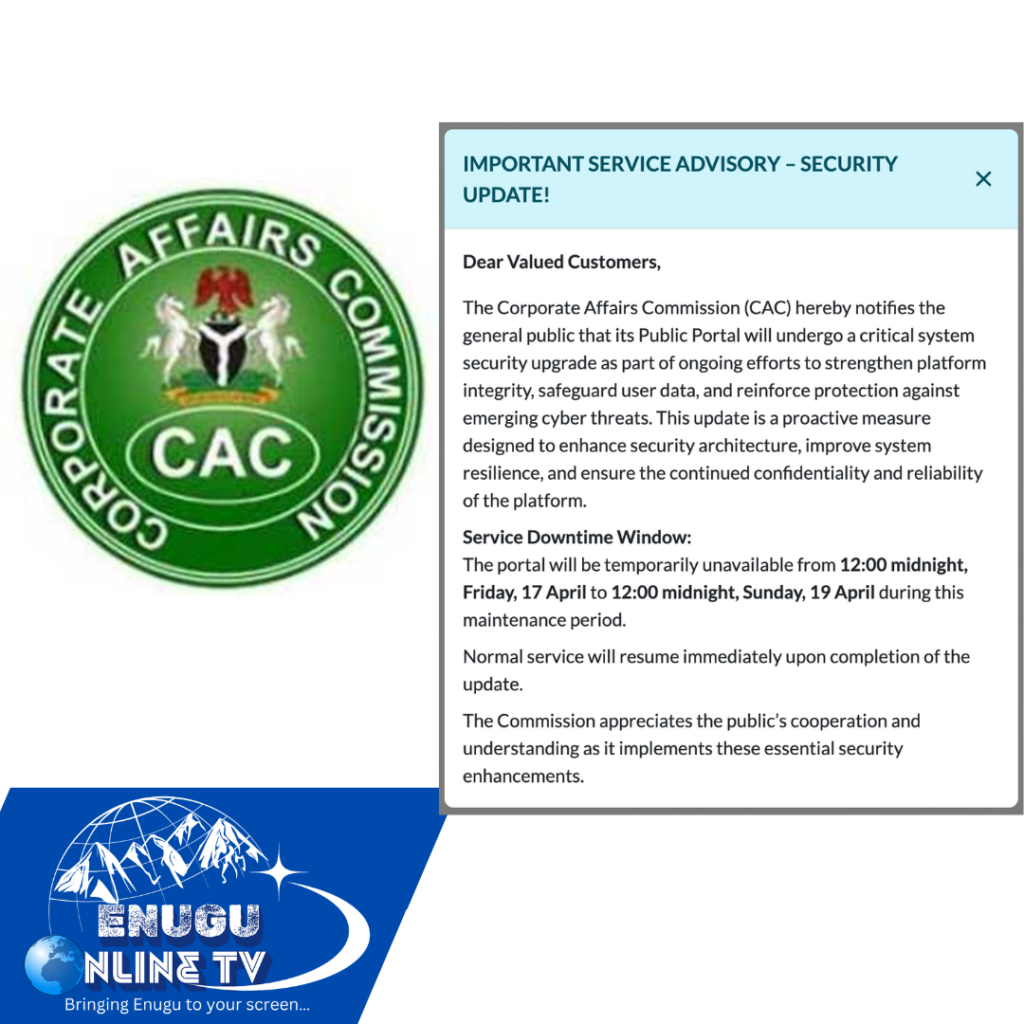
The breach, which came to public attention in April 2026, prompted immediate action from the Commission. CAC stated that it activated its internal response protocols as soon as the incident was detected and began working with relevant authorities, including the National Information Technology Development Agency (NITDA), to assess the scope and impact. The Commission also implemented containment measures and additional security safeguards to prevent further intrusion.
Despite these efforts, the situation raised serious concerns because of the sensitive nature of data held by CAC. The commission manages Nigeria’s corporate registry, which includes business names, company ownership details, directors’ information, and shareholding structures. These records are not just administrative; they are critical for banking, compliance, and verification processes across the country. Any vulnerability in such a system can have far-reaching consequences.
As the news spread, the Nigeria Data Protection Commission (NDPC) stepped in to launch a formal investigation into the breach. The agency made it clear that the probe would examine CAC’s security systems, including access control mechanisms, data protection protocols, and its vulnerability assessment processes. This move signals a growing seriousness in Nigeria’s approach to data protection, especially under the Nigeria Data Protection Act.
The NDPC also warned that cyber threats are becoming increasingly sophisticated, with attackers now using advanced methods such as large-scale data extraction and cross-platform breaches. The CAC breach is not an isolated incident, but rather a broader pattern that affects both public and private institutions in Nigeria.
In fact, reports indicate that the CAC breach is not the only recent cybersecurity concern in the country. Other platforms, including financial and payment systems, have also faced similar threats, highlighting a growing vulnerability in Nigeria’s digital ecosystem. As more services move online, the risk of cyberattacks continues to increase, making cybersecurity a national priority.
While investigations are still ongoing, CAC has advised users to take precautionary steps. These include updating login credentials, monitoring their records on the portal, and being cautious of suspicious emails or messages that may attempt to exploit the situation. This is particularly important because cybercriminals often take advantage of such incidents to launch phishing attacks, tricking users into revealing sensitive information.
On social media, reactions have been mixed but largely critical. Many Nigerians expressed concern about the security of government databases, questioning how such a breach could occur in a system that holds vital national records. Some users described the situation as a sign of weak cybersecurity infrastructure, while others pointed out that even major global institutions have experienced similar breaches.
On forums like Nairaland, reactions ranged from sarcasm to serious concern. One user questioned whether CAC had sufficient cybersecurity expertise, while another pointed out that even global organizations like NASA and Microsoft have faced cyberattacks, suggesting that no system is completely immune. These conversations reflect a mix of skepticism, frustration, and realism among Nigerians.
There were also political undertones in some discussions, with a few users linking the incident to broader governance and institutional challenges in the country. Others, however, urged calm, emphasizing the limited nature of the breach and the intactness of the system.
The truth is somewhere in the middle. Although many social media posts suggested a complete hack of the CAC, the confirmed unauthorized access remains a serious issue. The incident exposes potential weaknesses in the system and raises important questions about the protection of public data.
For businesses, the incident serves as a wake-up call. Many companies depend on CAC records for verification and compliance, meaning any disruption or loss of trust in the system can affect business operations. It also highlights the importance of cybersecurity awareness among users, not just institutions.
Experts believe that incidents like these will likely push Nigerian agencies to invest more in cybersecurity infrastructure, including stronger encryption, better monitoring systems, and regular security testing. The NDPC’s involvement also suggests that regulatory oversight will become stricter, with organizations expected to meet higher standards of data protection.
At the same time, there is a growing need for collaboration between government agencies, private sector players, and cybersecurity experts. As digital transformation continues, protecting data will require a coordinated effort, not just isolated responses after incidents occur.
For now, CAC maintains that the situation is under control and that the integrity of its database remains intact. However, the outcome of the investigation will be crucial in determining the full impact of the breach and what steps need to be taken moving forward.
Ultimately, the CAC data breach serves as a reminder of the vulnerabilities associated with digital progress. As Nigeria continues to expand its digital economy, ensuring the security of critical systems will be essential to maintaining public trust and protecting sensitive information.
The key takeaway is straightforward: although the system didn’t undergo a complete hack, the breach is genuine and significant. And in today’s digital world, even a “limited” breach can have significant consequences if not properly addressed.