
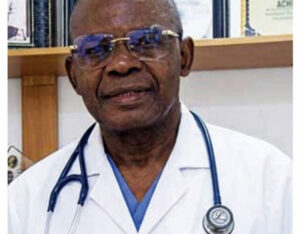

The events that unfolded between Enugu and Lagos from July 3 to July 5, 2026, have raised serious questions about due process, accountability, and the rule of law. The experience of Professor Martin Anthony Chukwumbudike Aghaji stands as a troubling example of how unchecked authority can undermine justice.
Professor Aghaji, aged 74, is a highly respected cardiothoracic and vascular surgeon whose career has left a lasting impact on Nigerian medicine. During his years at the University of Nigeria Teaching Hospital (UNTH), he achieved remarkable milestones, including performing Nigeria’s first successful mitral valve replacement with a mechanical heart valve in 1986, a procedure that enabled the patient to live for another twenty-seven years. He also carried out the country’s first successful aortic valve replacement using a mechanical valve. A graduate of the University of Nigeria, Nsukka, where he finished as the best graduating medical student in 1977, he further trained in the United Kingdom and later became the pioneer Vice-Chancellor of the Federal University of Health Sciences, Otukpo.
Despite decades of distinguished service, Professor Aghaji says he was subjected to an experience that left him deeply shaken. According to his account, at approximately 2:30 a.m. on Friday, July 3, 2026, a large team of armed Department of State Services (DSS) operatives arrived at his residence in Independent Layout, Enugu. Without prior notice or invitation, they allegedly forced their way into his home after failing to scale the fence because of barbed wire, eventually breaking through part of the property to gain entry.
Professor Aghaji and his daughter, who was visiting while his wife was abroad, reportedly believed they were under attack by criminals or kidnappers. In the confusion, attempts were made to alert neighbours and the police before both father and daughter were taken into custody.
They were first transported to the DSS office in Enugu before being moved to Lagos the following day. His daughter was eventually released after officers reportedly confirmed she was not the person they were looking for. Throughout the ordeal, Professor Aghaji maintains that he was never informed of the specific allegation against him or the reason for his arrest.
According to his account, the situation ended with an apology after officials acknowledged that an error had been made. He was released after spending nearly three days in custody. While the apology recognised the mistake, it could not erase the emotional distress, damage to property, and psychological trauma experienced by him and his family.
The incident has sparked concerns about the conduct of security agencies and the need for strict adherence to constitutional safeguards. Critics argue that an apology alone cannot fully address the consequences of an operation that allegedly disregarded due process and fundamental human rights.
Reflecting on the incident, Professor Aghaji reportedly noted that he had recently provided medical care to the detained IPOB leader, Mazi Nnamdi Kanu, but stated that he could not understand why he was treated in such a manner. He further disclosed that he had written to the Governor of Enugu State, Peter Mbah, requesting intervention to establish the circumstances surrounding the operation.
In his words, no professional, particularly one of advanced age, should be subjected to such treatment, even where there are legitimate allegations requiring investigation. He maintained that lawful procedures should always be followed.
The case has reignited broader conversations about the balance between national security and civil liberties. It also raises an important question: if someone with Professor Aghaji’s record of service and international reputation can allegedly experience such treatment, what confidence can ordinary citizens have that their own rights will always be protected under the law?