

By Peace Orjiani
Long before modern fashion trends, designer labels, and imported fabrics became common in Nigeria, the people of Enugu and the wider Igbo nation had a unique way of dressing that reflected their identity, culture, social status, occupation, and beliefs. Clothing was not merely a means of covering the body—it was a language. Every fabric, color, bead, wrapper, hairstyle, and accessory told a story.
Enugu State, known today as the Coal City State, is home to many proud Igbo communities, including the Nsukka, Nike, Udi, Agbaja, Nkanu, Awgu, Oji River, and other cultural groups. Although each community had slight differences in style, they all shared common traditions rooted in Igbo heritage.
The way Enugu’s forefathers and foremothers dressed was inspired by nature, craftsmanship, spirituality, dignity, and community values. Their attire represented hard work, respect, honor, and pride in their ancestry. Today, many of these traditional styles continue to influence modern Nigerian fashion, especially during weddings, festivals, chieftaincy ceremonies, and cultural celebrations.
This article explores how the people of old Enugu dressed, the significance of their clothing, and the inspiration behind every piece they wore.
Clothing of Enugu Forefathers
Traditional men’s clothing in ancient Enugu was simple, functional, and elegant. Since many men were farmers, hunters, blacksmiths, traders, and community leaders, their clothing was designed to suit their daily activities while maintaining dignity.
The most common clothing was the wrapper, known in many Igbo communities as the George wrapper in later years or locally woven cloth before imported materials became available. Men wrapped a piece of cloth around their waists, allowing free movement while working on farms or travelling through forests.
For important ceremonies and community meetings, wealthy men wore longer wrappers and sometimes added a flowing cloth across one shoulder. Chiefs and titled men dressed more elaborately, often wearing richly woven fabrics that displayed their status within society.
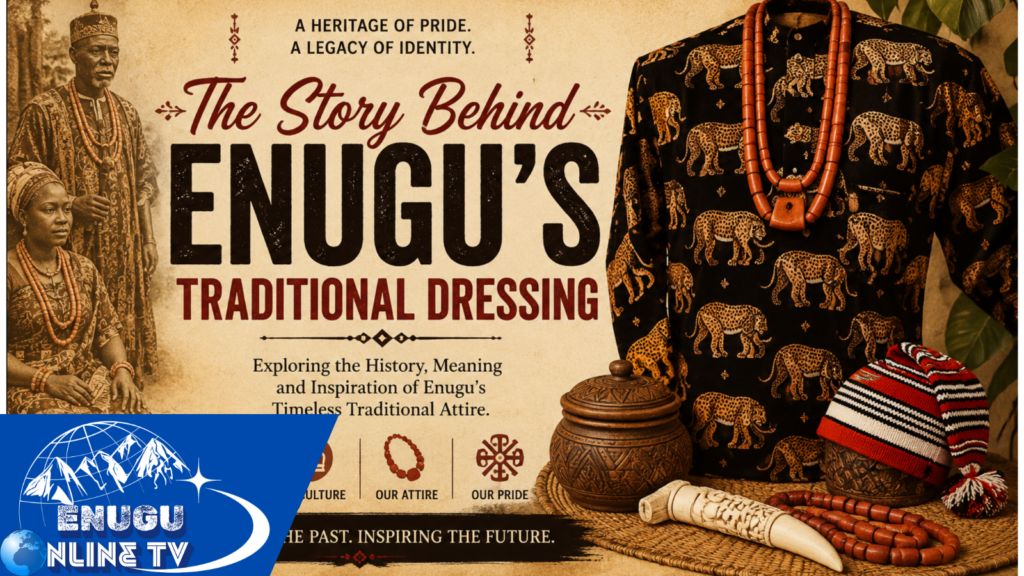
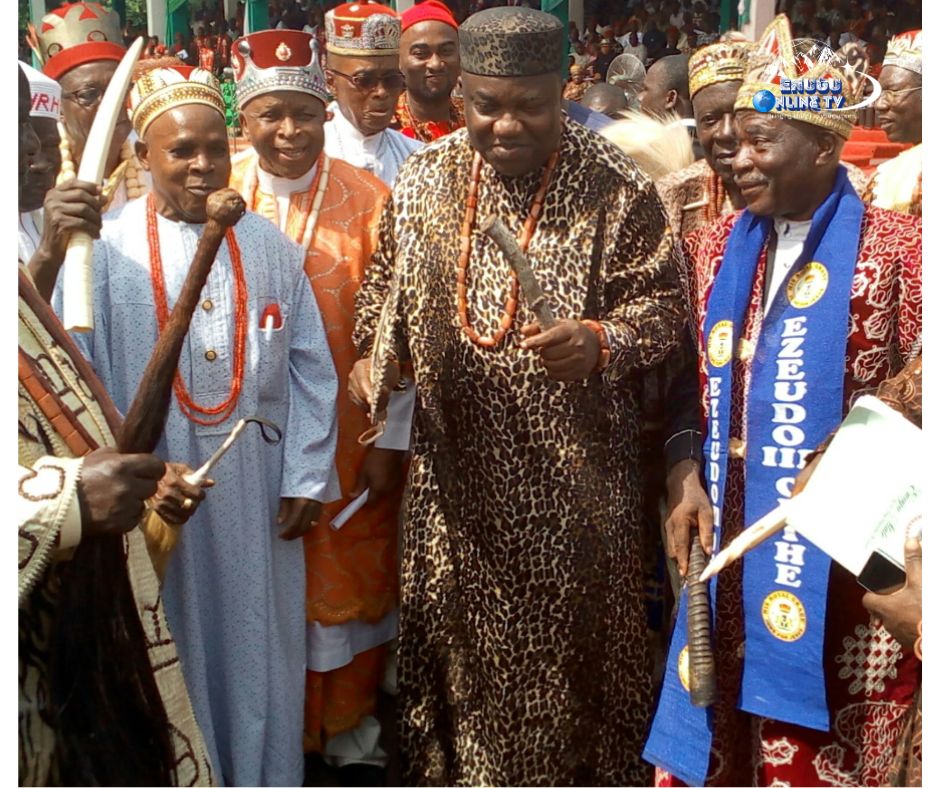
One of the most respected symbols of authority was the Isi Agu style that later evolved into today’s famous lion-head patterned attire. Although the modern Isi Agu fabric came much later, its inspiration came from the ancient tradition of distinguished men wearing garments that reflected courage, leadership, and nobility.
Traditional Hairstyles for Men
Many Enugu men kept low-cut natural hair. Warriors and hunters sometimes wore distinctive hairstyles that identified their age group or achievements. During festivals, some decorated their heads with feathers from birds such as eagles, symbols of bravery and strength.
Chiefs also wore red caps, which remain one of the strongest symbols of leadership among the Igbo today.
The Clothing of Enugu Foremothers
Women in ancient Enugu were admired for their elegance, modesty, and creativity. Their dressing reflected beauty, fertility, respect, and family values.
The traditional attire consisted mainly of wrappers tied around the waist, often extending below the knees. Some women wore two wrappers—one around the waist and another across the chest or shoulders.
Before imported textiles became popular, women used locally woven fabrics made from cotton and plant fibers. Over time, trade introduced finer materials that became highly prized.
Women also wore beautifully tied headscarves, known today as Ichafu or Gele, depending on the occasion. These head coverings represented maturity, respect, and marital status.
Married women often dressed more conservatively than unmarried girls, reflecting the cultural emphasis on dignity and responsibility.
Beads: More Than Decoration
One of the most striking features of traditional Enugu dressing was the use of beads.
Women adorned themselves with coral beads, waist beads, necklaces, bracelets, anklets, and earrings. These were not worn merely for fashion.
Beads symbolized:
- Wealth
- Royalty
- Femininity
- Fertility
- Spiritual protection
- Social class
Brides wore elaborate bead arrangements during traditional marriage ceremonies to signify beauty, purity, and prosperity.
Men of high rank also wore beads around their necks and wrists as symbols of authority and honor.
The Role of Akwete and Local Weaving
Although Akwete cloth originated in present-day Abia State, woven textiles and handcrafted fabrics became popular across many Igbo communities, including Enugu.
Local weavers produced durable fabrics using traditional looms. These cloths featured geometric patterns inspired by nature, rivers, farms, animals, and ancestral symbols.
Every woven design reflected artistic creativity and the rich heritage of the people.
Body Decoration and Natural Beauty
Ancient Enugu people believed beauty extended beyond clothing.
Women decorated their bodies with uli, a traditional form of body art made from natural plant dyes. Uli designs featured elegant lines, curves, leaves, and geometric patterns painted on the hands, legs, face, and body during festivals and ceremonies.
Unlike permanent tattoos, uli faded naturally after several days.
Women also used natural oils like palm kernel oil and shea butter to keep their skin healthy and glowing.
Men often rubbed palm oil mixed with camwood on their bodies before wrestling competitions and cultural festivals.

The Significance of Colors
Colors held deep meaning in traditional Enugu attire.
White symbolized purity, peace, and spirituality.
Red represented authority, bravery, and sacred leadership.
Black signified maturity, wisdom, and strength.
Blue and indigo dyes reflected calmness and were obtained from natural plants.
Earth tones represented the people’s close relationship with farming and the land.
These colors were chosen intentionally rather than for fashion alone.
Traditional Accessories
No traditional attire was considered complete without accessories.
Men carried walking sticks that represented wisdom and leadership.
Some carried elephant tusk bracelets or carved staffs during important ceremonies.
Women wore decorative fans woven from raffia or palm leaves.
Cowries were sewn onto clothing and accessories because they once served as currency and represented wealth.
Anklets and bangles produced gentle sounds while dancing, adding beauty to cultural performances.
Dressing for Different Occasions
Different occasions required different clothing.
Festivals
During festivals such as the New Yam Festival, both men and women wore their finest attire, colorful beads, and ceremonial accessories.
Traditional Weddings
Brides wore richly decorated wrappers, coral beads, elaborate hairstyles, and beautiful body art.
Grooms dressed in flowing wrappers with walking sticks, caps, and symbolic jewelry.
Funerals
Darker colors and simpler attire were worn during mourning periods to show respect for the deceased.
Farming
Practical clothing suitable for physical labor was worn daily on farms.
Hunters dressed differently from traders, while priests wore garments reserved for sacred duties.
The Inspiration Behind Traditional Dressing
The fashion of ancient Enugu people was inspired by several important factors.
-Nature
The forests, rivers, animals, and plants surrounding Enugu influenced patterns, colors, and materials.
Natural dyes came from leaves, tree bark, charcoal, camwood, and indigo plants.
-Identity
Each community had unique dressing styles that distinguished them from neighboring clans.
Attire helped identify family lineage, village, occupation, and social standing.
-Respect for Elders
Traditional clothing reflected respect for age and wisdom.
Older men and women dressed more conservatively, and certain garments were reserved exclusively for titled individuals.
-Spiritual Beliefs
Some clothing and accessories were believed to offer protection from evil spirits.
Priests, traditional rulers, and masquerade custodians wore sacred garments that ordinary people could not wear.
-Wealth and Success
Imported fabrics, coral beads, ivory ornaments, and finely woven textiles demonstrated prosperity.
The richer a family became, the more elaborate their ceremonial attire.
How Colonialism Changed Traditional Dressing
The arrival of European missionaries and colonial administrators introduced new clothing styles.
Shirts, trousers, dresses, suits, and shoes gradually became common.
Western education encouraged formal attire, while Christianity influenced more modest styles.
Despite these changes, Enugu people never abandoned their traditional identity completely.
Instead, they blended Western clothing with indigenous fashion.
This fusion gave birth to today’s modern Igbo traditional attire.
Traditional Fashion in Modern Enugu
Today, traditional dressing remains an important part of Enugu’s cultural identity.
During weddings, chieftaincy title ceremonies, cultural festivals, and New Yam celebrations, many people proudly wear traditional attire inspired by their ancestors.
Modern fashion designers have reinvented traditional styles using luxury fabrics, embroidery, and contemporary tailoring while preserving their cultural essence.
Young people now pair Isi Agu tops with trousers, while women wear George wrappers, coral beads, elegant blouses, and intricately tied headpieces.
Fashion shows, cultural festivals, and social media have helped preserve these traditions and introduce them to younger generations.
Preserving the Legacy
Traditional clothing is more than fashion—it is a living archive of Enugu’s history. Every wrapper, bead, woven cloth, and carved accessory carries stories of resilience, creativity, and communal values. Preserving these styles means preserving the identity of the people.
Parents, schools, cultural organizations, and local governments all have a role to play by teaching younger generations about the meaning behind traditional attire, encouraging participation in cultural festivals, and supporting local artisans who continue to weave fabrics, carve accessories, and make beads.
Conclusion
The dressing of Enugu’s forefathers and foremothers was a remarkable expression of culture, identity, and heritage. Every garment served a purpose beyond appearance, communicating respect, social standing, spirituality, occupation, and pride in one’s roots.
Although modern fashion has transformed how people dress, the influence of traditional Enugu attire remains unmistakable. From the regal red cap of a titled elder to the graceful coral beads of a bride, the legacy of our ancestors continues to inspire contemporary fashion and cultural celebrations.
As Enugu evolves into a modern, vibrant state, remembering and celebrating the clothing traditions of its forefathers and foremothers ensures that future generations remain connected to their rich history. By embracing these timeless styles and understanding the inspiration behind them, we honor the creativity, resilience, and enduring spirit of the people who laid the foundation of the Coal City State.