










-1200x675.webp)









A Turning Point in Nigerian History
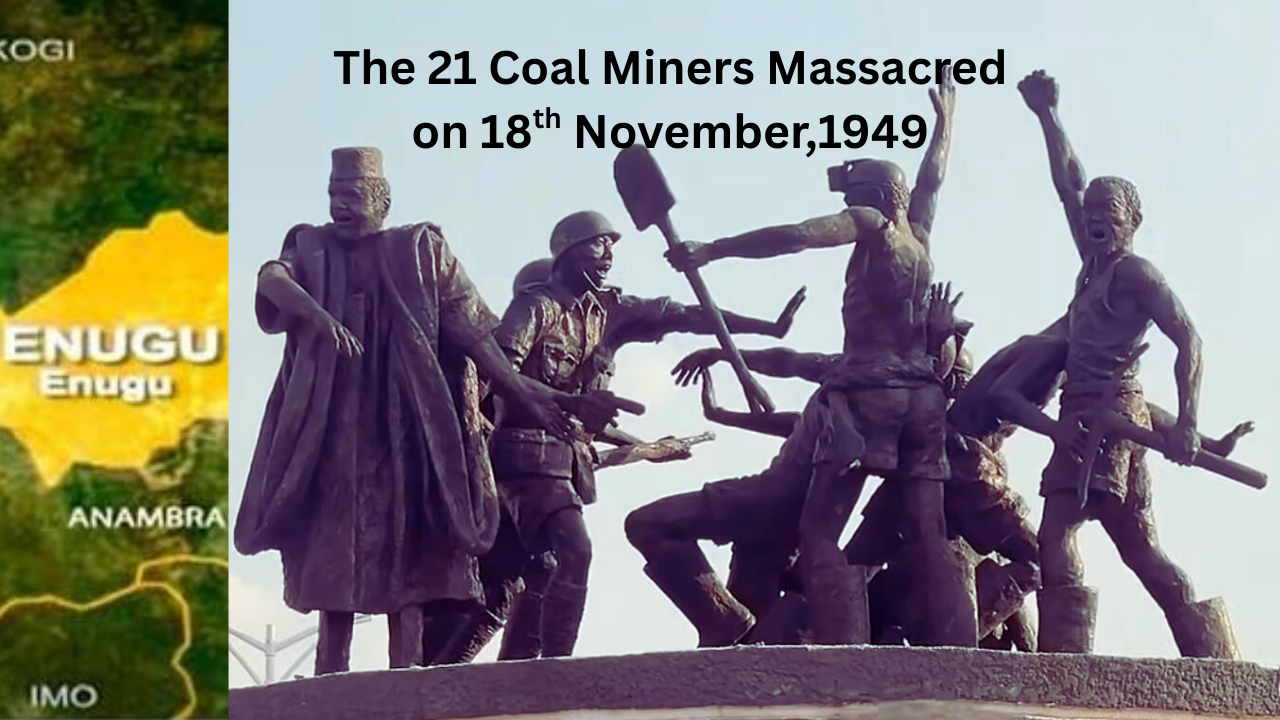
One of the most painful and important events in the history of Enugu State is the 1949 Iva Valley Coal Miners Massacre. This tragic event did not just affect Enugu; it shook the entire country and became a powerful moment in Nigeria’s struggle for independence from British colonial rule.To understand why this event was so important, we must look at what was happening in Enugu at the time, why the miners were protesting, and how the killings changed Nigeria’s political future.
Background: Coal Mining in Enugu
Coal was discovered in Enugu in 1909 by British colonial explorers. By 1915, coal mining had officially begun. The industry quickly became one of the most important in colonial Nigeria because coal was used to power trains, ships, and other machinery.
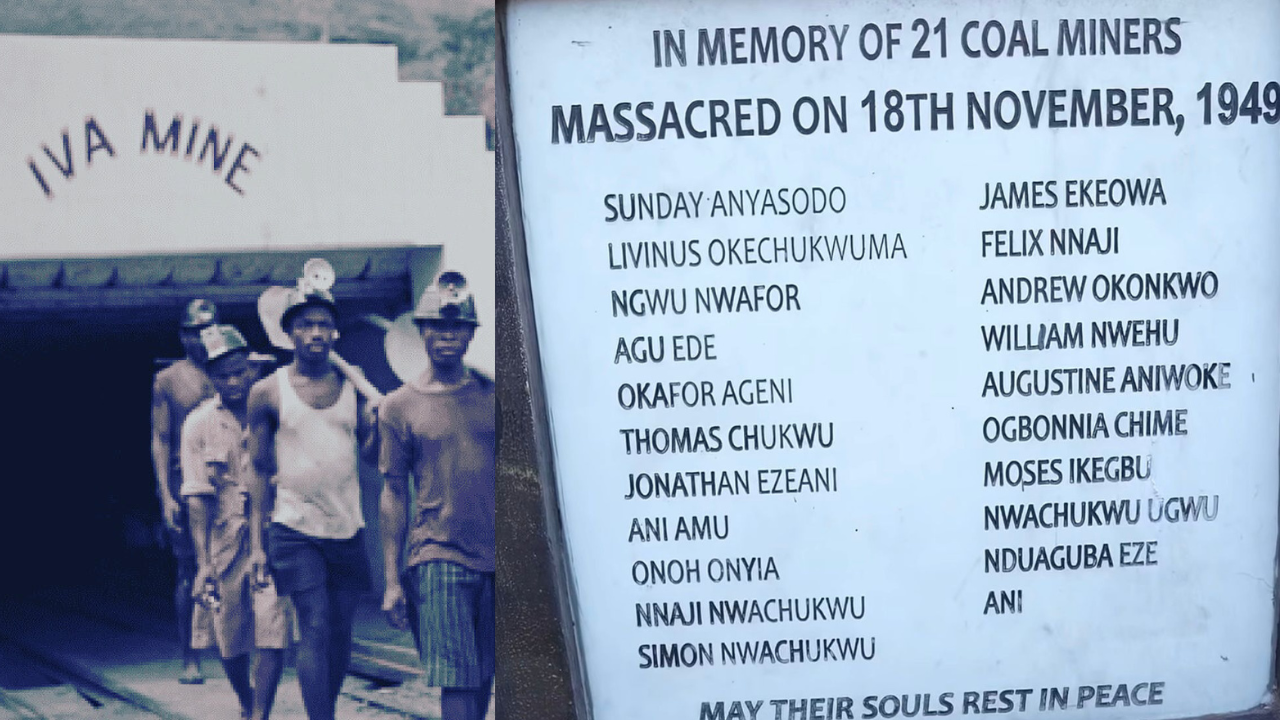
Enugu became known as the “Coal City” because of this industry. Thousands of Nigerian workers were employed in the mines, especially at places like the Iva Valley mine.
However, although coal mining brought economic growth, the benefits were not equally shared. The British colonial government controlled the mines through government-owned companies. Most of the profits went to the British administration, while Nigerian workers were left with low wages and poor working conditions.
Working Conditions at Iva Valley Mine
The miners worked under very harsh conditions:
- Long working hours
- Dangerous underground tunnels
- Poor ventilation
- High risk of accidents
- Low wages
Many miners suffered injuries or developed health problems because of coal dust and unsafe mining environments.
Despite doing physically demanding and risky work, African miners were paid very little compared to European workers. There was clear racial discrimination. European staff enjoyed better housing, better healthcare, and higher salaries, while African miners lived in overcrowded and poorly maintained quarters.
As time went on, the miners became increasingly frustrated and angry.
Why the Miners Protested
By 1949, tension had been building for years. Workers wanted:
- Better wages
- Improved working conditions
- Fair treatment
- Recognition of their labor unions
After World War II, many African workers across Nigeria began demanding better rights. The war had changed global politics, and ideas about freedom and self-determination were spreading across Africa.
In Enugu, coal miners joined labor unions to push for their rights. One of the prominent labor leaders supporting workers’ struggles across Nigeria at the time was Michael Imoudu, who was known for organizing strikes and standing up to colonial authorities.
In November 1949, coal miners went on strike after the colonial government refused to meet their demands for improved wages. The strike was peaceful. The workers simply refused to enter the mines until their concerns were addressed.
However, the colonial government saw the strike as a threat to authority and economic stability.
What Happened on November 18, 1949
On November 18, 1949, the situation turned deadly.
That morning, police officers were sent to the Iva Valley mine to intimidate and disperse the striking workers. The miners had gathered near the mine, unarmed and protesting.
The police ordered the workers to return to work. The miners refused, insisting that their demands be heard.
Suddenly, the police opened fire on the crowd.
When the shooting stopped, 21 miners were dead. Many others were injured.
The victims were unarmed workers whose only crime was demanding fair wages and better conditions.
The killings shocked the people of Enugu and spread quickly across Nigeria. What started as a labor dispute had now become a national tragedy.
Immediate Reactions
News of the massacre spread rapidly. Nigerians were outraged.
Nationalist leaders strongly condemned the British colonial government. One of the most vocal critics was Nnamdi Azikiwe, who used newspapers and public speeches to attack colonial injustice.
The massacre became proof that colonial rule was violent and unfair. Many Nigerians began to question whether British rule truly served their interests.
Protests and sympathy strikes occurred in different parts of the country. The event united workers, students, and political activists in a common cause against colonial oppression.
How the Massacre Contributed to Nigeria’s Independence
The Iva Valley massacre played a major role in strengthening Nigeria’s independence movement in several important ways.
1. It Exposed Colonial Brutality
Before the massacre, some Nigerians still believed that British rule was bringing progress and development. But the killing of unarmed workers changed that perception.
It showed that the colonial government was willing to use deadly force to protect its economic interests.
This destroyed much of the trust Nigerians had in colonial authorities.
2. It Strengthened Labor Movements
After the massacre, labor unions became more determined and organized. Workers realized that unity gave them strength.
The labor movement became closely connected to the nationalist movement. Demands for better wages were now linked with demands for political freedom.
3. It Increased National Unity
Nigeria was (and still is) made up of many ethnic groups. However, the Iva Valley tragedy affected people across ethnic and regional lines.
Northerners, Westerners, and Easterners all saw the event as an attack on Nigerian dignity.
This shared anger helped strengthen national unity against colonial rule.
4. It Inspired Political Activism
Young Nigerians became more politically active after 1949. Political parties gained more support. Newspapers became more critical of colonial policies.
Within eleven years of the massacre, Nigeria gained independence on October 1, 1960.
While independence was the result of many factors, the Iva Valley massacre was one of the key moments that accelerated nationalist feelings and resistance.
Long-Term Impact on Enugu
In Enugu, the massacre remains a powerful historical memory.
The Iva Valley site is remembered as a place of sacrifice. The miners who died are seen as heroes who fought for workers’ rights and national freedom.
The event also changed how the government approached labor issues. After independence, Nigerian leaders were more careful about handling labor disputes, knowing how tragic outcomes could fuel political unrest.
Why This Event Still Matters Today
The 1949 Iva Valley Coal Miners Massacre teaches important lessons:
- The importance of standing up for workers’ rights
- The dangers of government oppression
- The power of unity in fighting injustice
- The sacrifices made for Nigeria’s freedom
It reminds us that independence did not come easily. It was built on the courage and blood of ordinary people, including coal miners who simply wanted fair treatment.
Conclusion
The 1949 Iva Valley Coal Miners Massacre was more than just a workplace tragedy. It was a turning point in Nigerian history.
At the Iva Valley mine in Enugu, unarmed workers demanding justice were shot and killed by colonial police. Their deaths exposed the harsh realities of British rule, strengthened labor unions, united Nigerians across ethnic lines, and energized the independence movement.
Today, when we talk about Nigeria’s journey to freedom, we must remember the miners of Iva Valley. Their sacrifice helped shape the future of the nation.
Their story remains one of courage, struggle, and the powerful human desire for dignity and justice.