



















By Peace Orjiani — Enugu Online TV
Introduction
Enugu State, once considered a relatively affordable place to live, is experiencing a sharp rise in the cost of living in 2026. Essentials such as food, transport, and housing are increasingly stretching household budgets. Even as national inflation shows slight easing, high commodity prices continue to dominate residents’ expenses, reducing purchasing power for families across the city.
Food Prices Bite Deep Into Budgets
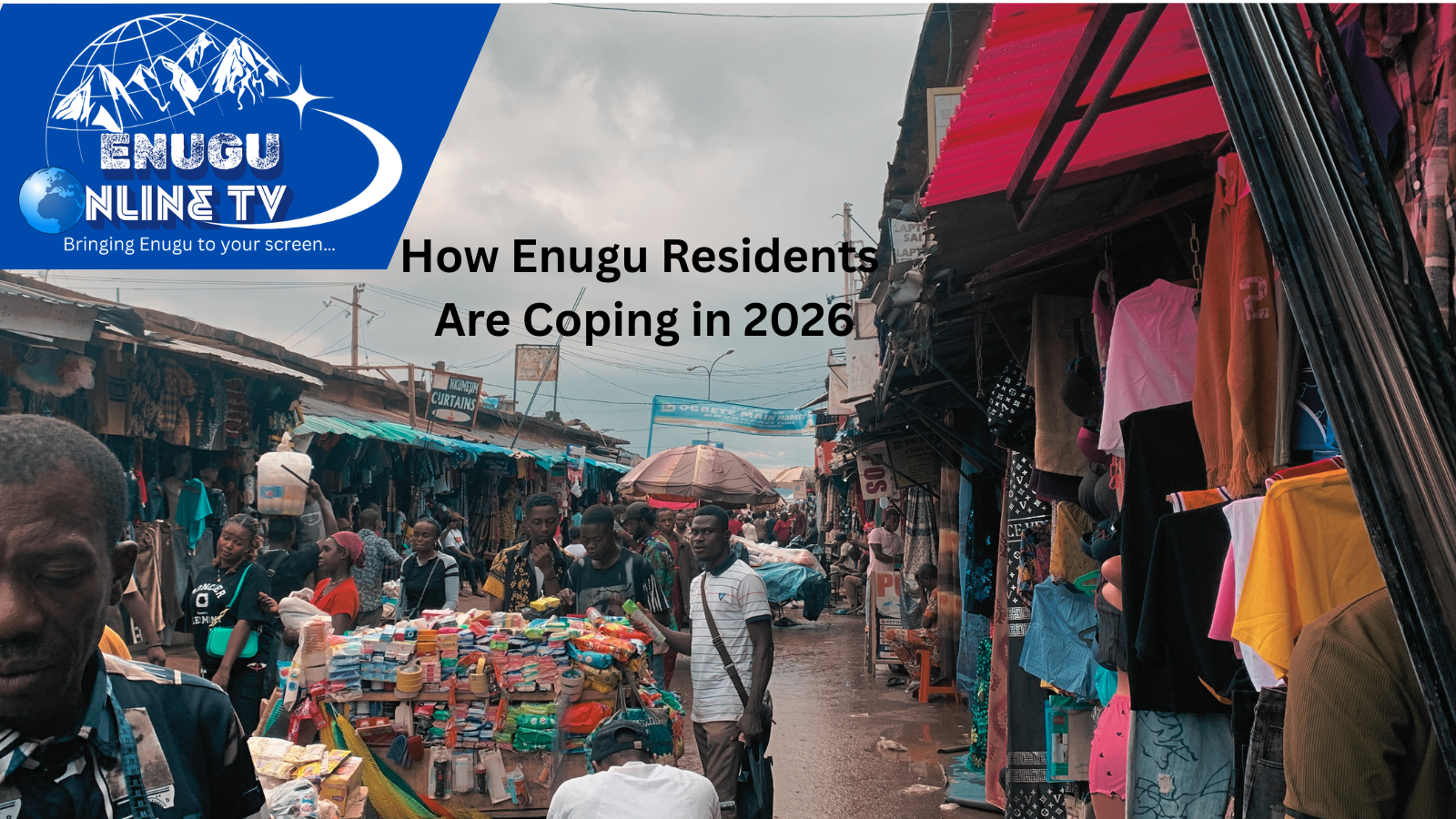
At Ogbete Main Market, traders and shoppers lament the steep prices of staple foods.
“I used to buy a bag of rice for much less,” says Mrs. Chinwe Okoro, a mother of three and vegetable seller. “Now I spend almost double on the same quantity of food items. If I reduce prices, I lose money. If I keep them high, customers complain.”
Most staple food items, including garri, rice, beans, and palm oil, now consume a much larger portion of families’ weekly income. Families share online that rising grocery costs are one of the most persistent pressures they face.
Transport Costs Climb With Fuel Prices
Beyond food, rising transport costs are another major concern.
Mr. Godwin Ebuka, a commercial bus driver, explains:
“Fuel prices keep going up. I now pay more at the pump than I used to, and passengers complain when I raise fares. But I have to, otherwise I make no profit.”
For daily commuters, this means making tough choices. Mrs. Veronica Eze, a teacher, says:
“Some days, I walk instead of taking a bus, because the fare is too much. If I spend less on transport, I spend less on food too.”
Housing and Rent: A Heavy Burden
Housing costs are also rising. Renters in areas like Independence Layout and Uwani report sharp increases during lease renewals.
“Landlords are asking for higher rents,” says Chidimma, a young tenant. “We had to move to a cheaper neighborhood because we couldn’t afford the renewal.”
This trend is common in many Nigerian cities, where demand for affordable housing outpaces supply, pushing low- and middle-income families into tighter budgets.
Families Tightening Belts, Coping Strategies at Home
Many households are adjusting their lifestyles to manage costs. Common strategies include:
- Reducing meals or switching to cheaper alternatives
- Cutting non-essential spending
- Bulk shopping at local markets
- Using alternative transport such as walking or shared rides
Mr. Peter Anene, father of four, shared:
“At first, we ate three times a day with protein. Now we sometimes skip meat and eat carbohydrate-heavy meals because it’s cheaper.”
Some families are also engaging in small side businesses, like trading tomatoes, onions, garri, tailoring, or delivery services, to supplement their income.
Youth and Small Business Responses
Young entrepreneurs are adapting their businesses to the rising costs.
Ms. Adaobi, a café owner near the University of Nigeria, explains:
“We have to reduce prices sometimes, but that lowers our profit. Customers are struggling too. If we raise prices, they don’t buy. It’s a tight balance.”
Some use social media platforms to reach customers outside traditional market spaces, helping reduce overhead costs and maintain sales.
Community Support and Resilience
Despite economic pressures, Enugu residents show resilience.
Community groups and online discussions highlight creativity and perseverance in facing financial hardship. Residents share tips like cooperative buying, meal-sharing, and resource pooling to cope with rising prices.
“Every day is hustle,” said a local market trader online. “You just have to make your money stretch.”
Government and Economic Context
While inflation nationwide has shown slight easing, food and transport prices remain high. Analysts note that persistent costs in these areas continue to hurt low- and middle-income families.
State governments, including Enugu’s, are under scrutiny for the use of budget allocations and their real impact on residents’ welfare.
Looking Ahead: Hope and Challenges
Residents remain hopeful that improved supply chains, better infrastructure, and support for local agriculture will ease the burden of rising costs. Community solidarity and innovative coping strategies continue to help families manage lean months.
“We keep going,” says Mrs. Okoro. “Because if we don’t fight every day, nothing changes.”
Conclusion
The rising cost of living in Enugu in 2026 is a reality for traders, commuters, and families. High prices for food, transport, and housing reshape budgets and force tough choices. Yet, the resilience, creativity, and solidarity of residents demonstrate how communities adapt and continue to thrive despite economic challenges.