



By Faith Eze
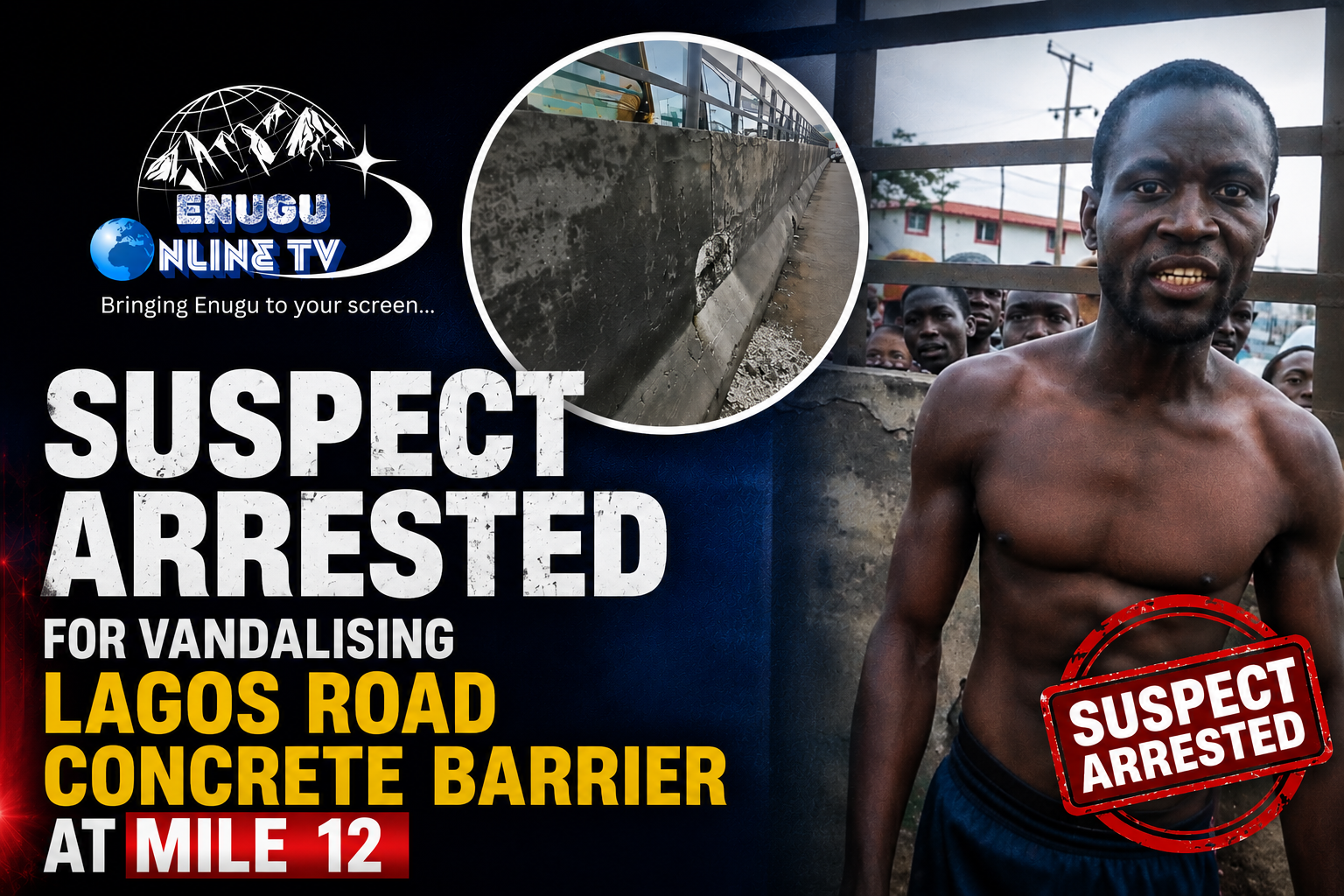
A suspected vandal has reportedly been arrested after allegedly being caught in the act of removing or vandalising a concrete road barrier around Mile 12 in Lagos State.
The incident was highlighted in a video shared by SaharaReporters, showing the suspect surrounded by members of the public. The report describes the incident as a case of a person allegedly vandalising a Lagos road concrete barrier at Mile 12.
The incident has drawn attention to an important issue in Lagos: the protection of public infrastructure.
While the full circumstances surrounding the arrest and the suspect’s alleged motive were not independently confirmed in the sources reviewed for this article, the incident raises serious questions about how public facilities are protected and why some people continue to damage government property.
What Happened at Mile 12?
According to the report shown in the video, the suspect was allegedly caught while vandalising a concrete barrier along the Lagos road around Mile 12.
The video shows a shirtless man standing near a road barrier while several people appear to have gathered around him. The caption on the video states that he was arrested for allegedly vandalising a Lagos road concrete barrier at Mile 12.
It is important to describe the man as a suspect, rather than a convicted criminal, because an arrest or allegation does not by itself establish guilt. The appropriate authorities would have to investigate the incident and, where necessary, take the matter before a court.
However, being caught allegedly damaging public infrastructure is a serious matter because road barriers are not simply pieces of concrete placed by the roadside. They can play an important role in controlling traffic and protecting road users.
Why Road Barriers Matter
Lagos is one of Africa’s busiest urban areas, with millions of people and vehicles moving around the city every day. This makes proper road management extremely important.
The Mile 12–Ketu corridor is particularly significant. Lagos Metropolitan Area Transport Authority (LAMATA) regulations identify the BRT Lite corridor on Ikorodu Road as running from the Mile 12 terminus towards CMS, passing through areas including Mile 12 and Ketu. The regulations also distinguish between BRT lanes, main carriageways, service lanes and walkways.
This means that infrastructure around the corridor is connected to the wider transportation system.
Concrete barriers can help separate different sections of a road, discourage dangerous movements and protect areas where pedestrians or vehicles should not enter. When such infrastructure is damaged or removed without authorisation, the consequences can go beyond the cost of replacing the material.
It could create additional risks for motorists, pedestrians and other road users.
Mile 12 Is an Important Transport Area
Mile 12 is not an isolated location. It is an important part of Lagos’ transport network.
Government transport data lists routes involving Mile 12 Underbridge and Ketu, showing the area’s connection to several important transport routes.
The Lagos State Traffic Management Authority (LASTMA) also lists Mile 12 and Ketu among its operational zones, further showing the importance of the area to traffic management in Lagos.
Because of the heavy movement of people and vehicles around the area, any damage to road infrastructure should be treated seriously.
A damaged barrier could potentially expose motorists and pedestrians to hazards, especially during periods of heavy traffic or poor visibility.
Public Infrastructure Belongs to Everyone
One of the biggest lessons from the incident is that government infrastructure should not be viewed as something that belongs to nobody.
Roads, bridges, streetlights, drainage systems, traffic signs, barriers and other public facilities are provided for the benefit of society.
When public infrastructure is vandalised, taxpayers and government agencies may have to spend additional money repairing or replacing it. That money could otherwise be used for other public needs.
Lagos State’s own public-private partnership policy recognises the need to protect public infrastructure from vandalism and other criminal activities.
This shows that infrastructure protection is not only about preventing physical damage. It is also about protecting public investment.
Vandalism Can Create Bigger Problems
Vandalism may sometimes appear to be a small offence, especially when only one piece of infrastructure is damaged. But repeated acts of vandalism can create larger problems.
For example, if road barriers are repeatedly removed, authorities may need to spend money replacing them. If the damage affects traffic control, road users may experience additional confusion or congestion.
Lagos already faces major challenges relating to traffic, road conditions and the pressure created by a growing population. A Lagos State resilience strategy has identified inadequate infrastructure, traffic and road safety among challenges affecting the city.
This makes responsible use and protection of existing infrastructure even more important.
The Role of Residents
The incident also shows why members of the public have an important role to play in protecting their communities.
In previous cases involving illegal activities in Lagos, government agencies have acted after receiving information from members of the public. For example, LASBCA has reported an arrest following information from concerned Lagos residents about suspected illegal dredging activities.
Residents should therefore report suspicious activities involving public infrastructure to the appropriate authorities rather than taking matters into their own hands.
At the same time, people should avoid mob action. Once a suspect has been apprehended, law enforcement authorities should be allowed to investigate and handle the case according to the law.
What Should Happen Next?
The most important next step is a proper investigation.
Authorities should establish exactly what happened, what part of the road infrastructure was allegedly damaged, why the suspect was allegedly doing it and whether anyone else was involved.
If there is sufficient evidence of an offence, the suspect should face the appropriate legal process.
There is also a need for stronger monitoring of vulnerable public infrastructure. Security agencies, transport authorities and local communities can work together to discourage vandalism and ensure that damaged infrastructure is reported quickly.
A Warning to Others
The Mile 12 incident should serve as a warning to anyone who deliberately damages public property.
Public infrastructure is paid for through government resources and ultimately serves the people. Damaging it can put other people at risk and create additional costs for society.
At the same time, the public should remember that an allegation is not the same as a conviction. The suspect in this incident remains a suspect unless and until a court determines otherwise.
The bigger issue, however, goes beyond one individual.
Lagos needs its roads, barriers, bridges, traffic facilities and other public infrastructure to remain functional and safe. Protecting these facilities is a shared responsibility involving government agencies, security authorities and ordinary residents.
The arrest reported at Mile 12 therefore provides an opportunity to remind Lagos residents of a simple message: public infrastructure is public property, and protecting it helps protect everyone.