






By Isaac Mission
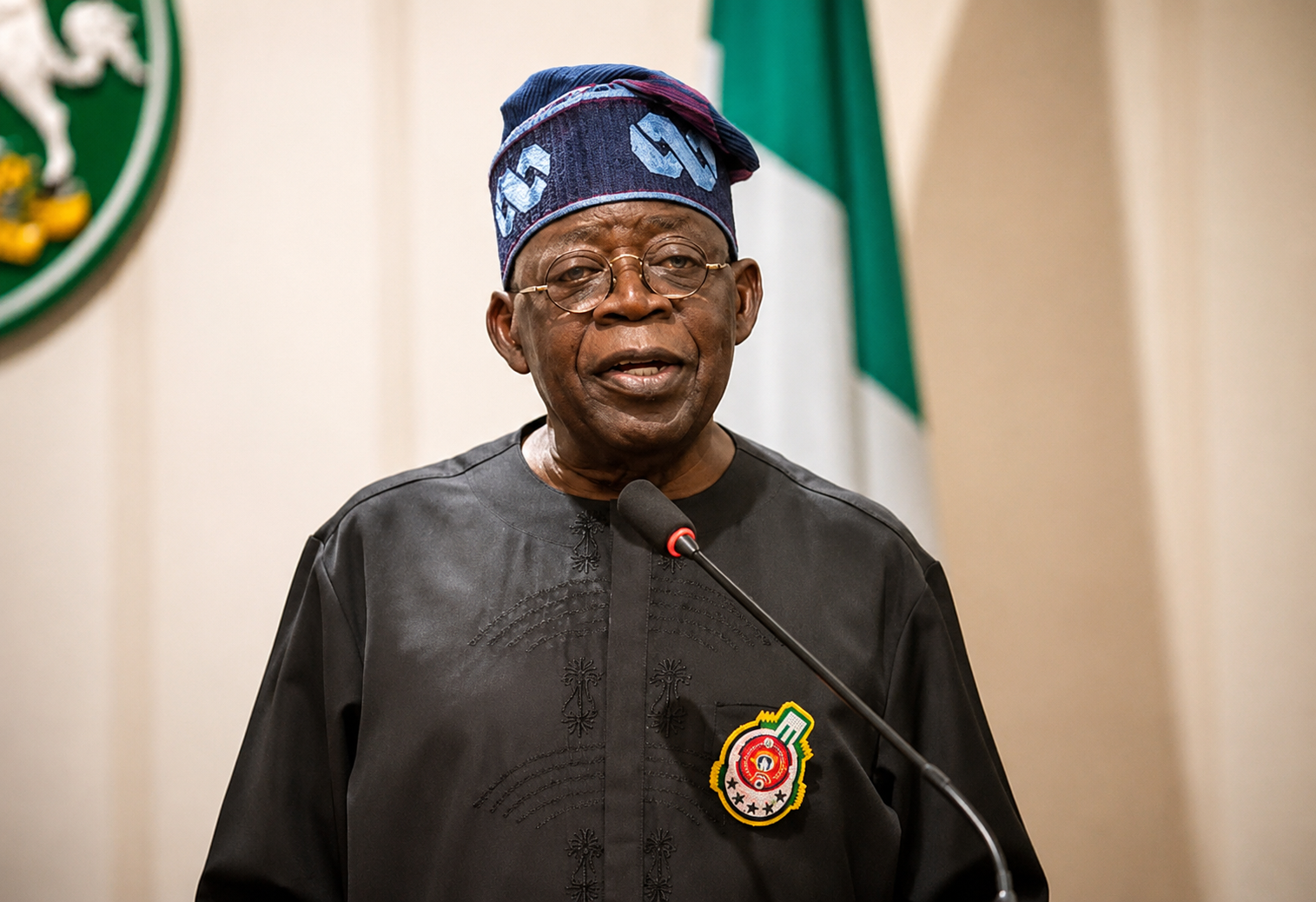
President Bola Tinubu has approved a new framework aimed at attracting up to $50 billion in fresh investment into Nigeria’s deep offshore oil and gas sector.
The framework replaces the previous project-by-project arrangement under which oil companies negotiated separate terms with the Federal Government, a process that often resulted in prolonged delays and uncertainty for investors.
The development was disclosed on Tuesday by the President’s Special Adviser on Information and Strategy, Bayo Onanuga, in a statement titled, “President Tinubu Approves Landmark Deep Offshore Investment Framework to Unlock up to US$50 Billion in New Investment.”
According to Onanuga, the new policy establishes uniform eligibility requirements, implementation procedures and investment rules for qualifying deep offshore developments.
The reform is expected to help revive major offshore projects that have remained stalled for years, with Shell’s approximately $10 billion Bonga South West project among those expected to benefit.
The initiative followed an earlier meeting between Tinubu and Shell plc Chief Executive Officer, Wael Sawan, during which the President directed the development of measures to stimulate a new wave of investment in Nigeria’s deep offshore industry.
Rather than developing separate solutions for individual projects, the Federal Government subsequently created a broader framework applicable to multiple categories of qualifying developments.
The policy is being implemented through the Deep Offshore Oil and Gas Projects Incentives (Tax Remission) Order, 2026.
The new arrangement is designed to provide investors with greater certainty while ensuring that the country continues to secure long-term economic benefits from its offshore petroleum resources.
The framework also authorises NNPC Limited, the government’s nominated counterparty under Production Sharing Contracts, to make the necessary amendments to eligible contracts to give effect to the new policy.
Special Adviser to the President on Oil and Gas, Olu Arowolo-Verheijen, said the reform would also place strong emphasis on increasing Nigerian participation in the execution of offshore projects.
She explained that qualifying projects would be expected to maximise activities carried out within Nigeria where commercially and technically feasible.
This, she said, would support the growth of domestic engineering, fabrication, marine logistics, technical services and project management.
The Federal Government expects the initiative to increase investment and oil production while creating skilled employment opportunities, strengthening local supply chains and improving Nigeria’s position as a regional hub for deep offshore project execution.
President Tinubu commended the Federal Ministry of Justice, Federal Ministry of Finance, Federal Ministry of Petroleum Resources, Nigeria Revenue Service, NNPC Limited, Nigerian Upstream Petroleum Regulatory Commission, Nigerian Content Development and Monitoring Board, as well as industry partners and other stakeholders involved in developing the framework.
The President said investment decisions were often influenced more by certainty and predictable rules than by the availability of natural resources alone.
He stated that the new reform was part of his administration’s efforts to create an investment environment built around clear regulations, strong institutions and sustainable partnerships.
Tinubu added that the government was focused on creating conditions that would encourage capital inflows, expand opportunities for Nigerian businesses and ensure that the country’s natural resources generate lasting economic value.