





By Isaac Mission
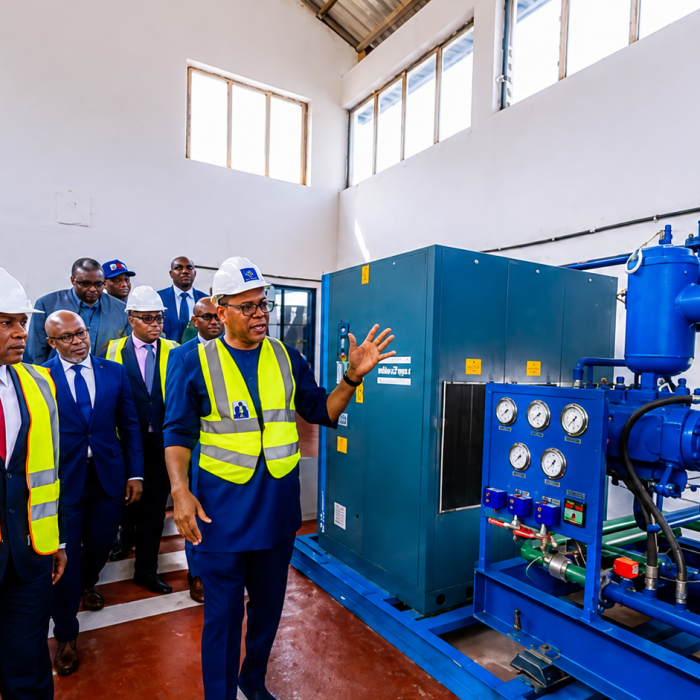
The Enugu State Government has commenced the construction of three new 33KV electricity feeders as part of efforts to tackle prolonged power outages and improve electricity supply across several communities in the state.
The project, being developed from the Transmission Company of Nigeria (TCN) station at Ugwuaji, is expected to strengthen power supply to communities in Nkanu East, Nkanu West, Awgu and Aninri Local Government Areas.
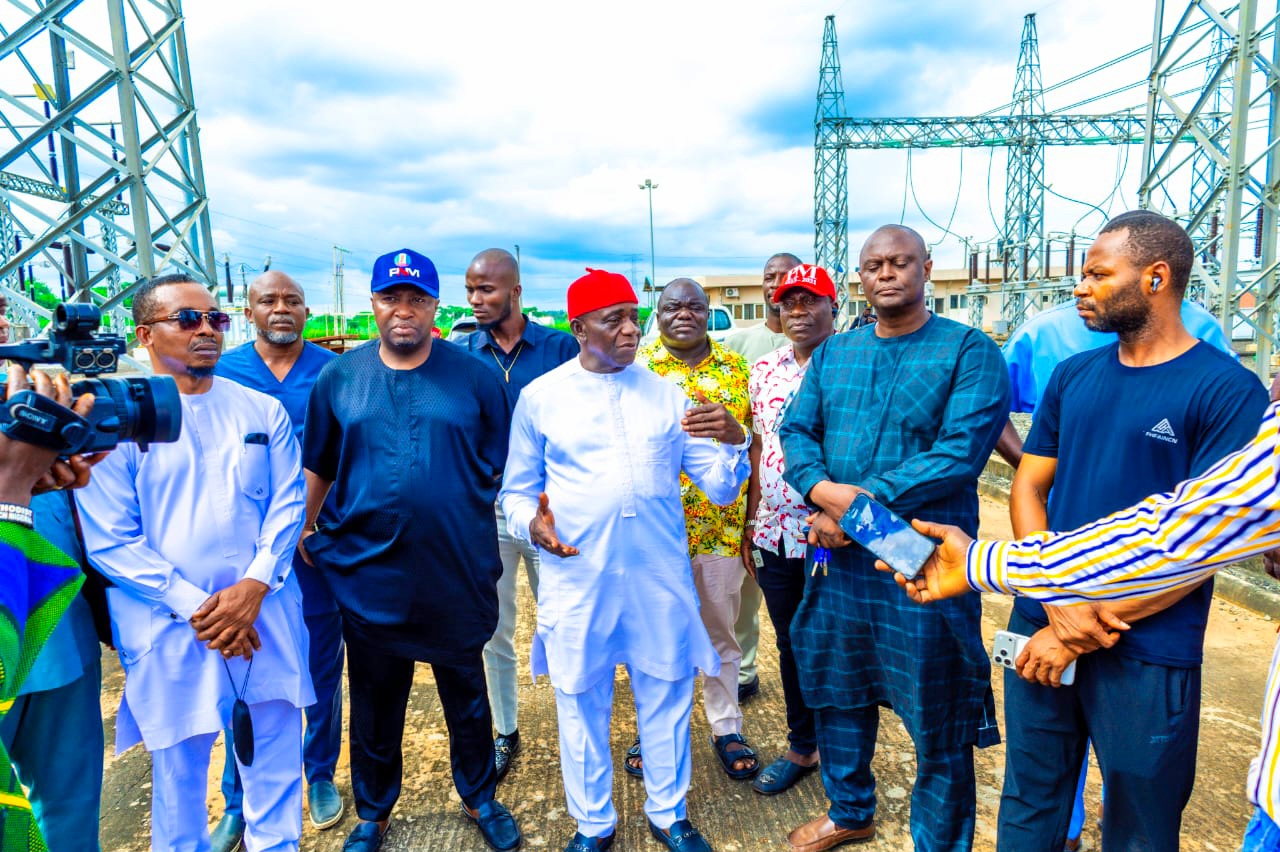
The commencement of the project followed a stakeholders’ meeting on electricity held at the International Conference Centre, Enugu, where officials and community representatives discussed the state’s power challenges and the government’s plans to address them.
The intervention is designed to resolve problems associated with the existing Amechi 33KV feeder, which currently supplies electricity to Nkanu East, Nkanu West, Enugu South, Awgu and Aninri.
According to officials, the Amechi feeder extends for more than 600 kilometres into three Local Government Areas in Ebonyi State, making it one of the longest 33KV feeders in the South-East.
Its extensive length has reportedly made fault detection and repairs difficult, contributing to prolonged power outages in communities connected to the network.
Speaking during the event, the Managing Director and Chief Executive Officer of the Enugu State Electrification Agency (ESEA), Engr. Christopher Ezeoha, said the state government opted for a major restructuring of the electricity network rather than simply repairing the existing feeder.
Ezeoha explained that two new 33KV feeders were being constructed from the Ugwuaji TCN station, while an existing short 33KV feeder would also be extended.
He said the new and extended feeders would primarily serve Nkanu East and Nkanu West, while the existing Amechi feeder would be reconfigured to supply Awgu and Aninri.
The ESEA chief executive further disclosed that four new injection substations would be constructed in Nkanu East and Nkanu West to convert electricity from 33KV to 11KV and strengthen the local distribution network.
He noted that some communities, including Nkerifi, Nara and Mburubu, had been without electricity for more than two decades, stressing that the state government had directed the agency to restore power to such communities.
According to him, simply repairing the Amechi feeder would not provide a sustainable solution because of its excessive length and the large number of communities and Local Government Areas dependent on it.
The restructuring, he said, would shorten the individual feeders, making it easier for faults to be identified and repaired while improving the reliability and duration of electricity supply.
Ezeoha said the government was targeting an average of more than 20 hours of electricity supply daily when the project is completed.
He added that the intervention formed part of Governor Peter Mbah’s broader plan to establish a modern and commercially sustainable electricity market in Enugu State.
As part of the plan, Ezeoha disclosed that the power infrastructure would initially be managed by Enugu Electrification Agency Ltd., a special-purpose vehicle that would distribute and market electricity in Nkanu East and Nkanu West.
He said the long-term objective was for the agency to expand its operations and eventually take over electricity distribution services across the state.
The agency, he added, had commenced pre-feasibility studies and was preparing a 10-year business plan required to secure relevant regulatory approvals and licences for bulk electricity trading and participation in the state electricity market.
Ezeoha also revealed that the state was preparing its electricity distribution network to evacuate power from a proposed 630-megawatt generation facility being developed in Enugu.
He said the ultimate objective of the administration was to achieve reliable electricity supply on a 24-hour, seven-day basis, noting that increased power generation must be supported by an efficient distribution network capable of delivering available electricity to consumers.
The government also plans to introduce smart prepaid meters and automation technology to improve accountability, revenue collection and fault management.
According to Ezeoha, the planned Supervisory Control and Data Acquisition (SCADA) system would enable the agency to identify faults almost immediately and direct technical teams to the affected locations, rather than manually searching along lengthy power lines.
He urged residents and communities to protect electricity infrastructure from vandalism, stressing that the success and sustainability of the investments would depend on collective responsibility.
The ESEA boss said similar investments would be extended to other parts of the state, including Nsukka and Uzo-Uwani, as the government works towards transforming electricity supply across Enugu.
The Commissioner for Energy, Mr Enyinna Ogbonna, described electricity as one of the administration’s major priorities, stressing that reliable power supply was essential to industrialisation, job creation and economic development.
Ogbonna said the government’s investment in the electricity sector was part of its wider economic agenda, including its ambition to increase Enugu State’s Gross Domestic Product from approximately $4.4 billion to $30 billion.
Also speaking, the General Manager of the TCN Enugu Region, Dr Tom Inugonum, commended the state government for its efforts to improve electricity supply.
Inugonum said the TCN Enugu Region oversees transmission infrastructure across between six and eight states, adding that stronger collaboration with the Enugu Government could help resolve some of the state’s electricity challenges.
He noted that Enugu receives electricity from three major sources and has several transmission lines serving different parts of the state.
However, he pointed out that some transmission and substation projects in the region remained incomplete, limiting the capacity and effectiveness of the power system.
The TCN official also raised concerns over the vandalism of electricity infrastructure and called on communities to protect substations, transmission lines and other critical facilities.
Similarly, the President-General of Isi-Amagunze, Mr Okey Nwatu, appealed for stronger community participation in protecting electricity infrastructure.
Nwatu stressed that transformers, cables, switches and other electrical facilities were essential infrastructure that communities must safeguard to enjoy sustainable electricity supply.
The Enugu State Government said the ongoing intervention represents part of its broader strategy to modernise the state’s electricity infrastructure and provide more dependable power to residents, businesses and industries.