








By Faith Eze
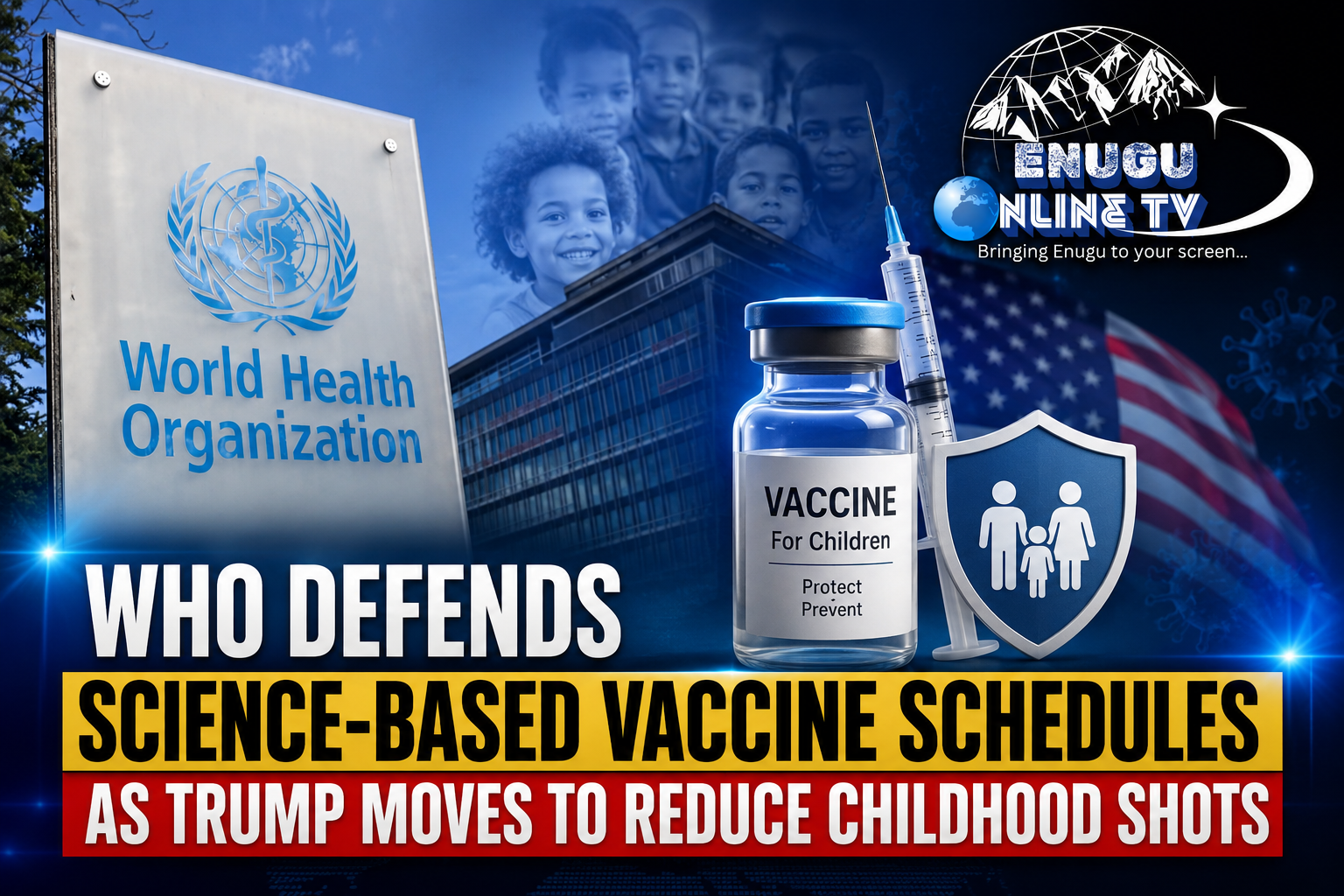
The World Health Organization (WHO) has defended the use of science-based childhood vaccination schedules after the administration of United States President Donald Trump moved to reduce the number of vaccines routinely recommended for American children. The development has attracted international attention because childhood vaccination is one of the major tools used by health authorities around the world to protect children from serious infectious diseases. According to a report published by Reuters on August 11, 2026, the WHO said its immunization recommendations are based on decades of research and expert review. The comments came after Trump signed an executive order seeking major changes to the way childhood vaccines are recommended in the United States. The issue has also generated strong reactions from medical and public health experts, with concerns that changes to the vaccination schedule could make it more difficult for parents to protect their children against diseases that can be prevented through immunization.
What Is Happening in the United States?
President Trump has directed his administration to change the country’s approach to childhood vaccination recommendations. The new policy seeks to reduce the number of vaccines routinely recommended for all children. Reports indicate that the new approach would focus routine recommendations on vaccines protecting against 11 diseases, while some other vaccines would be recommended based on individual risk or through discussions between parents and healthcare professionals. The Trump administration has described the changes as an effort to give parents greater choice and to bring American vaccination practices closer to those of other developed countries. The White House has previously said that the administration wants the United States to examine vaccination practices in other developed nations and consider scientific evidence when making changes to the country’s recommendations. However, medical organizations and public health experts have questioned whether reducing routinely recommended vaccines is supported by sufficient scientific evidence.
WHO Says Vaccine Recommendations Are Based on Evidence
The WHO has made it clear that vaccination schedules are not created randomly. The organization maintains detailed recommendations for routine immunization covering children, adolescents and adults. Its recommendations include information about the age at which vaccines should be given, the number of doses required and the intervals between doses. For children specifically, the WHO publishes guidance covering vaccines and the timing of primary doses and booster doses. The organization says these recommendations are developed using scientific evidence and expert advice. Its Strategic Advisory Group of Experts on Immunization, known as SAGE, plays an important role in reviewing evidence and advising on immunization policies. This is why the WHO has defended science-based vaccine schedules at a time when vaccination policies are becoming increasingly controversial in some countries.
Why Childhood Vaccines Matter
Vaccines help the body develop protection against infectious diseases before a person is exposed to them. Childhood immunization is particularly important because young children can be more vulnerable to serious complications from certain infections. Vaccination programmes have helped reduce illnesses and deaths caused by diseases such as measles, polio and other vaccine-preventable infections. When vaccination rates fall, diseases that were previously under control can return. This is one of the major concerns being raised by health experts about changes to childhood vaccination recommendations. If fewer children receive recommended vaccines or receive them later than advised, communities may have lower levels of protection. That can create opportunities for infectious diseases to spread, particularly among babies, people with certain medical conditions and others who may not be fully protected.
The Debate Over the MMR Vaccine
One of the most controversial parts of the new U.S. approach concerns the MMR vaccine. MMR protects against measles, mumps and rubella. The vaccine has traditionally been administered as a combined vaccine rather than as three completely separate vaccinations. Trump has supported separating the three components into individual shots and different medical visits. Medical experts have criticized the idea, arguing that separating the vaccines could create additional opportunities for children to miss or delay doses. The debate is important because measles, in particular, can spread rapidly in communities where vaccination coverage is low. Public health officials therefore continue to emphasize the importance of timely vaccination.
Vaccine Schedules Are Not Exactly the Same Everywhere
It is also important to understand that there is no single vaccination schedule that is identical in every country. Countries develop immunization programmes according to their own disease risks, healthcare systems, available vaccines and public health needs. The WHO provides global recommendations, but individual countries use those recommendations alongside their own national policies. For example, the WHO provides a specific vaccination schedule for Nigeria. The Nigerian schedule includes vaccines given at different stages of childhood, with information based on official country reporting. This means that parents in Nigeria should not automatically follow vaccination information circulating from another country, especially social media posts from the United States. Instead, parents should follow the vaccination programme recommended by Nigerian health authorities and speak with qualified healthcare professionals when they have questions.
Why the Development Matters to Nigeria
Although the current controversy is largely about U.S. policy, it has implications for conversations about vaccination around the world. Social media allows health information from the United States and other countries to spread rapidly to Nigerian audiences. A change in American policy could therefore lead to confusion among parents elsewhere, particularly when social media posts fail to explain that different countries have different immunization schedules. Nigeria continues to face challenges in reaching children who have not received routine vaccines. Ensuring that parents have access to accurate information is therefore important. Parents should be careful about relying on viral posts, videos or comments when making decisions about their children’s health.
The Importance of Following Reliable Health Advice
The latest debate is a reminder that vaccination decisions should be based on reliable medical evidence rather than political arguments or social media trends. Parents who are unsure about a vaccine, the number of doses their child needs or whether a missed vaccination can still be given should speak with a doctor, nurse or other qualified healthcare professional. The WHO maintains regularly updated information about routine immunization recommendations, including guidance for children and recommendations for delayed or interrupted vaccination. The most important point is that vaccination schedules are designed to provide protection at appropriate stages of life. Changing the timing or number of recommended vaccines can therefore have consequences that need to be carefully evaluated.
A Debate That Will Continue
The disagreement between the Trump administration and health experts is likely to continue as the United States implements changes to its childhood vaccination recommendations. Supporters of the changes say parents should have more choice and that vaccination policies should be reviewed regularly. Critics argue that public health decisions should remain firmly rooted in strong scientific evidence and that reducing routine childhood vaccination could increase the risk of preventable diseases. For the WHO, the message remains clear: vaccination recommendations should be guided by scientific evidence, expert assessment and the health needs of populations. As the debate continues, parents should avoid panic and misinformation. The best approach is to obtain information from trusted health authorities and qualified medical professionals before making decisions about childhood vaccination.
For Nigerian families, this means paying particular attention to guidance from Nigeria’s health authorities rather than assuming that changes to the American vaccination schedule automatically apply to Nigeria.
The wider lesson from the controversy is simple: when it comes to children’s health, accurate information, scientific evidence and professional medical advice matter.