

By Isaac Mission
Umuchigbo Iji Nike Community Rejects Alleged Installation of Traditional Ruler
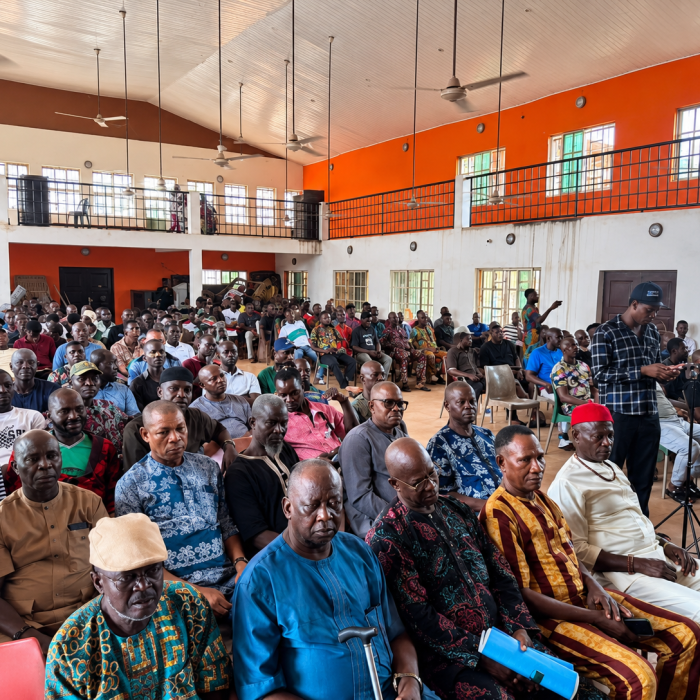
Hundreds of residents and indigenes of Umuchigbo Iji Nike Autonomous Community in Enugu East Local Government Area have rejected the alleged appointment of a new traditional ruler, insisting that no monarch should emerge without a transparent election conducted in line with the community’s constitution.
The community members, who gathered at their village square on Saturday, maintained that the Igweship stool remains vacant and urged the Enugu State Government to direct the Ministry of Chieftaincy Affairs to organise a proper election to determine who becomes the traditional ruler.
The protest followed reports that Chief Jude Agu had been appointed as the community’s traditional ruler, a move many residents described as unconstitutional and unacceptable.
According to the protesters, the matter is already before the court, making any attempt to install a monarch before the conclusion of legal proceedings a violation of due process.
They referenced an interlocutory injunction issued by an Enugu State High Court in July 2025, which restrained Jude Agu from presenting himself as the Igwe or Igwe-elect of the community pending the determination of the substantive suit. The court also ordered all parties to maintain the status quo until the case is concluded.
Community leaders warned that disregarding the court order and imposing a traditional ruler without an election could heighten tension and disrupt the peace in the area.
Several elders, youths, and aspirants to the throne addressed journalists during the gathering, unanimously insisting that only a free and transparent election should determine who occupies the royal stool.
One of the community elders, Chief Okoh Gabriel, alleged that the controversy began after the former town union chairman, Hon. Kenneth Mbah, halted an earlier election process and claimed that the government had already selected a candidate.
He maintained that the community’s constitution clearly provides for the emergence of an Igwe through an election and appealed to the state government to supervise a credible voting process.
The youth leader, Anthony Ikechukwu Anike, also opposed any attempt to install a monarch without the consent of the people. He stressed that the youth would pursue every lawful means to protect the community’s constitutional rights and ensure that due process is followed.
According to him, the reported presentation of a staff of office to anyone before an election is unacceptable, especially while the matter remains before the court.
Three aspirants to the Igweship position—Chief Maurice Nonyelum Ekete, Chief Joseph Iloka, and Chief Josephat Ezeoha—also called on the government to organise an open election.
Speaking on behalf of the aspirants, Ekete, a retired Permanent Secretary, explained that the community had previously begun an electoral process before it was cancelled. He argued that the constitution of Umuchigbo Iji Nike clearly outlines an election as the only legitimate process for selecting an Igwe.
He urged the Ministry of Chieftaincy Affairs to send officials to oversee a transparent election, allowing eligible community members to choose their preferred traditional ruler through an open and credible process.
The aspirants insisted that they are not opposed to anyone becoming Igwe but believe that every interested candidate should contest fairly and allow the people to decide.
As of the time this report was filed, the Enugu State Ministry of Chieftaincy Affairs had not issued an official response to the concerns raised by the community.
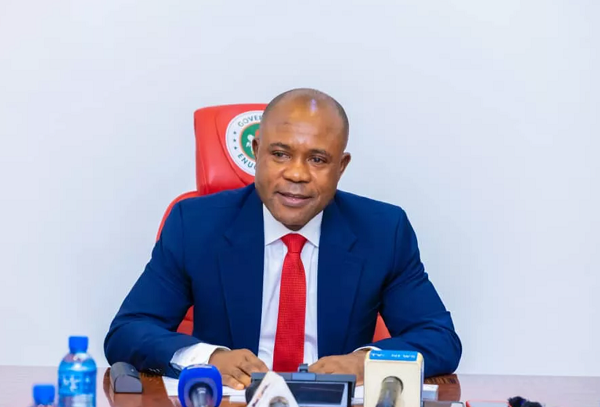
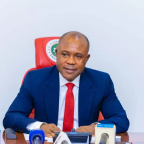
As preparations for the 2027 governorship election gather momentum, Governor Peter Mbah is widely regarded as a strong contender for a second term, largely due to the numerous infrastructure projects executed since assuming office in 2023. However, political observers believe issues such as taxation, his recent move to the All Progressives Congress (APC), and the cost of living could significantly influence the electoral contest.
Since taking office, the Mbah administration has embarked on major road construction projects, introduced the Smart Green Schools initiative, expanded primary healthcare facilities, improved security infrastructure, and invested in transportation, water supply, and economic development. These achievements have earned him commendations from traditional rulers, business leaders, and political stakeholders across the state.
Despite the visible projects, analysts note that elections are determined not only by infrastructure but also by how citizens perceive their everyday living conditions. Rising living costs and economic pressures remain concerns among many residents, and opposition parties are expected to focus their campaigns on these issues rather than the administration’s physical projects.
Another major political development is Mbah’s defection from the Peoples Democratic Party (PDP), under which he won the 2023 election, to the APC. Supporters argue the move strengthens Enugu’s relationship with the Federal Government and could attract more federal support for development. Critics, however, believe the governor will have to convince voters that the party switch serves the interests of the state rather than political expediency.
The administration’s drive to increase internally generated revenue has also generated mixed reactions. While the government maintains that improved revenue is essential for sustainable development, traders, landlords, and business owners have criticised some tax and levy policies introduced by the state.
Following public complaints, the government reviewed parts of the policy by suspending certain daily levies on small-scale traders and reducing some charges. Nevertheless, critics continue to argue that the initial measures placed unnecessary financial pressure on residents.
Another policy attracting debate is the introduction of a ₦150 million advertising permit fee for political parties and candidates ahead of the forthcoming elections. The policy has drawn criticism from opposition groups, some of which have challenged its legality in court.
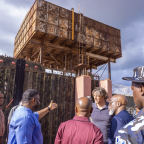
Water supply also remains a major campaign issue. Although the government has invested heavily in rehabilitating major water schemes across the state, many residents continue to judge the programme by whether water flows consistently into their homes rather than by official production figures.
Similarly, the Smart Green Schools project—one of the administration’s flagship education programmes—has received national attention. While supporters praise its vision of establishing modern schools across all wards, critics continue to question project completion timelines, staffing, and the long-term sustainability of the facilities.
Within the governor’s political base, attention has also shifted to reports that several prominent politicians from Enugu East Senatorial District have shown interest in the 2027 governorship race. Although none currently appears to match Mbah’s political influence individually, observers believe multiple aspirants from the same zone could create internal political pressure if not properly managed.
While Governor Mbah enters the election season with the advantages of incumbency, visible infrastructure, and support from influential stakeholders, political analysts believe voters will ultimately assess whether those achievements have translated into improved living conditions, affordable livelihoods, and broader economic opportunities for ordinary citizens.
As the political landscape evolves, the outcome of the 2027 election is expected to depend not only on completed projects but also on how effectively the administration addresses concerns surrounding taxation, water supply, economic hardship, and public confidence.