





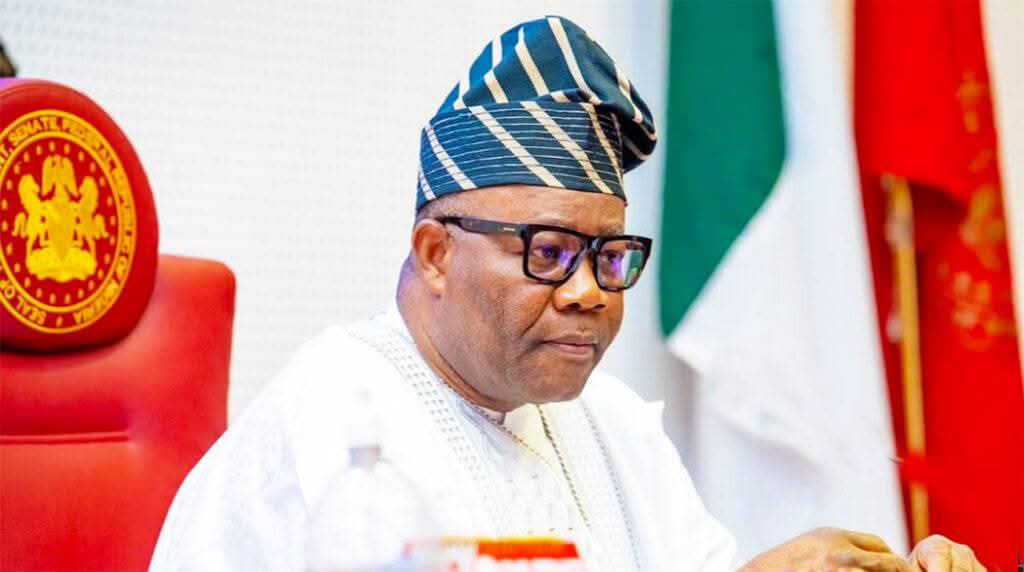




In the fast-paced world of digital media and political discourse, the line between authentic news and deliberate falsehoods often gets blurred. Recently, a major news report captured by Punch Newspapers brought to light a serious development involving the President of the Senate, Godswill Akpabio. He officially petitioned the Department of State Services, commonly known as the DSS, to investigate a viral social media post. This post falsely attributed an inflammatory, anti-Northern statement to him. This situation highlights the growing dangers of fake news, digital manipulation, and the swift spread of unverified information across platforms like Facebook, especially as the nation looks ahead to future political events.
The controversy began when a graphic image featuring a photograph of the Senate President alongside his official title began circulating widely online. Stamped onto this graphic was a fabricated quote that directly targeted the people of Northern Nigeria. The fake statement claimed that Northerners would suffer the most if they allowed President Bola Tinubu to lose an election. For anyone familiar with the delicate ethnic and regional sensitivities in Nigeria, words of this nature carry enormous weight. The obvious intention behind creating such a narrative was to spark regional anger, paint the Senate President in a negative light, and make it look as though he was issuing threats to a major voting bloc.
Realizing the potential damage such a malicious fabrication could cause, the office of the Senate President took swift and decisive action. Through a petition signed by his Chief of Staff, Chinedu Akubueze, the Senate President formally requested the DSS to step in. The petition firmly dismissed the quote as completely false, describing it as dangerous, divisive, and designed purely to manipulate public opinion. Furthermore, the petition emphasized that there was zero evidence to back up the claim. No video recordings, audio files, official press statements, or credible news interviews could ever be linked to the words printed on that viral graphic.
When looking closely at how information spreads on the internet, it becomes clear why such posts gain traction so quickly. Social media networks allow users to share images and text with just a single click, often bypassing traditional editorial checks. In this specific case, the petition pointed out that the graphic lacked any verifiable publisher marks or clear sources. It was an anonymous digital creation designed to deceive everyday citizens who might scroll past it and assume it came from a legitimate news outlet.
To help security operatives get to the root of the matter, the petition highlighted preliminary findings from publicly accessible records on Facebook. It drew attention to specific individuals and online groups that played early roles in spreading the graphic. For instance, it noted accounts and groups that amplified the post, helping it reach a much larger audience. However, the legal representatives of the Senate President were careful to add an important disclaimer. They stressed that the individuals whose names came up during these preliminary checks should not be automatically presumed guilty. Instead, they were categorized as material persons of interest—people who might hold crucial clues about who originally designed the graphic, who uploaded it first, and whether there was a coordinated network behind its distribution.
The involvement of the DSS marks a transition from ordinary social media arguments to a formal security inquiry. By taking this route, the leadership aims to uncover the technical provenance of the image, trace electronic devices, and examine communication logs to find the sponsors of the campaign. This step emphasizes the necessity of holding creators of digital falsehoods accountable, particularly when those falsehoods threaten peaceful coexistence and national stability.
As digital literacy continues to grow, incidents like this serve as a vital reminder for all internet users. It is entirely too easy for bad actors to manufacture outrage using screenshots, fake graphics, and manipulated quotes. Before reacting to, commenting on, or sharing sensational content online, citizens must pause and verify its authenticity through trusted mainstream media organizations. Checking for official statements, looking for credible news coverage, and questioning anonymous graphics can prevent the spread of dangerous lies.
The action taken by the Senate President sends a strong signal that fabricating political statements to divide communities will face formal resistance and thorough investigation under the law.