




By Faith Eze
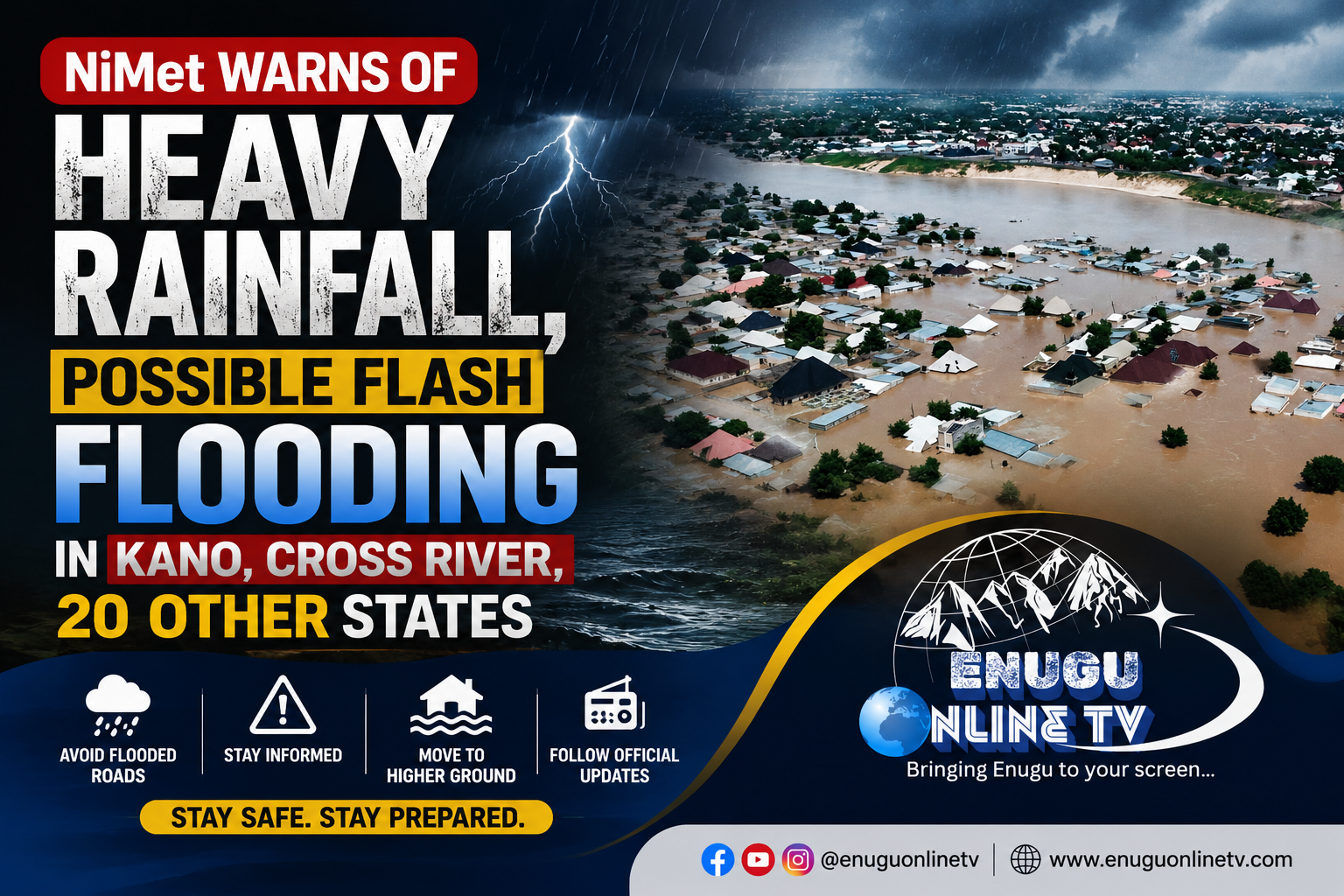
The Nigerian Meteorological Agency (NiMet) has issued fresh weather warnings over heavy rainfall and possible flash flooding in several parts of Nigeria. The warning is coming at a time when many communities across the country are already experiencing the effects of the rainy season. According to the report shared by Daily Times Nigeria, Kano, Cross River and several other states are among areas that could experience heavy rainfall and possible flooding. NiMet’s latest advisories show that residents in vulnerable areas need to take the warning seriously and prepare for sudden changes in weather conditions.
The latest NiMet flood advisory specifically identified 13 states at high risk of flash flooding between August 11 and August 20, 2026. They are Sokoto, Zamfara, Kebbi, Niger, Kaduna, Nasarawa, Adamawa, Plateau, Benue, Kogi, Taraba, Cross River and Akwa Ibom. The agency explained that its assessment was based on factors including expected rainfall intensity, the amount of moisture already present in the soil, drainage capacity, terrain and dam characteristics. This means that the warning is not simply about the amount of rain expected but also about how different locations may respond when heavy rain falls.
Kano has also appeared in NiMet’s recent weather forecasts, showing why residents in the state and other northern areas should remain alert during periods of heavy rainfall. In some communities, intense rain can overwhelm drainage systems within a short period of time. When water cannot flow away quickly, streets, homes, markets and roads may become flooded. Flash floods are particularly dangerous because they can develop rapidly, leaving residents with little time to move themselves, their families or their belongings to safer places. NiMet has repeatedly encouraged Nigerians to monitor official weather updates instead of waiting until flooding has already started before taking action.
The possible effects of the rainfall go beyond temporary flooding of roads. NiMet warned that flash floods could cause road closures, traffic problems and disruption to transportation. Electricity and telecommunications services could also be temporarily affected in some areas. Heavy rainfall can reduce visibility for motorists and may create difficulties for aviation operations. Roads, bridges and drainage systems can also suffer damage when large amounts of water move through communities. In areas where farms are located in low-lying places, excessive water can damage crops, livestock and agricultural equipment, creating additional economic problems for farmers and households.
Another concern is the health risk that can follow flooding. When floodwater remains in residential areas, it can mix with waste, sewage and other contaminants. Stagnant water can also create conditions that increase the spread of waterborne diseases. For this reason, residents should be careful about coming into direct contact with floodwater and should pay attention to advice from health and emergency authorities. Clean drinking water should also be protected from contamination. Communities that experience flooding should take sanitation seriously because the danger may continue even after the rain has stopped and the water begins to disappear.
NiMet has advised residents of flood-prone areas to avoid walking or driving through flooded roads, bridges or fast-moving water. This is especially important because the depth and strength of floodwater can be difficult to judge from a distance. A road that appears passable may have been weakened underneath or may contain dangerous currents. Motorists should therefore avoid taking unnecessary risks during heavy rainfall. Residents who live close to rivers, streams, drainage channels or other low-lying areas should remain alert and be prepared to move to safer locations if conditions worsen.
Farmers have also been advised to take precautionary measures. NiMet urged farmers to improve drainage around their farms and move livestock, machinery and harvested produce away from areas that are vulnerable to flooding. Early preparation can reduce losses if heavy rainfall occurs. Emergency management authorities have also been encouraged to strengthen monitoring, prepare response teams and maintain readiness throughout the warning period. This is important because flash flooding can happen quickly, and emergency workers may have only a short period to respond once water levels begin rising.
The latest warning is a reminder that flooding is not only an environmental problem but also a serious safety and economic issue. Government agencies, state authorities, community leaders and residents all have roles to play in reducing the impact of heavy rainfall. Authorities need to keep drainage systems clear, improve flood monitoring and communicate warnings quickly. Residents, on their part, should avoid blocking drainage channels with waste and should take official warnings seriously. As the rainy season continues, Nigerians in Kano, Cross River and other vulnerable areas should remain watchful and follow updates from NiMet and emergency agencies. Early preparation can help protect lives, homes, businesses, farms and public infrastructure when heavy rainfall occurs.