







By Isaac Mission
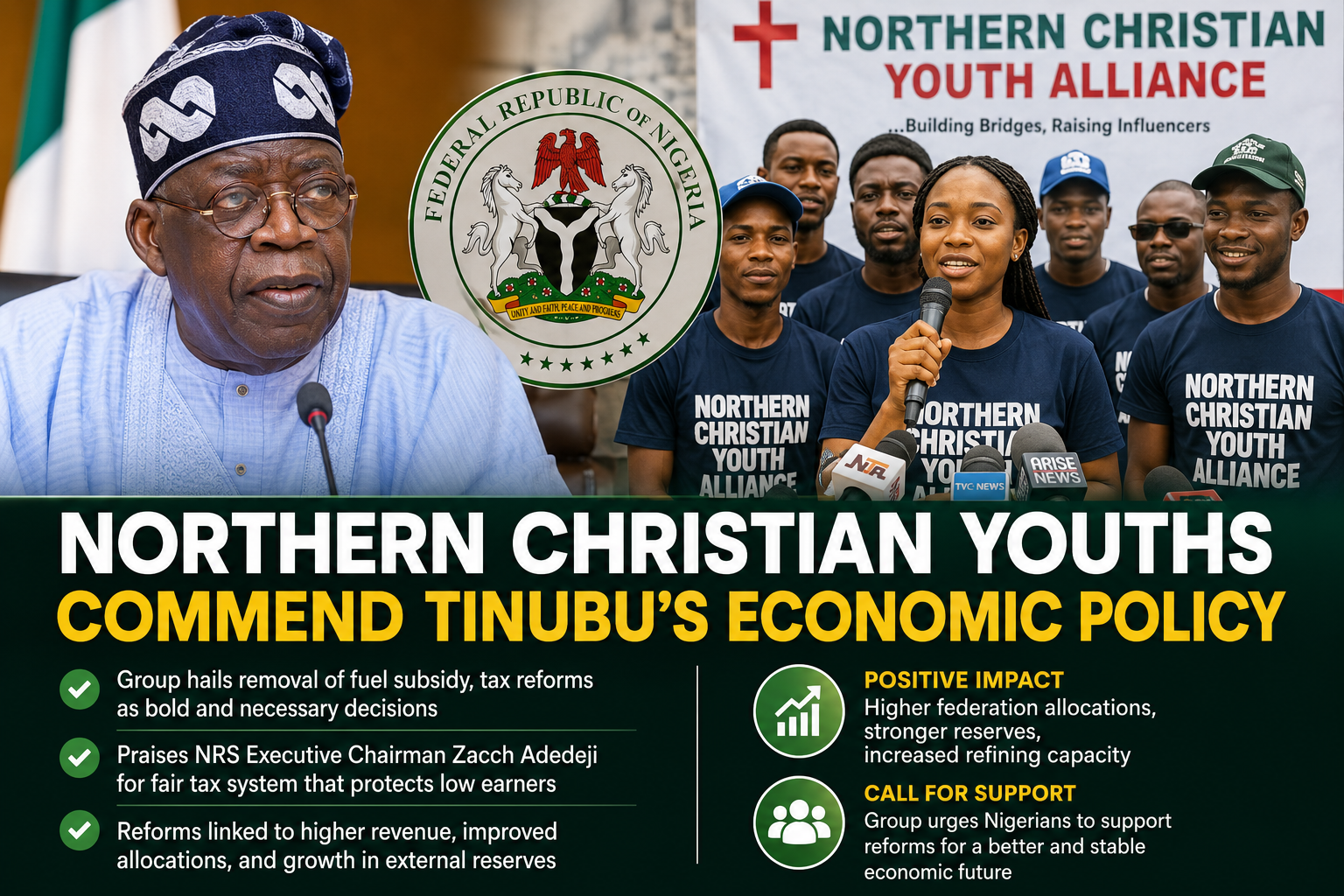
The Northern Christian Youth Alliance (NCYA) has expressed support for President Bola Ahmed Tinubu’s economic reform programme, describing the removal of the petrol subsidy and changes to Nigeria’s tax system as necessary steps towards improving the country’s finances.
The group made its position known in a statement issued on Tuesday, August 11, 2026, and signed by its spokesperson, Evangelist Benjamin Akoka.
The alliance also praised the Executive Chairman of the Nigeria Revenue Service (NRS), Zacch Adedeji, for his role in developing and implementing the government’s tax reforms.
According to the group, the new tax approach is designed to place a greater burden on higher-income earners and large businesses while reducing the impact on low-income Nigerians.
Group defends fuel subsidy removal
The NCYA described the removal of the petrol subsidy, which began in May 2023, as a difficult but necessary economic decision.
Akoka argued that continuing the subsidy would have placed an unsustainable burden on government finances. He referenced previous explanations by Adedeji that the subsidy effectively required government to cover the difference between the market cost of petrol and the price paid by consumers.
The group said the reform has contributed to changes in government revenue and the distribution of funds to states and local governments.
It also pointed to developments in Nigeria’s external reserves and domestic refining capacity as areas where it believes the country has recorded progress.
NCYA praises new tax framework
On taxation, the youth alliance said the government’s approach should focus more heavily on income and profits than on discouraging investment.
The group particularly highlighted provisions under which people earning up to ₦800,000 annually are exempt from personal income tax, while certain essential goods and services receive VAT relief.
The NCYA described the approach as an attempt to make the tax system more progressive, with higher earners and successful businesses expected to make larger contributions.
It also said the new laws were intended to consolidate existing tax legislation, simplify compliance and create a more streamlined framework for taxpayers.
Youth groups urged to look beyond immediate hardship
Akoka acknowledged that the reforms have created economic pressure for many Nigerians in the short term.
However, he appealed to youth organisations, religious bodies and civil society groups to consider the longer-term implications of the government’s policies.
He argued that the alternative to difficult reforms could have been a deeper fiscal crisis.
The NCYA said the Tinubu administration’s willingness to implement unpopular measures, combined with the work of revenue authorities, could provide the foundation for a more resilient economy.
Reforms remain politically significant
The endorsement comes as the Tinubu administration continues to defend its economic policies amid debate over their effects on households and businesses.
Supporters of the reforms have pointed to improvements in government revenues, financial-market activity and other economic indicators, while critics have continued to raise concerns about the cost-of-living impact on Nigerians.
The NCYA’s intervention adds another layer to the ongoing debate, particularly as political parties and interest groups begin positioning themselves ahead of the 2027 general elections.
For the alliance, the key issue is whether the current reforms can deliver stronger public finances and broader economic opportunities over time.