







By Peace Orjiani
ENUGU, NIGERIA—The United Nations Children’s Fund (UNICEF) has renewed its call for improved nutrition during the first 1,000 days of a child’s life, describing the period as the foundation for healthy brain development, physical growth, strong immunity, and lifelong well-being. The global child rights agency said ensuring adequate nutrition from conception until a child’s second birthday is one of the most effective ways to prevent malnutrition, reduce childhood illnesses, and improve long-term health outcomes.
UNICEF emphasized that exclusive breastfeeding, combined with the introduction of nutritious complementary foods produced locally, remains one of the most affordable and sustainable ways of ensuring children receive the nutrients they need to grow and develop properly.
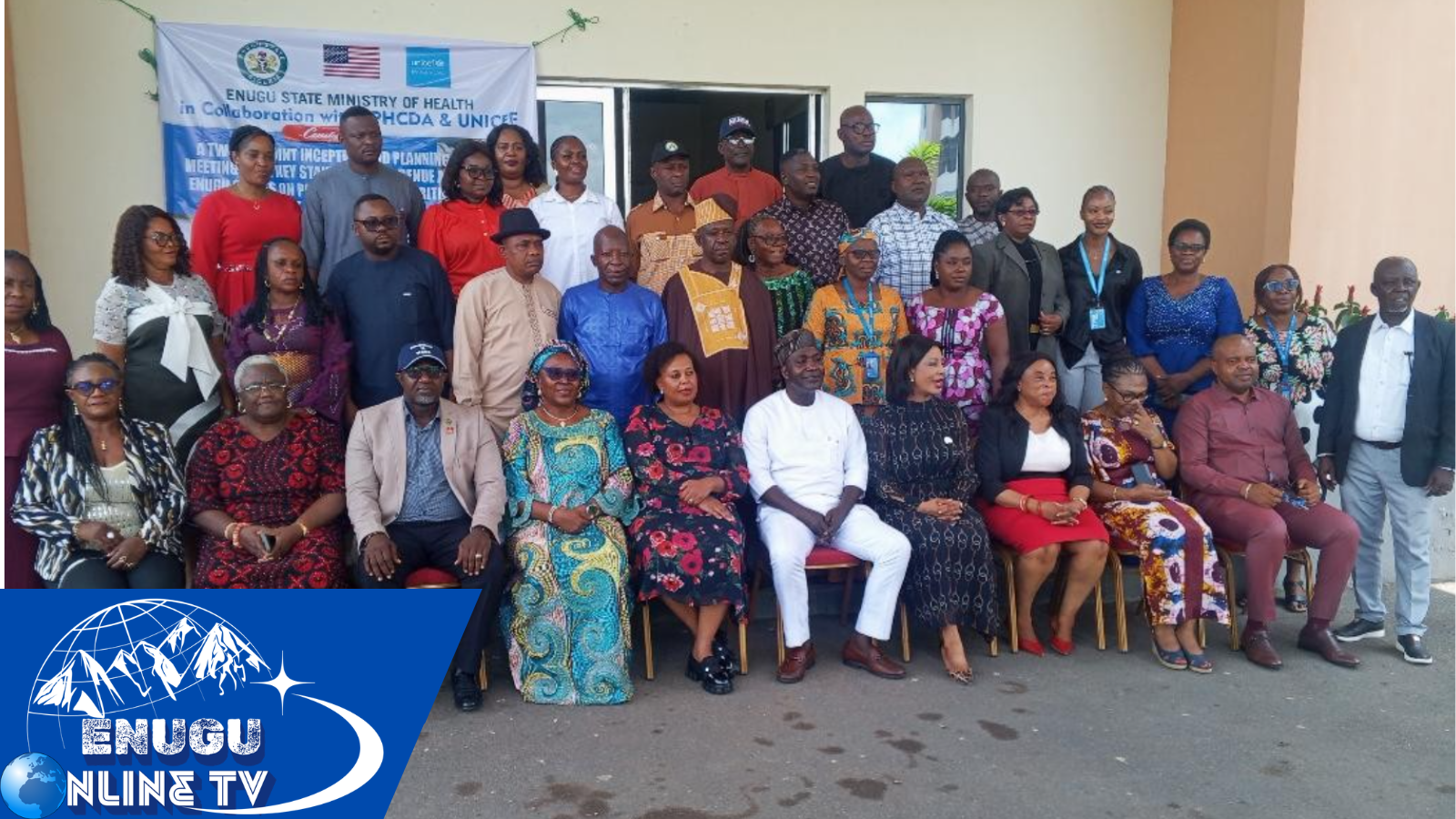
The organization made the appeal during a one-day review, planning, and scale-up meeting on the First 1,000 Days Dietary Diversity Initiative, themed “Combat Child Malnutrition and Enhance Healthy Growth,” which took place in Enugu on Monday and brought together government officials, development partners, health experts, local government representatives, and other stakeholders committed to improving child nutrition across the state.
Speaking during the meeting, UNICEF Nutrition Specialist at the UNICEF Enugu Field Office, Dr. Ngozi Onuora, explained that the first 1,000 days begin from the very first day of conception, covering the approximately 270 days of pregnancy and continuing through the first 730 days after birth, making a total of 1,000 days. She said this period represents the most critical window in a child’s life because the brain, immune system, and other vital organs experience rapid development that depends heavily on adequate nutrition.
According to Dr. Onuora, children who receive proper nutrition during this crucial stage have better chances of surviving infancy, achieving healthy physical growth, developing stronger cognitive abilities, and becoming productive adults later in life. She noted that poor nutrition during this period can have irreversible consequences, including stunted growth, weakened immunity, delayed brain development, and increased vulnerability to diseases.
She encouraged mothers to practice exclusive breastfeeding for the first six months after childbirth, stressing that breast milk alone provides all the nutrients and antibodies required for healthy growth during that period. After six months, she advised parents and caregivers to gradually introduce a wide variety of nutritious complementary foods while continuing breastfeeding.
Dr. Onuora urged families to make use of readily available local foods, including vegetables, maize, beans, yam, plantain, watermelon, and other locally grown crops that provide essential vitamins, minerals, proteins, and energy required for children’s healthy development. According to her, promoting dietary diversity through locally sourced foods remains one of the most practical and cost-effective ways to combat child malnutrition in communities.
Despite Enugu State’s rich agricultural resources and reputation as one of Nigeria’s major farming states, UNICEF expressed concern that many children in the state continue to suffer from poor nutrition. Dr. Onuora disclosed that approximately 15 percent of children in Enugu State are stunted, a condition that indicates chronic malnutrition and inadequate nutrient intake during the early years of life.
She described the statistics as disturbing, noting that a state blessed with fertile land and abundant food production should not continue recording such levels of child malnutrition. According to her, the figures demonstrate the need for greater public awareness, improved feeding practices, and stronger community participation in nutrition programs.
Dr. Onuora further explained that Enugu is among the states benefiting from a United States-supported nutrition program aimed at preventing malnutrition during the first 1,000 days of life. She revealed that UNICEF introduced the Dietary Diversity Initiative in Enugu and six other states across Nigeria to encourage healthier feeding practices among mothers and caregivers while reducing cases of stunting and undernutrition.
She stated that the program focuses on educating mothers about exclusive breastfeeding, dietary diversity, proper childcare practices, and sustainable livelihood activities that can improve household nutrition. According to her, these interventions are designed not only to improve children’s health but also to empower families economically.
The UNICEF Nutrition Specialist disclosed that the initiative is currently being implemented in Igbo-Etiti, Udi, and Nkanu West Local Government Areas, where women have received training in exclusive breastfeeding, complementary feeding, vegetable gardening, goat farming, and the production of nutritious complementary foods for young children.
She said many of the women participating in the program have shared positive testimonies about improvements in their children’s growth and health as a result of adopting the recommended feeding practices and income-generating activities.
Dr. Onuora also revealed that only 28 percent of children between six and twenty-three months of age in Enugu State receive the minimum recommended dietary diversity, meaning that many children do not consume enough varieties of food required for healthy growth and development.
According to her, the statistics indicate that nearly three out of every four children within that age group are not receiving the balanced nutrition necessary for proper physical and mental development, making it imperative for governments, development partners, and communities to intensify nutrition education and intervention programs.
In her remarks, the Enugu State Commissioner for Human Development and Poverty Eradication, Prof. Bernadette Okoli, described the first 1,000 days of life as one of the most important stages in human development. She noted that adequate nutrition during this period significantly increases a child’s chances of survival while supporting healthy growth, brain development, learning ability, and future productivity.
Prof. Okoli explained that the Enugu State Government recognizes malnutrition as not only a public health issue but also a development and poverty challenge. According to her, families living in poverty often struggle to provide nutritious meals, quality healthcare, and other essential services required for proper child development.
She said the review and planning meeting provided stakeholders with an opportunity to assess the progress made so far, strengthen partnerships among implementing agencies, identify existing gaps, and develop practical strategies for expanding the dietary diversity initiative to more communities across Enugu State.
The commissioner reaffirmed the commitment of the state government to supporting programs that improve maternal and child nutrition, adding that investing in children’s health today would contribute significantly to the state’s future social and economic development.
Also speaking during the meeting, the Deputy Chairman of Aninri Local Government Area, Hon. Mary Oluchi Nwani, emphasized the importance of proper nutrition during early childhood. She stated that local government councils have a critical role to play in promoting healthy feeding practices through community sensitization, agriculture, livestock farming, and the production of nutritious foods using locally available crops and grains.
She explained that strengthening local food production and encouraging families to utilize locally grown foods would contribute significantly to reducing malnutrition among children while improving food security in communities.
Following the positive outcomes recorded in Nkanu West, Udi, and Igbo-Etiti Local Government Areas, UNICEF announced plans to expand the First 1,000 Days Dietary Diversity Initiative to additional local government areas across Enugu State.
The organization expressed confidence that scaling up the program would enable more mothers and caregivers to access nutrition education, adopt healthy feeding practices, and provide children with balanced diets that support proper growth and development.
UNICEF added that expanding the initiative would further strengthen efforts to reduce child malnutrition, improve child survival rates, and ensure that every child in Enugu State has the opportunity to achieve optimal physical and cognitive development during the most critical period of life.
The meeting was jointly supported by the Child Nutrition Fund (CNF) and the United States government. It attracted local government chairmen, deputy chairmen, permanent secretaries, development partners, nutrition experts, health professionals, community leaders, and other stakeholders working together to improve maternal and child nutrition outcomes across Enugu State.