







By Faith Eze
An ordinary fishing trip along the southern coast of Ireland took a dangerous turn on August 11, 2026, when a fisherman suffered a severe leg injury from a shark bite. The incident triggered a large emergency response involving multiple rescue teams and an Irish Coast Guard helicopter.
While shark attacks in Irish waters are extremely rare, this event serves as a reminder of the unexpected dangers that ocean activities can bring. Below are the details of what happened, how emergency crews responded, and the context surrounding shark species in Ireland.
What Happened During the Incident?
On Tuesday afternoon, a small five-meter pleasure boat carrying five people was located about four miles off Ram Head, near Ardmore in County Waterford. The group was out on the water for a fishing trip.
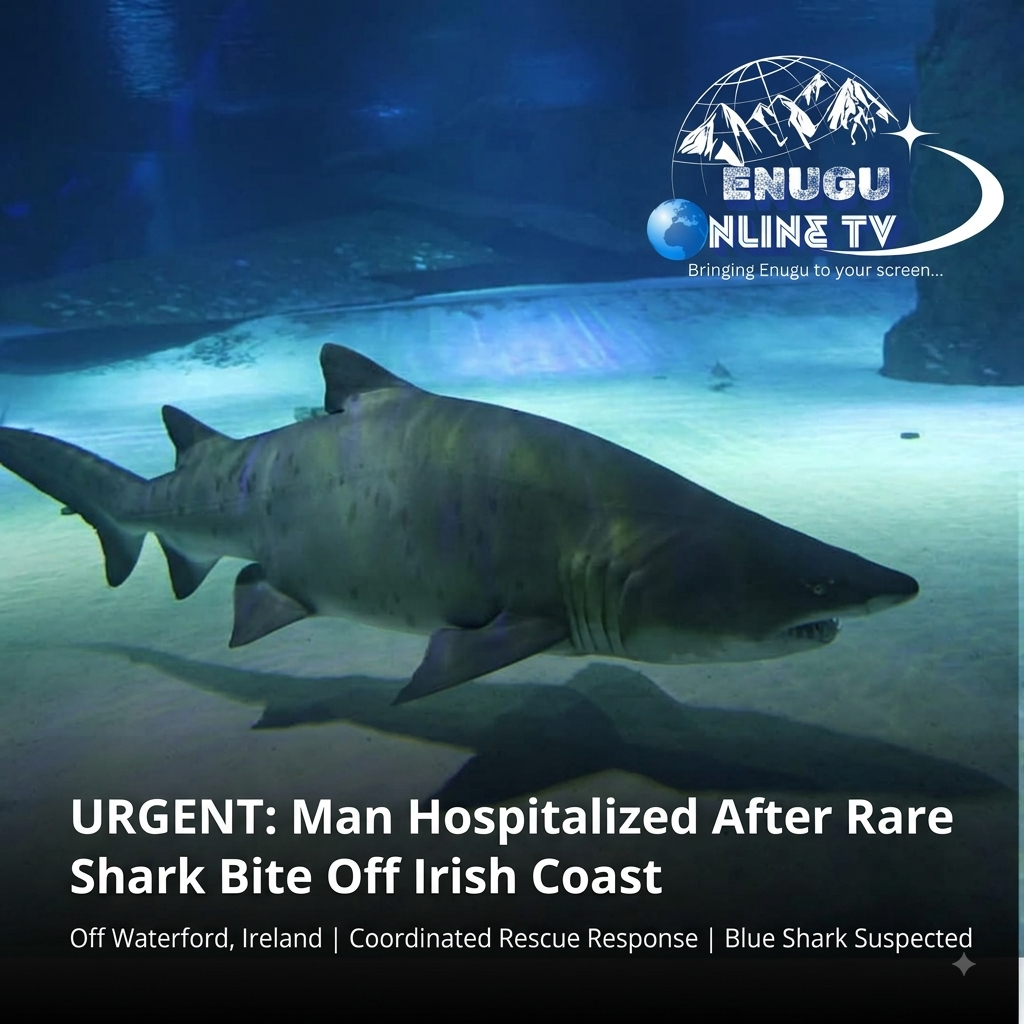
According to official reports, one of the men on board caught a shark—believed to be a blue shark—and brought it onto the small vessel. While attempting to handle and control the creature on the deck, the shark bit the man on his leg, causing significant injuries.
At approximately 4:15 PM, a emergency 999/112 call was placed to the Irish Coast Guard’s Marine Rescue Co-ordination Centre (MRCC) in Dublin. The crew on board reported that a passenger was bleeding from a serious shark bite wound and needed immediate medical attention.
The Emergency Rescue Operation
Given the remote location of the boat and the nature of the injury, emergency services immediately launched a coordinated multi-agency response.
1. Rescue Helicopter Deployment
The Irish Coast Guard dispatched its Waterford-based helicopter, Rescue 117, directly to the offshore location.
2. RNLI Lifeboat Support
Two lifeboat stations were alerted to assist:
Ballycotton RNLI: Launched their all-weather Trent-class lifeboat, The Austin Lidbury, around 4:30 PM.
Youghal RNLI: Sent an inshore lifeboat to support the operation.
3. Airlifting the Casualty
Upon reaching the vessel, the crew of Rescue 117 successfully winched the injured fisherman off the small boat and into the helicopter. He was immediately flown to Cork University Hospital, where he was handed over to the Health Service Executive (HSE) medical team for emergency treatment.
The remaining four people on board the pleasure boat did not sustain any injuries. They were able to navigate the boat back to Dungarvan harbor safely, allowing the lifeboat crews to stand down.
What Kind of Shark Was Involved?
Reports indicate that the creature involved was a blue shark (Prionace glauca).
Key Facts About Blue Sharks in Ireland:
Appearance: Blue sharks are sleek, streamlined ocean predators with distinct dark blue backs and vibrant blue sides. They typically grow to about 2 to 3 meters (6.5 to 10 feet) in length.
Habitat: They visit the warmer waters off Ireland’s southern coast during the summer months.
Behavior: Blue sharks are generally passive toward humans in open water. They rarely display aggressive behavior toward swimmers or divers.
Fishing Incidents: Almost all documented blue shark “attacks” in coastal regions happen when anglers catch the shark on a hook and haul it aboard a small boat. When pulled out of the water, a stressed shark will thrash defensively, which can lead to bites.
How Common Are Shark Attacks in Ireland?
Shark attacks off the Irish coast are extremely rare.
Ireland’s cool ocean waters host over 30 different species of sharks, skates, and rays, including large species like the basking shark (which feeds exclusively on plankton and poses no threat to humans). Predatory species like blue sharks, porbeagle sharks, and mako sharks frequent deeper waters off the coast, but unprovoked attacks on swimmers or surfers in Ireland are virtually non-existent.
Most shark encounters in Irish waters involve catch-and-release sport fishing. When properly managed by experienced anglers using correct handling tools, these encounters are safe for both the anglers and the fish. However, bringing a large wild predator into a confined space—like a 5-meter craft—presents significant safety risks.
Ocean Safety Tips for Anglers and Boaters
This incident highlights the importance of safety when encountering marine life during offshore trips. Here are safety guidelines recommended for recreational boaters and anglers:
Avoid Bringing Large Sharks On Board: Whenever possible, unhook or cut the line while keeping the shark in the water beside the boat. Bringing a live shark onto a small deck creates a dangerous environment for everyone on board.
Use Proper Handling Equipment: If handling marine life is necessary, use specialized unhooking pliers, heavy-duty gloves, and tail ropes to keep control of the animal.
Carry Communication Gear: Always carry reliable communication tools on board, such as a VHF marine radio, satellite tracker, or charged mobile phone to contact emergency services immediately.
Know Marine Emergency Numbers: In Ireland and the UK, dial 999 or 112 and ask for the Coast Guard if an emergency occurs at sea.
Conclusion
Thanks to the rapid response of the Irish Coast Guard, Rescue 117, and the volunteer RNLI crews from Ballycotton and Youghal, the injured man received medical treatment at Cork University Hospital. While shark incidents in Ireland remain rare, this event underscores the need for caution when handling ocean wildlife on recreational boats.