








By Faith Eze
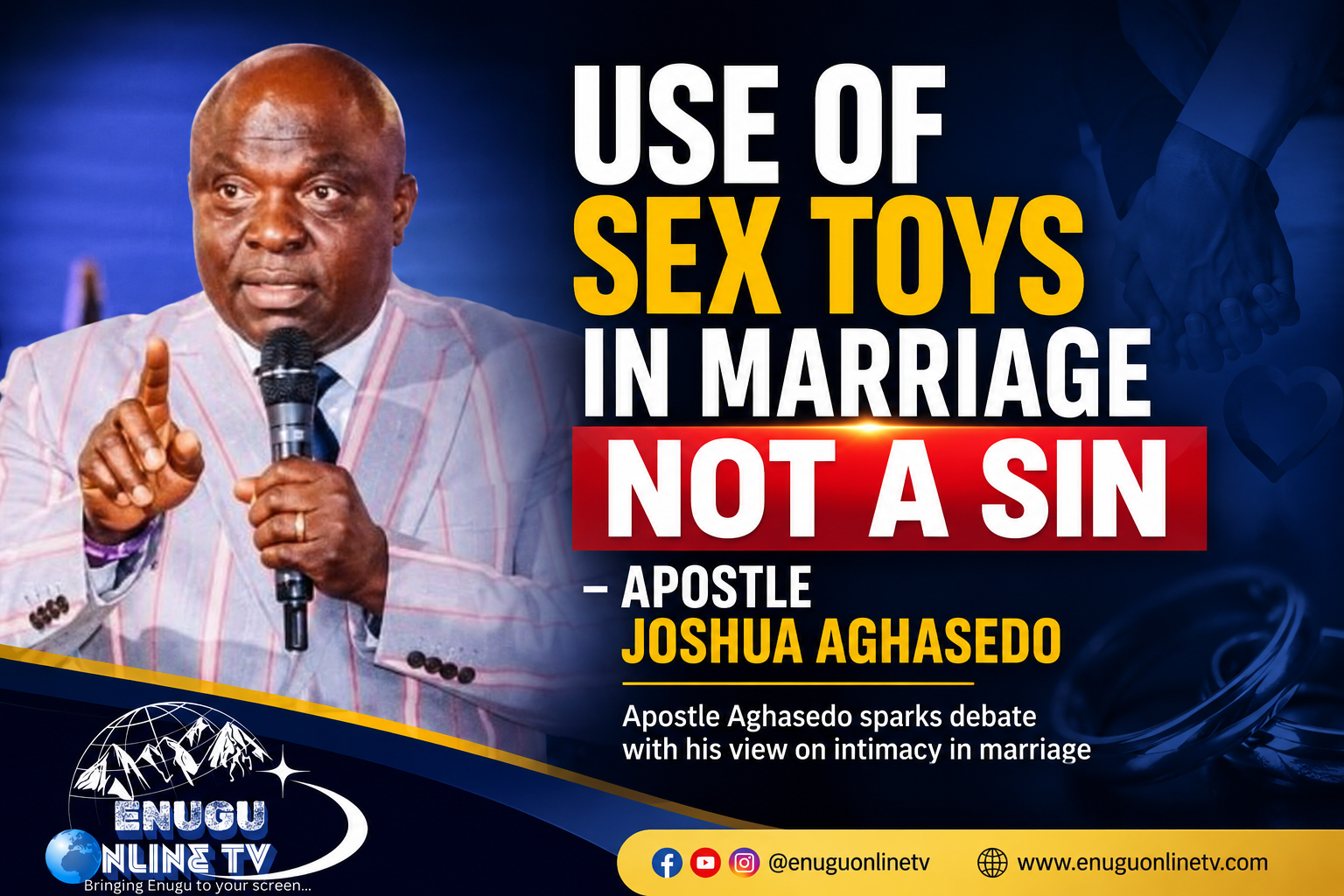
Apostle Joshua Aghasedo has sparked a fresh debate among Nigerians and Christians after stating that the use of sex toys within marriage is not a sin. His position has attracted attention because issues relating to sexual intimacy are often considered private and sensitive, especially within religious communities. The statement, which was reported by PUNCH Newspapers, has generated different reactions from people who have different interpretations of Christian teachings about intimacy in marriage. While some people agree with the pastor’s position, others believe that Christians should avoid the use of such devices because of their personal understanding of biblical principles.
According to the report, Apostle Aghasedo’s comments were focused specifically on married couples. His position is that the use of sex toys between a husband and wife should not automatically be regarded as sinful. The distinction is important because his comments were made in the context of intimacy within marriage rather than sexual activities outside marriage. A video and posts circulating online have also drawn attention to his explanation of the subject. His statement has consequently encouraged many people to discuss whether modern sexual aids can have a place in Christian marriages.
The subject has become controversial partly because the Bible does not specifically mention modern sex toys. The Bible was written long before such devices existed, meaning there is no direct biblical verse that specifically says they should or should not be used. Because of this, Christians often rely on broader biblical principles when making decisions about the issue. Some believe that anything that could encourage lust or inappropriate sexual behaviour should be avoided, while others believe that married couples have freedom in their private intimate lives as long as their actions remain within the boundaries of marriage, love, respect and mutual agreement.
One Bible passage often considered when discussing intimacy between married couples is 1 Corinthians 7:3, which speaks about husbands and wives fulfilling their responsibilities to each other. The passage highlights the importance of mutuality in marriage and shows that intimacy is not meant to be the responsibility or right of only one partner. However, because the Bible does not directly address sex toys, Christians may reach different conclusions based on their personal convictions, church teachings and understanding of Scripture. This explains why there is no single opinion among Christians on whether married couples should use such devices.
Another important issue is consent and mutual agreement. Even if a husband or wife believes that using a sex toy is acceptable, the other partner should not be pressured into doing something they are uncomfortable with. Marriage should provide an environment where couples can discuss sensitive issues honestly and respectfully. No spouse should be forced, threatened or insulted because of their views about intimacy. Whether a couple chooses to use a sexual aid or not, their decision should be based on communication, respect and genuine agreement between both partners.
There are also Christians who completely reject the use of sex toys in marriage because of their religious convictions. They may believe that sexual intimacy should remain between husband and wife without the introduction of artificial devices. Others may have a different view and believe that married couples can make private decisions about intimacy as long as those decisions do not involve infidelity, pornography or sexual activities outside the marriage. These different opinions show that the subject is not as simple as saying that every Christian must follow one particular position.
Apostle Aghasedo’s statement has therefore opened an important conversation about how Christian couples approach intimacy in modern times. While people may disagree with his position, the discussion also highlights the need for married couples to communicate openly about their needs, expectations and personal convictions. Intimacy is only one part of marriage, and it should not become more important than love, trust, emotional connection and faithfulness. Couples should also be careful about allowing social media arguments to determine what happens in their private relationships, because every marriage has its own circumstances and convictions.
Ultimately, the debate over Apostle Joshua Aghasedo’s statement is likely to continue because Christians have different interpretations of Scripture and personal beliefs about marriage and intimacy. His position has challenged the idea that the use of sex toys within marriage is automatically sinful, while those who disagree with him remain free to hold their own religious convictions. What is important is that married couples approach sensitive issues with honesty, respect and mutual understanding. The conversation also reminds the public that questions about marriage and intimacy require thoughtful discussion rather than insults or condemnation. For Christians who are uncertain about the issue, they may choose to study Scripture, consider their personal convictions and seek guidance from trusted religious leaders before making decisions within their marriages.