





Here is a rewritten and clearer version of your news report, with improved flow, structure, and originality while preserving the key points:
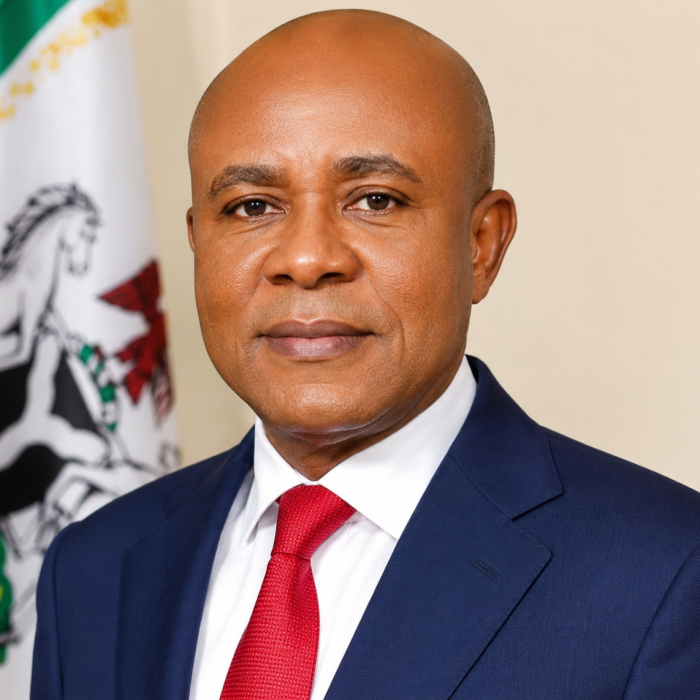
Enugu State Governor, Dr. Peter Mbah, has reaffirmed his administration’s commitment to transforming the state through massive investments in infrastructure, healthcare, education, security, agriculture, tourism, and technology.
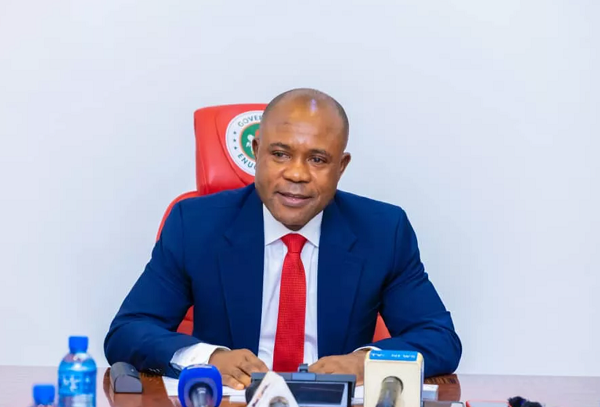
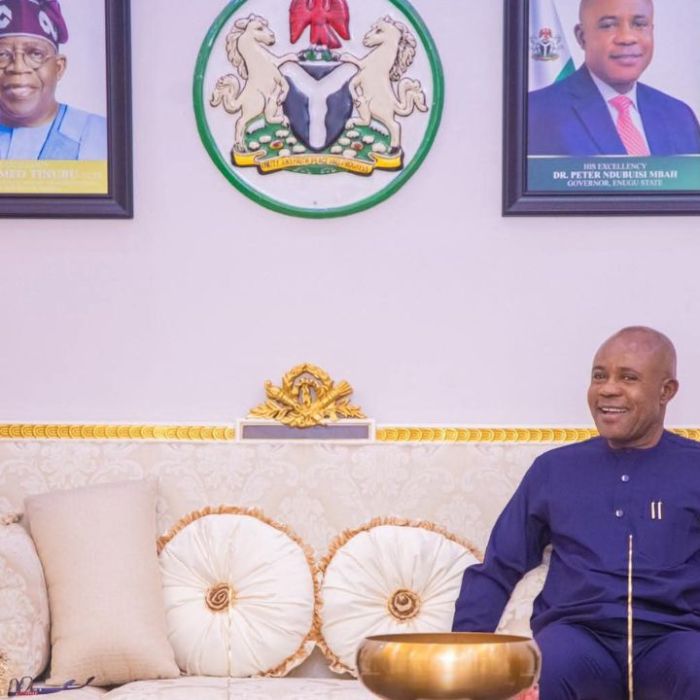
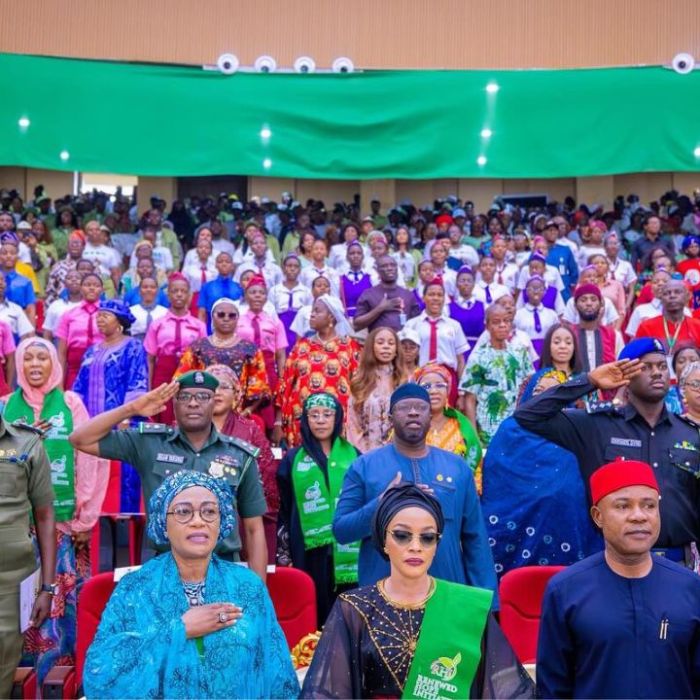
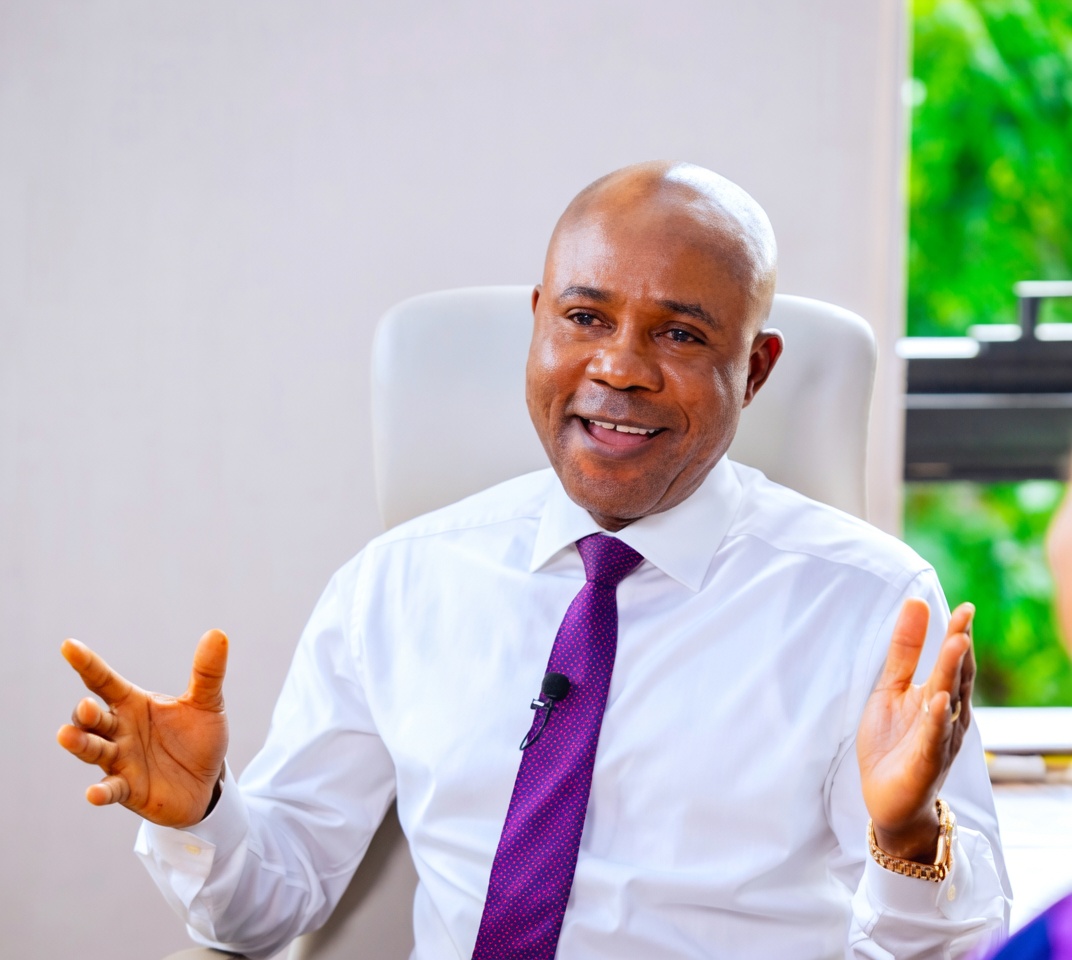
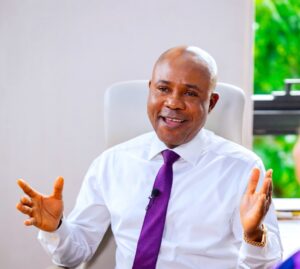
Speaking during an interactive session with the Renewed Hope Media Team in Enugu, the governor explained that his administration’s developmental achievements were made possible through strategic planning and support from the administration of President Bola Ahmed Tinubu.
Mbah, widely regarded as “Mr. Project” because of his aggressive development drive, highlighted major achievements including the construction of AI-powered Smart Schools, the establishment of a high-tech Command and Control Security Centre, agricultural mechanisation projects, and the development of an international hospital.
Vision Behind the International Hospital
Explaining the motivation for building the state’s international hospital, Governor Mbah said the project is part of a broader economic blueprint designed to reposition Enugu.
According to him, his administration came into office with three major goals: expanding Enugu’s economy from $4.4 billion to $30 billion within eight years, eliminating poverty, and making the state a top destination for tourism, investment, and quality living.
He noted that achieving such ambitious targets required bold and unconventional strategies.
“Our growth model is government-enabled but private sector-driven,” he said, stressing that the government must create the right environment for private investments to thrive.
Mbah identified security and quality healthcare as two major concerns for investors. He explained that no serious investor would commit resources to a state where security is unstable or where access to quality healthcare is poor.
He added that the international hospital was built to tap into Nigeria’s growing medical tourism market, estimated at $2 billion annually.
“Our goal is to capture at least 10 percent of that market, which translates to about $200 million,” he stated.
The hospital, he said, is equipped with advanced medical technology, including specialized diagnostic and oncology facilities capable of handling complex treatments locally.
Tourism and Aviation Expansion
On tourism development, Governor Mbah said the state is targeting three million visitors annually.
He explained that achieving this target requires improved accessibility, prompting investments in aviation and airport expansion.
“When we came in, only four or five aircraft landed in Enugu daily. That was far below what we needed,” he said.
To address this, the government invested in aviation infrastructure and worked with private investors to improve operations at Akanu Ibiam International Airport.
Mbah disclosed that flight traffic into Enugu has increased to nearly 20 flights daily, with a long-term target of 100 flights per day.
He also announced major tourism projects, including:
- A 300-metre zipline, expected to be the longest in Africa
- A 5.6-kilometre cable car system
- A giant “Cross of Hope” tourism site
- Religious tourism centres including a monastery and chapel
These attractions, he said, are designed to make Enugu a leading tourism destination.
The governor further revealed plans to launch direct international flights from Enugu to the United States, United Kingdom, and China before the end of the year.
Technology-Driven Security
Governor Mbah described security as the foundation of sustainable development.
He said his administration has invested heavily in advanced surveillance systems to monitor activities across the state, including entry and exit routes.
According to him, Enugu has identified nine major gateways, all of which are under surveillance.
The government also established a Distress Response Squad (DRS) equipped with AI-powered cameras, mobile surveillance systems, and body cameras.
He explained that DRS vehicles can monitor activities within a two-kilometre radius, while command officers remotely track field operations in real time.
Mbah said this technological approach allows security agencies to prevent crime and respond quickly to threats.
He commended the Nigeria Police Force>, Department of State Services>, military, and civil defence corps for their collaboration.
Smart Education Reform
On education, Mbah said his administration has consistently allocated 33 percent of the state budget to education over the past three budget cycles.
He described the investment as necessary to build long-term human capital.
So far, the state has constructed over 7,000 classrooms and built 267 Smart Schools equipped with:
- Robotics labs
- Artificial Intelligence learning centres
- ICT facilities
- 3D printers
However, he stressed that infrastructure alone is insufficient without quality teachers.
To address this, the state established the Centre for Experiential Learning and Innovation (CELI) to train teachers in modern teaching methods.
Mbah said the education system has also shifted from rote memorisation to experiential learning, where students learn through practical problem-solving and innovation.
He added that Enugu now offers 12 years of free and compulsory education, beginning from early childhood learning.
According to him, sustained investment in education is critical to reducing poverty and preventing future insecurity.
“If we equip children with relevant skills today, we reduce crime tomorrow,” he said.
Impact of Tinubu’s Reforms
Governor Mbah praised President Tinubu’s economic reforms, saying they have significantly increased financial resources available to states.
He pointed to fuel subsidy removal, foreign exchange reforms, tax restructuring, and student loan initiatives such as NELFUND as major enablers of development.
According to him, these reforms have given sub-national governments greater fiscal capacity to execute impactful projects.
“What we are doing today at this scale would have been difficult without the bold reforms of Mr President,” he said.
Agricultural Mechanisation
Speaking on agriculture, the governor said his administration sees farming not just as food production but as a major economic sector.
He announced plans to establish over 260 farm estates across Enugu to help smallholder farmers transition from subsistence farming to mechanised agriculture.
The estates will provide farmers with:
- Access to tractors and machinery
- Agricultural training
- Storage facilities
- Aggregation centres
- Processing plants
Mbah disclosed that the state currently has a database of more than 18,000 smallholder farmers who will benefit from the programme.
He said the initiative is designed to increase productivity, create jobs, and strengthen food security while driving economic growth across all parts of the state.
Governor Mbah maintained that his administration’s development model ensures no community is left behind, as investments in education, healthcare, agriculture, and infrastructure are spread across all 260 wards in Enugu State.