



















By Isaac Mission
The Executive Secretary of the National Sugar Development Council (NSDC), Mr. Kamar Bakrin, has urged governments at all levels to implement bold industrial reforms to lower production costs and improve the competitiveness of Nigerian manufacturers.
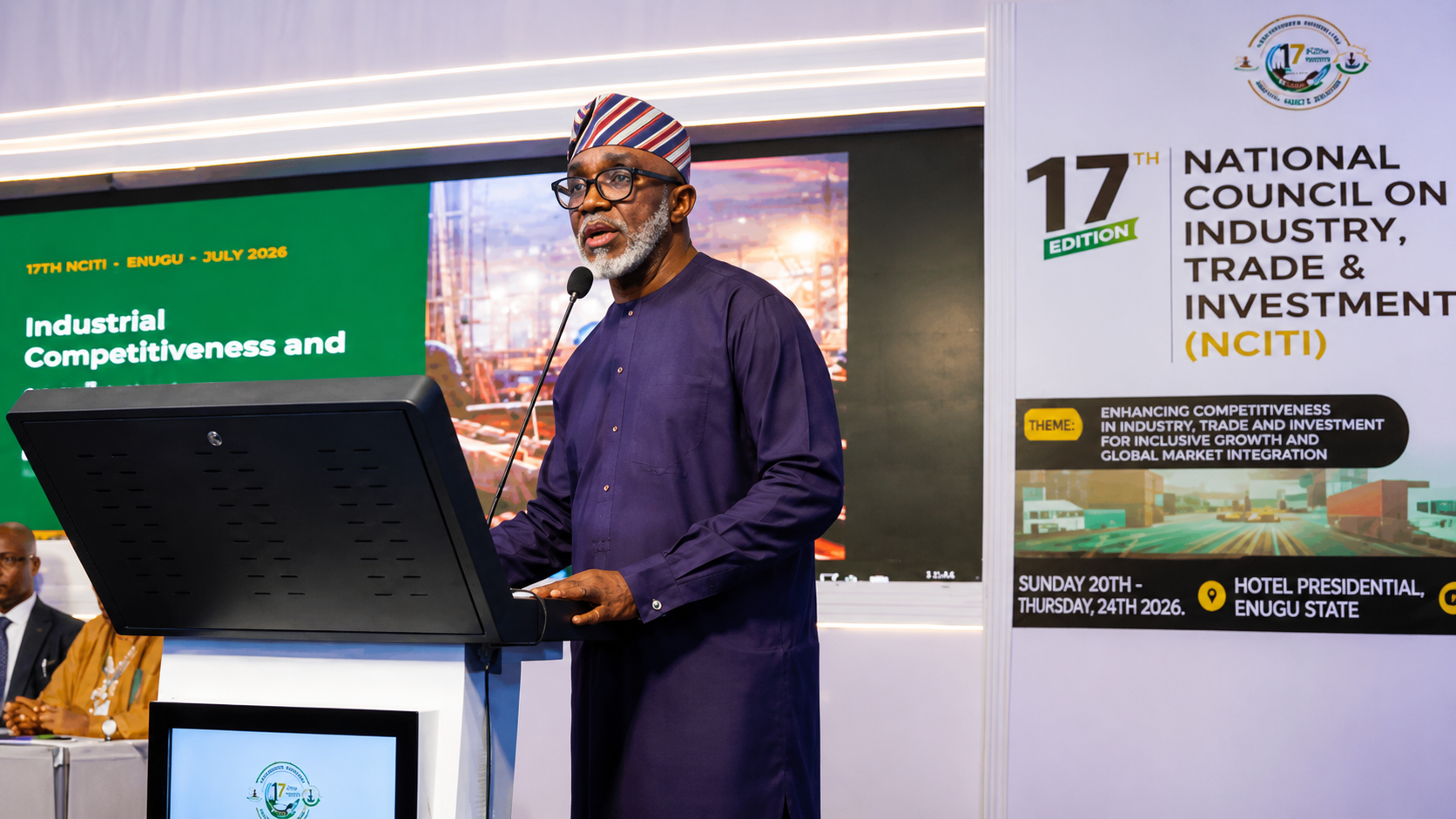
Speaking during the technical session of the 17th National Council on Industry, Trade and Investment (NCITI) in Enugu, Bakrin outlined a strategy to strengthen local industries and enable Nigeria to maximise opportunities presented by the African Continental Free Trade Area (AfCFTA).
He noted that Nigerian manufacturers currently face significantly higher production costs than competitors in countries such as Vietnam and China, largely due to expensive electricity, high borrowing costs and poor logistics, making locally produced goods less competitive.
According to him, industries in Vietnam pay around eight US cents per kilowatt-hour for electricity, while those in China pay about 10 cents. In contrast, Nigerian manufacturers pay roughly 15 cents on the national grid, with costs rising to nearly 30 cents when factories rely on diesel generators.
Bakrin disclosed that manufacturers spent an estimated ₦1.34 trillion on self-generated electricity last year, describing the situation as one where many factories are forced to operate private power plants in addition to their core businesses.
He also pointed to the high cost of financing, noting that manufacturers in Nigeria pay between 27 and 35 per cent interest on working capital loans, compared to around nine per cent in Vietnam and three per cent in China.
In addition, he highlighted Nigeria's weak logistics performance, saying delays at ports and inefficient transport systems continue to increase production costs and reduce the competitiveness of locally made products.
Despite Nigeria's large domestic market and access to over 1.4 billion consumers under AfCFTA, manufacturing contributes only about eight per cent to the country's Gross Domestic Product (GDP), while factory capacity utilisation remains below 60 per cent.
Bakrin stressed that the country's challenge is not insufficient demand but the high cost of production, insisting that reducing production costs would make Nigerian products more competitive across Africa.
He also said recent economic reforms, improved macroeconomic stability and growing foreign reserves have created favourable conditions for industrial expansion, adding that Nigeria must take advantage of shifting global supply chains to attract more manufacturing investments.
Citing the rapid growth of Nigeria's urea industry as evidence of what deliberate policies can achieve, Bakrin explained that production capacity increased from about 500,000 tonnes in 2005 to 6.5 million tonnes, making Nigeria one of the world's leading exporters of nitrogen fertiliser.
To accelerate industrial development, he proposed several measurable targets, including reducing electricity costs for industrial clusters to between eight and 10 US cents per kilowatt-hour, providing manufacturers with single-digit interest loans, cutting port clearance time to less than seven days and doubling worker productivity by 2030.
He further recommended that every state establish at least one industrial cluster with dedicated power within the next year, while federal and state governments should harmonise taxes, remove illegal checkpoints on industrial routes and simplify land acquisition processes for investors.
Bakrin also advocated the introduction of an annual State Industrial Competitiveness Index to rank states based on infrastructure, power supply, taxation, logistics and ease of doing business.
He maintained that government incentives should be tied to measurable performance rather than treated as permanent entitlements, urging policymakers to focus on practical outcomes that support industrial growth.
According to him, stronger manufacturing will create millions of jobs, reduce dependence on imports, strengthen the naira through increased exports and provide more opportunities for young Nigerians entering the labour market each year.
He concluded by calling for future NCITI meetings to focus on measurable progress in expanding manufacturing, lowering production costs and positioning Nigeria as a leading industrial hub on the African continent.