

















Enugu, popularly known as the Coal City, is one of the most well-known states in Southeastern Nigeria. It is rich in history, culture, and natural resources. But many people don’t know the full story of how Enugu was founded and how it got its famous nickname.
This blog will take you through the journey of how Enugu started, the discovery of coal, its role in Nigeria’s growth, and how it became the Enugu State we know today.
A Quiet Settlement in the Hills
Before Enugu became a modern city, it was a quiet, hilly area mainly occupied by farming communities. The name “Enugu” comes from two Igbo words, Énú Ụ́gwụ́, meaning hilltop. The area is full of hills, and that is how the name was formed.
The people living in this area were mostly from the Ngwo and Ogui Nike communities. They were peaceful and lived by farming, fishing, and trading with neighboring villages.
The Discovery of Coal in Enugu
Everything changed in 1909 when a British geologist named Albert Kitson came to the Enugu. While exploring the hills in Udi, he discovered something that would change the future of Enugu, which is coal.
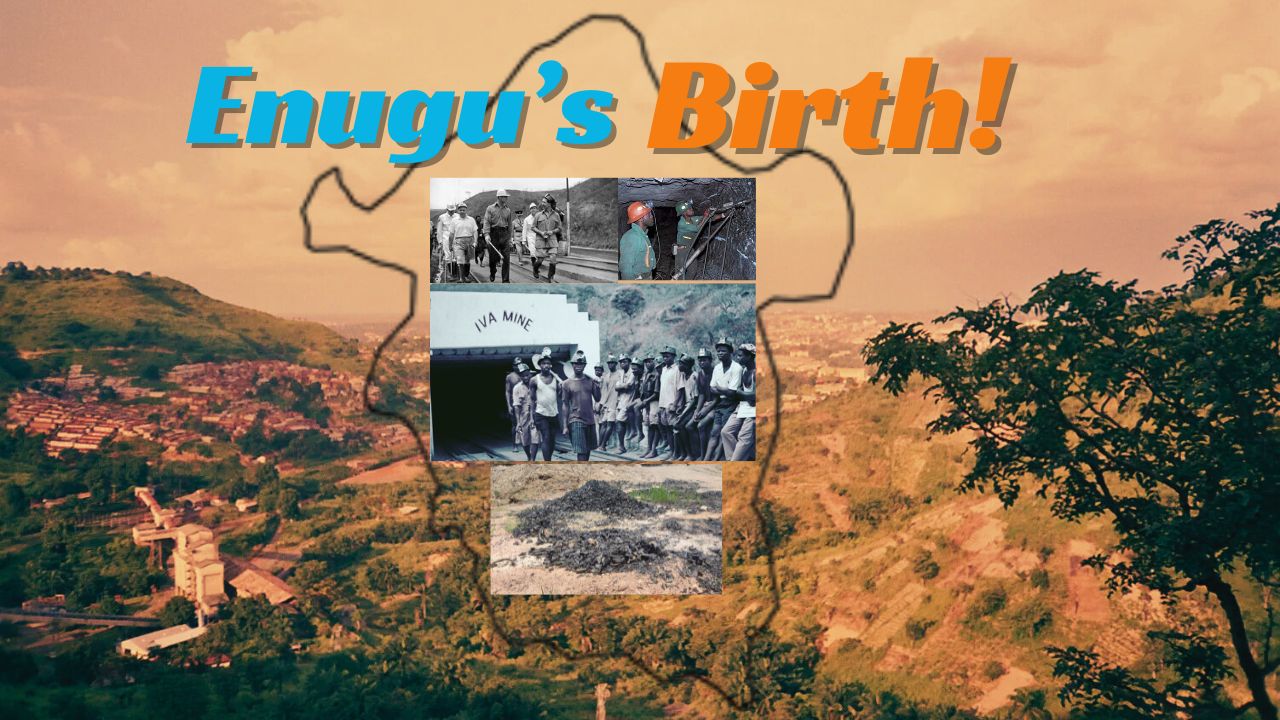
Coal is a black rock used as fuel to produce heat and energy. In the early 1900s, it was very valuable. When the British found out there was coal in Enugu, they quickly decided to mine it and use it to power their trains, ships, and factories.
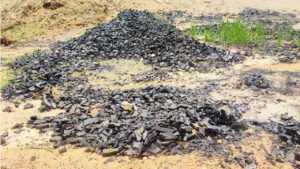
However, in 1915, the British officially started mining coal in the Udi Hills, near what is today called Ngwo. They built the first coal mine in Nigeria, and Enugu became the center of coal production.
This was the birth of what we now call the Coal City.
The Growth of Enugu Town
As coal mining grew, so did the town of Enugu. Many people from different parts of Nigeria, especially the Southeast, Middle Belt, and South-South, moved to Enugu to work in the mines.The British colonial government also built railways to carry coal from Enugu to the ports in Port Harcourt, where it would be shipped abroad. This railway line connected Enugu to many parts of Nigeria, making it an important transportation and business center.
Soon, the town had European-style buildings, roads, schools, churches, and markets. Enugu became a mix of Nigerian culture and British influence.
By the 1920s and 1930s, Enugu had grown into a proper city.
Struggles and the Iva Valley Massacre
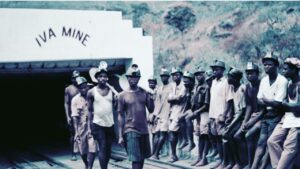
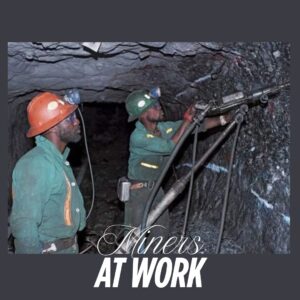
While coal brought jobs and development, it also came with hardship. The coal miners worked in tough and dangerous conditions. They were poorly paid and had few rights.
In 1949, a terrible event happened in Iva Valley, one of the coal mining areas in Enugu. The miners went on strike, asking for better pay and working conditions. But the British police responded with violence, shooting and killing 21 coal miners.
This event, known as the Iva Valley Massacre, shocked the country and played a major role in Nigeria’s fight for independence. It showed the world how badly Nigerian workers were being treated by the colonial government.
Enugu and Nigerian Politics
Because of its growing importance, Enugu also became a political center. In 1956, it was chosen as the capital of the Eastern Region of Nigeria. This made it the home of leaders like Dr. Nnamdi Azikiwe and Dr. Michael Okpara, two key figures in Nigeria’s history.Enugu was at the heart of Igbo politics and identity. It became the voice of the East and played a big role in national debates, especially during the fight for independence.
The Biafran War and Enugu’s Hard Times
In 1967, after years of political problems, the Eastern Region declared itself the Republic of Biafra, leading to the Nigerian Civil War (also called the Biafran War).
Enugu was declared the capital of Biafra, and this made it a target for the Nigerian government forces. In October 1967, Enugu fell to federal troops. The city suffered from bombings, hunger, and destruction during the war.
Many buildings and homes were destroyed, and people had to start rebuilding their lives from scratch after the war ended in 1970.
Enugu State Is Born
After the war, Enugu remained part of Anambra State until August 27, 1991, when the Nigerian government created Enugu State as its own state. The new state was made up mostly of the old Enugu division, with Enugu city as its capital.
The creation of Enugu State gave the people more control over their affairs. It also helped bring development closer to home, as new schools, roads, hospitals, and businesses started springing up.
Today, Enugu State has 17 local government areas and is known for its rich culture, hospitality, and peaceful environment.
Enugu Today is Still the Coal City, Still Rising
Even though coal mining is no longer the main source of income, the name “Coal City” still holds great meaning for the people of Enugu. It reminds them of their roots, strength, and history.Enugu today is a city of students, business people, civil servants, artists, and dreamers. It is home to the University of Nigeria, Nsukka (UNN), Enugu State University (ESUT), and many other institutions.
The city has grown to become one of the most beautiful and calm cities in Nigeria. Its peaceful hills, red earth, and warm people make it a unique place.
Finally, the story of Enugu is a story of growth, struggle, and survival. From a quiet hilltop village, it grew into a colonial mining town, a political capital, a war zone, and finally, a proud Nigerian state.
The coal may be fading, but the fire of the people continues to burn.
Enugu is more than just a city, it is a symbol of hope, unity, and persistence. That’s what makes it truly The Coal City.