









By Faith Eze
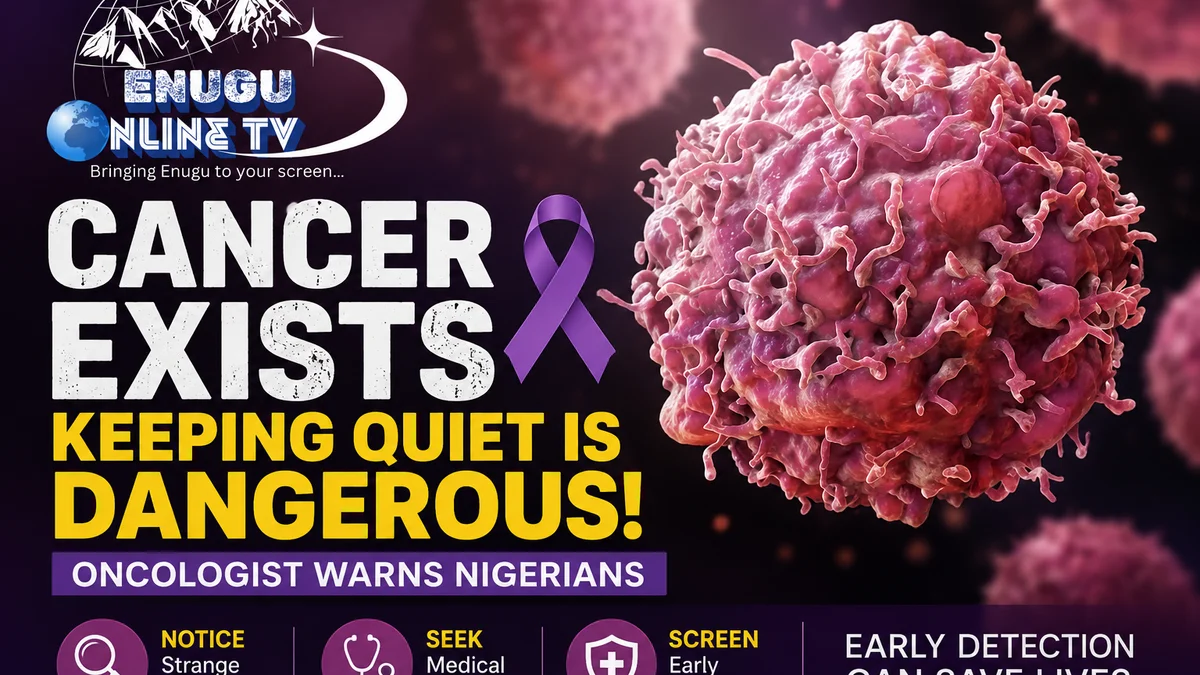
Cancer remains one of the serious health challenges affecting people around the world, including Nigerians. Yet, many people still find it difficult to talk about unusual changes in their bodies or seek medical attention when they notice something is wrong. An oncologist, Dr Temitope Olatunji, has now warned Nigerians that keeping quiet about possible cancer symptoms can be dangerous. According to her, people should raise an early alarm when they notice strange or unusual things happening in their bodies. She also encouraged Nigerians to develop the habit of going for medical checks and screening where appropriate. Her warning is important because cancer is not always easy to recognise at the beginning, and delaying medical attention can make treatment more difficult.
Dr Olatunji, a Radiation and Clinical Consultant at the Lagos State University Teaching Hospital, made the call in an interview with the News Agency of Nigeria in Ota, Ogun State. She explained that many people do not take their health seriously enough and often wait until their symptoms become severe before going to the hospital. This behaviour can be dangerous because some illnesses, including cancer, may become more difficult to treat when diagnosis is delayed. The World Health Organisation also explains that cancer is more likely to respond successfully to treatment when it is identified early. Early diagnosis can improve the chances of survival, reduce complications and sometimes reduce the cost and difficulty of treatment.
One of the biggest messages from the oncologist is simple: do not ignore unusual changes in your body. A person may notice a lump, unexplained bleeding, unusual weight loss, a persistent cough, changes in bowel habits, a sore that does not heal, unusual pain or another change that does not go away. Such symptoms do not automatically mean that a person has cancer because many non-cancerous conditions can produce similar symptoms. However, they should not simply be ignored. The right response is to speak with a qualified healthcare professional who can examine the person and determine whether further tests are necessary. WHO says early diagnosis begins with awareness of possible symptoms, seeking medical advice, getting proper clinical evaluation and accessing treatment without unnecessary delay.
The warning also highlights the importance of cancer screening, although screening is not the same as diagnosing every cancer. Screening is designed to identify certain cancers or pre-cancerous changes in people who may not yet have symptoms. The type and timing of screening depend on the particular cancer, a person's age, sex, risk factors and available medical guidance. Nigeria's National Cancer Screening and Early Diagnosis Guidelines explain that early diagnosis is relevant to all cancer types, while screening applies to selected cancers. The guidelines identify breast, cervical, colorectal and lung cancers among those for which screening may be recommended depending on resources and capacity. This means Nigerians should not simply assume that one screening test is suitable for everyone. Instead, people should speak with healthcare professionals about the appropriate checks for them.
Another major challenge is the cost of healthcare. Dr Olatunji identified poverty as one of the factors stopping some Nigerians from undergoing regular health checks and receiving treatment. For many families, the fear of medical bills can become a reason to postpone hospital visits. Unfortunately, delaying care can create an even bigger problem when a serious illness is eventually discovered. The Federal Government has recently placed greater emphasis on cancer prevention, early detection and treatment. In February 2026, the government announced the National Cancer Control Plan 2026–2030, which includes strategies covering cancer prevention, screening, early detection, diagnosis, treatment, survivorship and palliative care. Eight preventive oncology clinics were also announced as operational in federal tertiary health institutions across the country to expand access to routine cancer screening services.
Public awareness is therefore very important. People need accurate information about cancer instead of relying on rumours, fear or social media claims. Families should encourage one another to seek medical advice when something unusual happens. Parents can teach their children about healthy habits, while communities, churches, schools, workplaces and media organisations can help spread reliable health information. The Federal Ministry of Health has also said that late presentation, limited infrastructure, inadequate manpower and financial constraints remain challenges in cancer control in Nigeria. Strengthening public education can help people understand the importance of prevention, early detection and timely treatment. It can also reduce the stigma that sometimes makes people afraid to discuss cancer openly.
Cancer prevention is also part of the solution. Not every case of cancer can be prevented, but the risk of developing some cancers can be reduced. According to WHO, important risk factors include tobacco use, harmful alcohol use, being overweight or obese, unhealthy diets, physical inactivity, certain infections, air pollution and exposure to some forms of radiation. WHO also notes that vaccination against human papillomavirus and hepatitis B can help prevent cancers associated with these infections. This does not mean that people who live healthy lifestyles can never develop cancer. Rather, it means that Nigerians can take practical steps to reduce some known risks while also paying attention to their health and following appropriate medical advice.
The recent warning has also come at a time of renewed public attention on cancer following the death of veteran Nollywood actor Taiwo Hassan, popularly known as Ogogo, who had been battling stage-four cancer before his death on August 23, 2026. His death has once again reminded many Nigerians of the seriousness of late-stage cancer and the importance of taking health concerns seriously. However, cancer should not only become a topic of discussion when a famous person dies. It should be part of everyday health conversations in Nigerian homes and communities. The central message from the oncologist is clear: cancer exists, and keeping quiet about unusual symptoms can be dangerous. Nigerians should pay attention to their bodies, seek professional medical advice when they notice worrying changes and follow appropriate screening recommendations. Early action cannot guarantee a cure, but it can give patients a better chance of receiving timely treatment and achieving better outcomes.
Conclusion
Cancer awareness should not be based on fear. It should be based on knowledge, courage and timely action. Nigerians should not be ashamed or afraid to discuss unusual symptoms with qualified healthcare professionals. A strange symptom may not be cancer, but only proper medical evaluation can help determine the cause. Regular healthcare visits and appropriate screening can help identify certain diseases early, while healthy lifestyle choices can reduce some cancer risks. Most importantly, people should avoid self-diagnosis and unverified treatments from social media or unqualified sources. The message is worth repeating: cancer exists, and keeping quiet is dangerous. Speaking up early, getting checked and receiving appropriate medical care can make an important difference in the fight against cancer.