







By Faith Eze
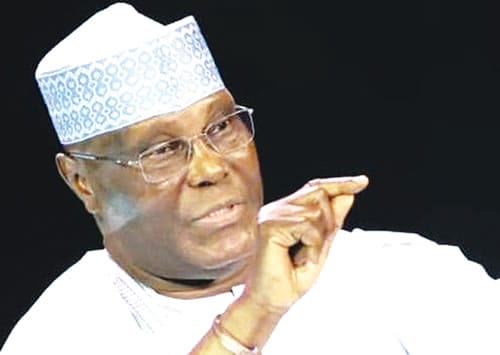
The political landscape in Nigeria has once again heated up following strong statements from prominent political figures regarding the state of the nation's economy and educational sector. Former Vice President Atiku Abubakar has openly challenged President Bola Tinubu to provide a clear and straightforward explanation to Nigerians. He wants the current administration to account for the massive funds saved following the removal of the petrol subsidy, especially now that the Academic Staff Union of Universities, commonly known as ASUU, is once again threatening to embark on a nationwide industrial action.
According to statements released by his media office, Atiku argued that ordinary citizens across the country have already borne the full weight of the economic adjustments. When the federal government announced the removal of the petroleum subsidy, the primary justification given to the public was that the saved resources would be channeled into critical areas like education, healthcare, infrastructure, and general social welfare. Citizens were urged to endure temporary hardships with the expectation that the long-term benefits would transform public services and build a stronger economic foundation for the future.
However, the former vice president pointed out that years after the implementation of these sweeping policies, the promised improvements remain largely invisible in the everyday lives of regular Nigerians. Instead of seeing better public infrastructure, citizens are grappling with skyrocketing transportation costs, high food prices, expensive energy bills, and surging school fees. Families are finding it increasingly difficult to survive, and the cost of maintaining a child in a tertiary institution has risen far beyond the financial reach of many average households.
The core of Atiku's recent criticism centers on the recurring friction between the federal government and university lecturers. Despite claims by government officials that the removal of subsidies has freed up unprecedented amounts of revenue—some of which reportedly goes into larger allocations for state governments—public universities continue to suffer from severe underfunding. Lecturers are still raising alarms over unpaid entitlements, delayed salaries, and unresolved agreements that date back several years. The looming threat of another university shutdown proves that the fundamental problems plaguing the tertiary education system have not been solved.
Atiku questioned the logic of celebrating higher national revenues and increased statutory allocations while university students face the constant threat of having their academic calendars disrupted. He noted that classrooms, lecture theatres, laboratories, student hostels, and other essential campus facilities remain in a deplorable state. In his view, a government cannot boast about economic reforms while basic institutions of learning are left to decay and teachers are forced to contemplate strikes just to get what is rightfully owed to them.
The former vice president also directed sharp criticisms toward the federal government's student loan initiative. While the administration has presented the student loan scheme as a major reform designed to make higher education accessible, Atiku described it in entirely different terms. He argued that it is a contradiction to first introduce policies that impoverish families and spike the cost of living, and then turn around to offer loans to students so they can cope with the artificial hardship.
He labeled this approach as organized hardship financed through debt rather than genuine educational reform.
Furthermore, Atiku accused the administration of applying double standards when dealing with different segments of society. He claimed that while ordinary citizens and students are constantly told to make sacrifices, tighten their belts, and embrace loans, powerful and well-connected interests easily secure waivers, concessions, and financial privileges whenever they make demands. This disparity, he noted, strips the government of its moral authority to keep preaching patience and endurance to a populace already overwhelmed by economic pressures.
Concluding his remarks, Atiku maintained that the administration owes the public a direct answer to a simple question: where is the money saved from the subsidy removal? He emphasized that Nigerians cannot be expected to continue making endless sacrifices for a system where government promises exist only in speeches, press releases, and statistical announcements rather than tangible reality. As public pressure mounts and ASUU's ultimatum draws closer attention, all eyes remain on the federal government to see how it will respond to these probing economic and social questions.