




By Faith Eze
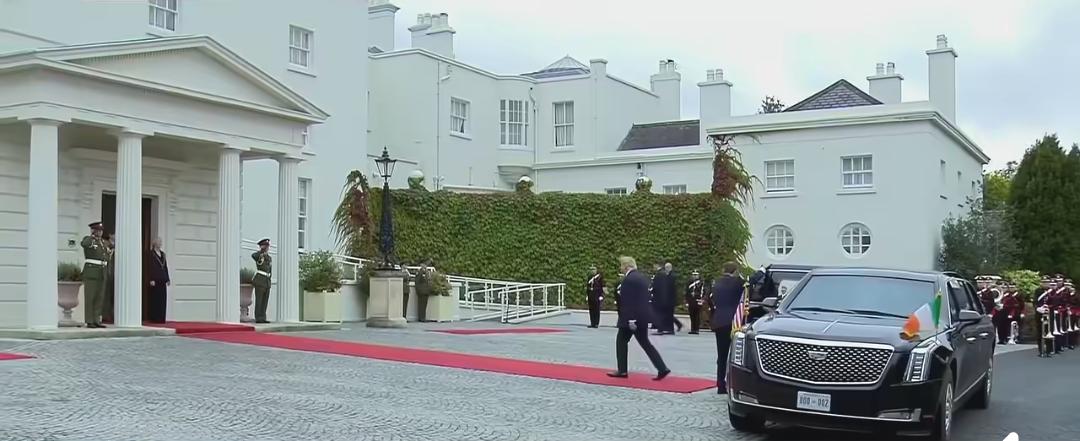
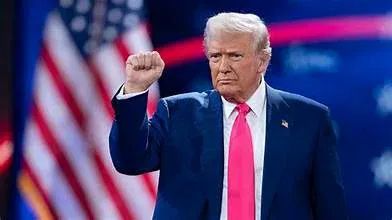
International diplomacy took center stage in Europe as United States President Donald Trump arrived in Dublin for a heavily anticipated two-day visit. The trip immediately drew global attention as the American leader began his itinerary with a high-profile diplomatic stop at Áras an Uachtaráin, the official residence and workplace of the Irish president located in the city's Phoenix Park. Upon his arrival, President Trump was greeted by Irish President Catherine Connolly. The two leaders shared a formal handshake before heading inside for closed-door discussions, marking a fascinating moment in international relations given their distinct political backgrounds.
The meeting carried significant political weight because of past remarks and ideological differences between the two figures. President Connolly, a prominent left-wing figure who transitioned into the largely ceremonial presidency after serving as an independent member of parliament, has previously voiced strong criticisms regarding various American policies and rhetoric concerning global affairs. Despite these historical divergences, standard diplomatic protocol required the official courtesy call, placing the spotlight squarely on how the meeting would unfold behind closed doors. Observers across the globe watched closely to see how the discussions would bridge contrasting viewpoints on international policy.
Following the initial handshake and introductory remarks, official ceremonies took place on the grounds of the presidential residence. An Irish Defence Forces band played the national anthems of both countries while a guard of honour presented arms. President Trump was invited to inspect the honour guard before introducing members of the US delegation, which included family members and senior advisors, to the Irish hosts. Similarly, President Connolly introduced key members of the Irish delegation to the visiting American president, fostering an atmosphere of formal cooperation and mutual diplomatic respect.
Beyond the initial encounter at Áras an Uachtaráin, the visit encompasses a broader agenda designed to address bilateral ties, economic cooperation, and trade discussions. Later in the schedule, President Trump is expected to hold separate talks with Ireland's Prime Minister, the Taoiseach, at the Farmleigh state guesthouse to review matters of mutual interest. Furthermore, the itinerary includes an address to prominent business leaders and dignitaries at the official residence of the US ambassador in Dublin, focusing heavily on strengthening commercial partnerships between American and Irish enterprises.
While official engagements form the core of the diplomatic mission, the visit also features personal and recreational elements. Following his political and diplomatic meetings in Dublin, President Trump is scheduled to travel to County Clare on the western coast of Ireland. There, he plans to visit his private luxury golf resort in Doonbeg, which is currently hosting a major international tournament, the Irish Open. The combination of high-stakes political meetings and a sporting getaway has naturally generated mixed reactions among the local populace.
Security measures throughout the capital and across transit points have reached unprecedented levels to ensure the safety of the visiting delegation. Law enforcement agencies deployed extensive cordons around Phoenix Park and other key locations, leading to temporary traffic disruptions across Dublin. At the same time, various activist groups organized demonstrations and protests in the city center to voice opposition to the visit, reflecting the polarized opinions surrounding foreign leaders visiting the country.
Ultimately, this diplomatic visit highlights the complex nature of modern international relations, where historical differences, economic interdependence, and political pragmatism intersect. As President Trump continues his European engagements, the meetings in Dublin serve as a vital checkpoint for maintaining open channels of communication between the United States and its European allies despite underlying policy disagreements.