



















By Faith Eze
Education and literacy serve as the core foundation for personal growth, community empowerment, and national development. In an effort to strengthen academic performance and cultivate a strong habit of learning among young people, community-focused organizations continue to roll out impactful programs across different regions. A notable development recently unfolded in Bayelsa State, where the National Association of Seadogs, also known as the Pyrates Confraternity, launched a comprehensive back-to-school campaign aimed at encouraging academic excellence and building a sustainable reading culture among secondary school students.
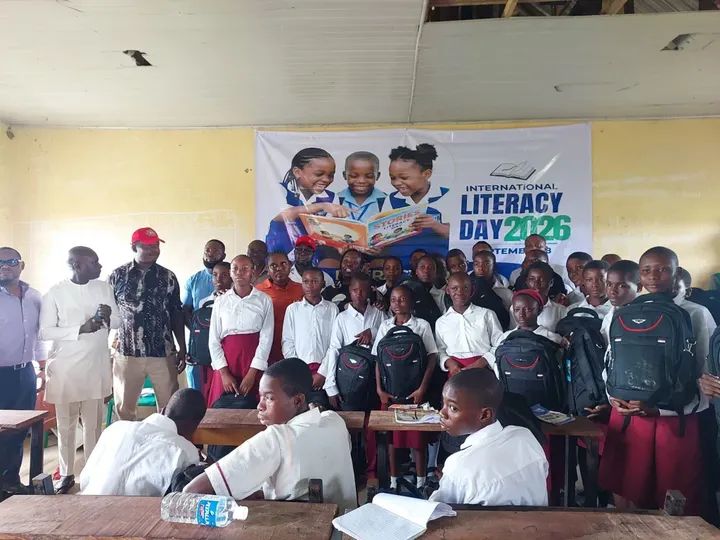
The outreach program was officially kick-started at a local institution, the Tarakiri Community Secondary School, situated in the Southern Ijaw Local Government Area of Bayelsa State. Members of the Oxbow Marino Deck arrived at the school premises to interact with students, teachers, and administrative staff. The primary objective of the intervention was to address the declining interest in extracurricular reading among youths and to provide practical support that makes learning more accessible and enjoyable for students from various backgrounds.
Speaking during the formal inauguration event, the leader of the delegation and Cap'n of the Oxbow Marino Deck, Timiebi Binafeigha, explained the driving philosophy behind the project. He noted that modern literacy goes far beyond basic reading and writing skills, extending into critical thinking, information technology adaptation, and lifelong personal development. According to his remarks, the creation of the reading club is designed to serve as a pilot project with plans for future expansion into other schools, ensuring that students develop an enduring passion for books outside of their regular classroom textbooks.
School administrators and educationists present at the event expressed profound gratitude for the thoughtful intervention. Representatives of the school management commended the association for extending valuable resources to the community, pointing out that such external engagements provide practical life lessons that complement conventional classroom teaching. They urged the students to take full advantage of the opportunity, reminding them that discipline, consistency, and a serious attitude toward education remain the surest pathways to achieving future aspirations.
An inspiring highlight of the program featured an advocacy session delivered by a renowned author and educationist, Annete David-West. Speaking on the theme of reading, literacy, and character formation, she emphasized that cultivating a daily reading habit unlocks intellectual growth and broadens horizons. The students were encouraged to view books not merely as tools for passing examinations, but as gateways to understanding the wider world and building mental resilience.
A major milestone of the campaign was the official inauguration of the school reading club and the formal induction of student members. Selected coordinators and teachers were appointed to guide the club's activities, ensuring that it remains active and productive throughout the academic calendar. The newly appointed student leaders expressed excitement and deep appreciation, promising to make the best use of the platform to encourage their peers to read more frequently.
To back the initiative with tangible resources, the association donated a substantial quantity of educational supplies. The distribution included branded school bags, exercise books, English Language textbooks, Mathematics textbooks, Social Studies books, and various novels meant to stock the newly established reading club library. Students across different grade levels, from junior secondary classes up to senior classes, benefited directly from the distribution.
Community leaders, parents, and education advocates have lauded the initiative as a step in the right direction. Many observers emphasize that corporate bodies, civil society organizations, and well-spirited individuals must continue to partner with government institutions to bridge educational gaps in rural and semi-urban communities. By investing in the intellectual development of young people today, programs like this help secure a brighter, more informed, and prosperous future for the entire society.