







-1200x675.webp)









The disruption of flight operations at major Nigerian airports last week could have been avoided if the aviation labour unions had adopted a less confrontational approach to resolving their grievances.
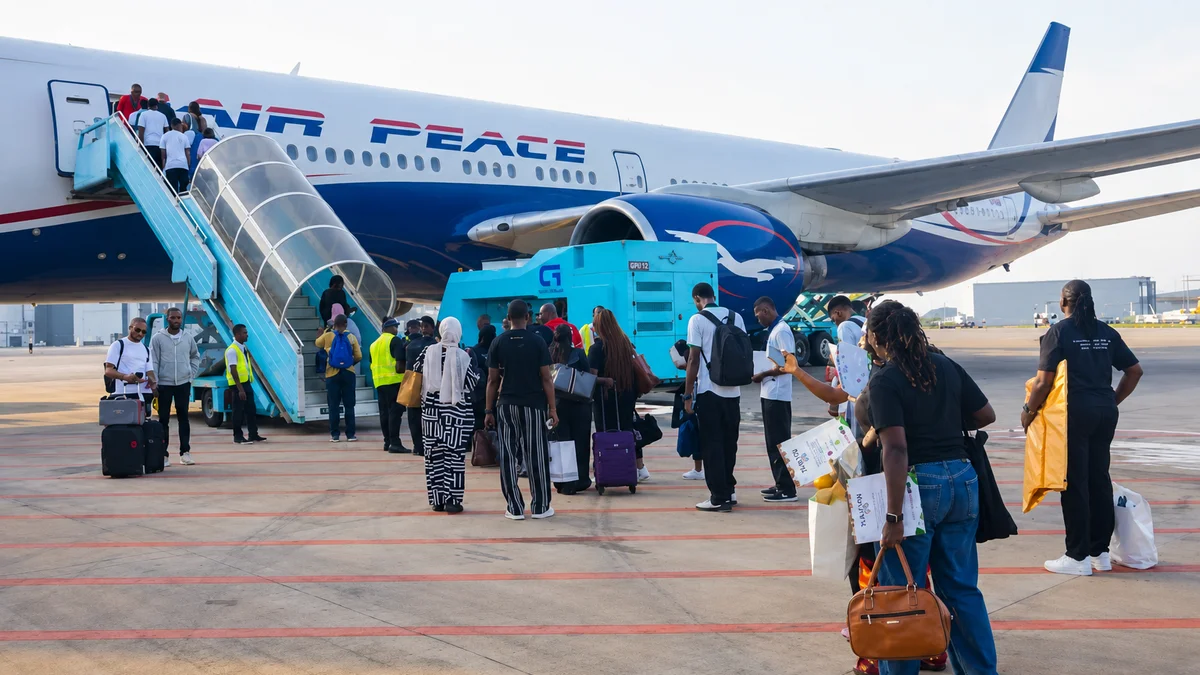
For about seven hours from 5am on August 12, members of the National Union of Air Transport Employees (NUATE), Air Transport Services Senior Staff Association of Nigeria (ATSSSAN) and National Association of Aircraft Pilots and Engineers (NAAPE), operating under the Nigeria Labour Congress (NLC) and Trade Union Congress (TUC), picketed terminals in Lagos, Abuja and Enugu. The action significantly affected Air Peace, while flights operated by other carriers, including United Nigeria Airlines, Max Air and Enugu Air, were also disrupted.
The unions said their action was prompted by concerns over the alleged failure of domestic airlines to remit at least N30 billion collected from passengers as Ticket Sales Charge (TSC). They also accused some airlines of preventing workers from exercising their right to belong to trade unions.
However, the decision to concentrate the protest largely on Air Peace is difficult to reconcile with the fact that the complaints were directed at the wider domestic aviation industry. The selective nature of the action therefore raises questions about whether there were other factors behind the choice of target.
The dispute over the Ticket Sales Charge is not new. The levy is collected by airlines for aviation agencies, including the Nigeria Civil Aviation Authority (NCAA), Nigerian Airspace Management Agency (NAMA), Nigerian Meteorological Agency (NiMet), National College of Aviation Technology (NCAT) and Nigerian Safety Investigation Bureau (NSIB).
While the unions may have legitimate concerns about ensuring that aviation agencies receive funds due to them, it is questionable whether shutting down airport operations is an appropriate way to compel payment. The agencies involved have established legal and regulatory mechanisms through which outstanding obligations can be pursued. Air Peace has also maintained that it is engaging the NCAA in discussions over the matter.
The same principle applies to the unions’ complaints about workers’ rights. Where employees believe their freedom to organise is being violated, existing labour and legal processes provide avenues for addressing such disputes. Resorting to blockades at airport terminals exposes passengers and the wider economy to unnecessary hardship.
The situation was further complicated by the fact that some Air Peace employees staged a counter-protest, maintaining that they had worked with the airline for years without being members of organised labour and had maintained a satisfactory relationship with management.
The Aviation Safety Round Table Initiative (ASRTI) criticised the unions’ approach, describing the action as unnecessary and raising concerns about its selective nature. It also pointed to legal provisions governing activities within aviation facilities, arguing that industrial disputes should not be allowed to interfere with airport operations.
The unions are well aware of how sensitive the aviation industry is. Even relatively short disruptions can cause a chain reaction involving cancelled flights, missed connections, stranded passengers and significant financial losses.
Air Peace reportedly lost about N1 billion during the disruption, while roughly half of its scheduled daily flights were cancelled. For passengers, the consequences went beyond financial losses, as many missed important appointments and engagements because of the cancellations and delays.
What makes the episode more troubling is that the disruption reportedly occurred while efforts were already underway to mediate the dispute through the aviation authorities. A negotiated settlement would have been preferable to action that placed thousands of travellers at risk of disruption.
Labour unions have an important role to play in defending workers’ rights and demanding compliance with relevant regulations. However, such responsibilities must be exercised with consideration for public safety, passengers and the broader economy.
In this case, the unions could have pursued their grievances through the appropriate legal and institutional channels without paralysing airport operations. The events of August 12 should therefore serve as a reminder that industrial action in a critical sector such as aviation requires restraint, careful judgment and a strong regard for the public interest.