











By Faith Eze
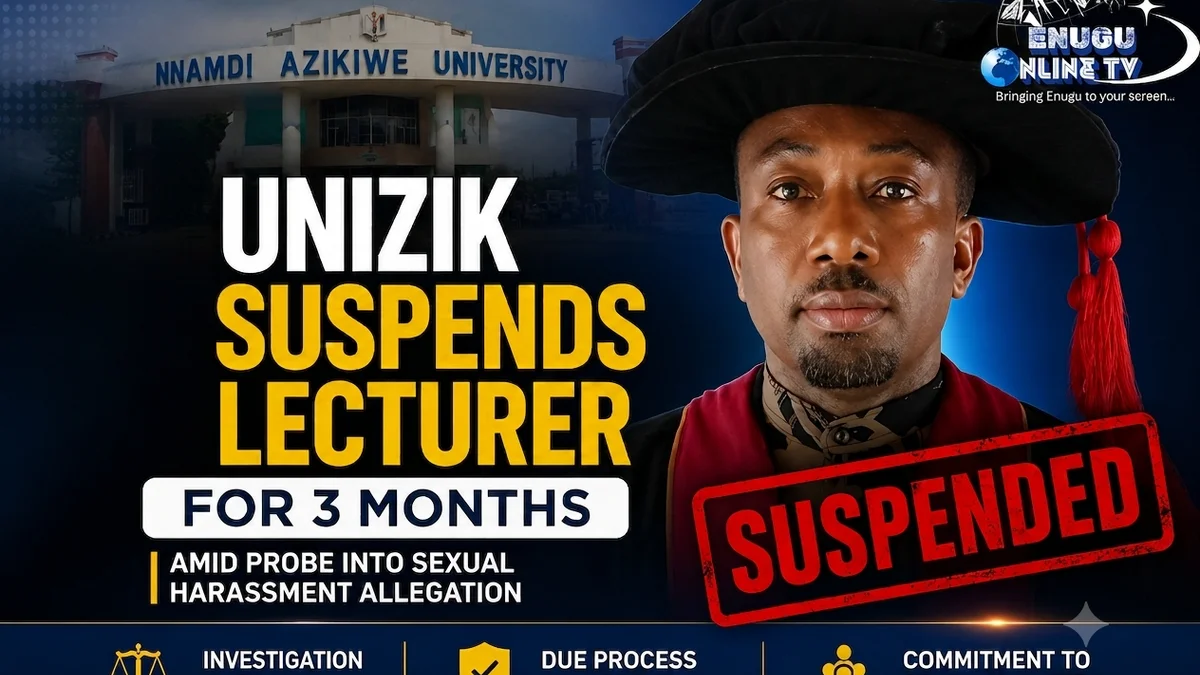
Nnamdi Azikiwe University, Awka, popularly known as UNIZIK, has suspended a lecturer in the Department of Chinese Studies, Professor Ifeanyi Sunny Odinye, for three months following preliminary findings from a special investigative panel. The development comes after a controversial incident involving the lecturer and students went viral on social media and generated widespread reactions from Nigerians. According to reports, the university approved the suspension after receiving an interim report from a six-member investigative panel set up to examine the circumstances surrounding the incident. The lecturer will reportedly receive half salary during the three-month suspension. However, it is important to note that the university has not concluded that the lecturer committed sexual harassment. The institution specifically said that more investigation is required before a decision can be reached on that allegation.
The matter became widely known after a video circulated online showing some students physically confronting and assaulting the lecturer on the university premises. The incident was reportedly connected to allegations involving a female student and claims of sexual misconduct. The video attracted considerable attention because it showed a lecturer being attacked by students, leading to questions about what had happened before the confrontation. In response, UNIZIK management ordered an immediate, comprehensive and impartial investigation. The university also condemned the physical assault, stressing that allegations of misconduct should not be used as a reason for people to take the law into their own hands. Channels Television reported that the university described the use of violence, self-help and jungle justice as unacceptable, regardless of the seriousness of an allegation.
Following the investigation, the six-member panel submitted its preliminary report to the Vice-Chancellor, Professor Ugochukwu Bond Stanley Anyaehie, on August 21, 2026. The panel, chaired by Professor Emmanuel Obidimma, Provost of the College of Postgraduate Studies, was given five major issues to investigate. However, its preliminary report dealt with only two of those issues. Based on the findings already reached, the university approved the three-month suspension of Professor Odinye. The university said the lecturer breached parts of its General and Academic Regulations in connection with an examination misconduct case involving a student. In particular, the panel found that the alleged examination misconduct was not properly documented and submitted using the required Examination Misconduct Report Form. The panel also found that a mobile phone recovered during the examination was returned to the student on the same day, which the university said was contrary to its regulations.
The examination-related findings are important because they show that the current suspension is not simply a final judgment on the sexual harassment allegation circulating online. According to the university's position, the panel has so far established certain breaches of academic regulations, while the more serious allegation of sexual harassment remains open. The university said the panel was given an additional two weeks to complete its investigation into the remaining issues. These include determining whether sexual harassment actually occurred, identifying those involved in the physical assault of the lecturer and establishing whether there was any incident of kidnapping connected to the matter. The final report is expected to provide further information that will help the university decide what additional action, if any, should be taken.
The university's decision highlights the importance of due process when serious allegations are made. Sexual harassment is a serious issue in any institution, especially within a university where there is a clear responsibility to protect students and maintain a safe learning environment. At the same time, an allegation is not automatically proof that an offence occurred. Every person accused of serious wrongdoing should have the opportunity to respond to the allegations and should be treated fairly while an investigation is ongoing. This is why UNIZIK's decision to continue investigating the sexual harassment allegation is significant. Rather than announcing a final conclusion before the investigation is complete, the institution has separated the issues already established by the preliminary panel from those that still require evidence and clarification.
The incident also raises concerns about how students and university communities respond to allegations of misconduct. While students have every right to report inappropriate behaviour and demand that complaints be taken seriously, physical violence is not an acceptable substitute for investigation and justice. The viral video has brought attention to the dangers of mob action and the possibility that important facts can be lost when people react emotionally to allegations. UNIZIK's condemnation of the assault therefore sends an important message to students and staff. Complaints should be reported through the appropriate university authorities, security agencies or other lawful channels, while investigations should be allowed to establish what actually happened. The university had earlier called for calm and promised a comprehensive investigation into both the allegations and the actions of those involved in the assault.
For students, the case is also a reminder of the importance of knowing the procedures available for reporting harassment, examination misconduct and other forms of inappropriate behaviour. Universities must ensure that students feel safe enough to report concerns without fear of intimidation or retaliation. They must also ensure that complaints are investigated professionally and confidentially where appropriate. At the same time, lecturers and other members of staff are expected to understand and follow institutional rules. In this case, the preliminary panel's findings concerning examination procedures demonstrate how failure to follow established regulations can lead to disciplinary consequences even while other allegations are still being investigated. The matter therefore goes beyond one lecturer or one incident; it raises broader questions about accountability, student protection, staff conduct and the need for strong disciplinary systems in Nigerian universities.
As the investigation continues, attention will remain on the final report of the special panel and the decisions that will follow. For now, Professor Odinye has been suspended for three months on half salary based on the preliminary findings relating to alleged breaches of UNIZIK's academic regulations. The sexual harassment allegation has not been finally determined, and the university has made it clear that further investigation is needed. The institution has also indicated that possible further action, including criminal prosecution where warranted, could be considered after the investigation is completed. The case is therefore still developing, and the public should be careful about treating social media claims as established facts. What happens next will depend on the evidence gathered by the panel and the university's final recommendations.