












Stakeholders across the Southeast have called for sustained investment and policy reforms to address persistent challenges in the region’s education sector, even as some states record improvements in enrolment, infrastructure and government funding.
While developments in states such as Enugu, Anambra and Imo have attracted commendation, education experts say funding shortfalls, inadequate facilities, teacher welfare, declining standards, insecurity and brain drain continue to threaten meaningful progress.
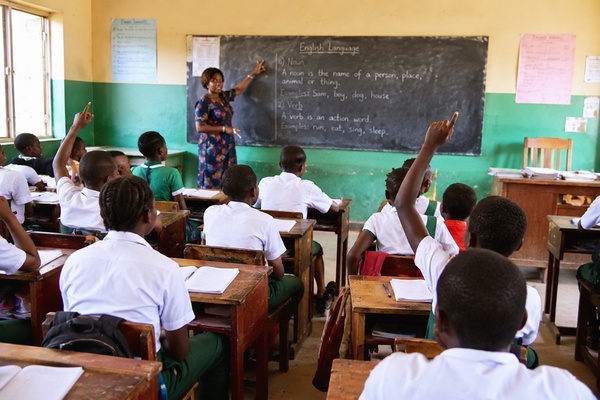
Education stakeholders who spoke on the state of the sector argued that increasing the number of schools and pupils must be matched with better teaching, adequate learning resources and improved outcomes.
Education remains one of the major drivers of human capital development, economic growth and social advancement.
Consequently, experts say the quality and accessibility of education are critical to the region’s long-term development.
A 2024 UNICEF report highlighted significant differences in school participation across Nigeria. While Kebbi recorded a primary-school out-of-school rate of 65 per cent, Bauchi and Zamfara recorded 61 per cent each. Imo, by comparison, recorded the lowest rate at one per cent.
The figures point to a considerable geographical disparity in access to education between different parts of the country.
Anambra expands access and digital learning
In Anambra, the state government says it is implementing reforms aimed at restoring the quality of public education.
The Commissioner for Education, Dr. Ekene Ogugua, said the administration of Governor Chukwuma Soludo had made education free and compulsory from basic education through junior secondary school in public institutions.
The government has also recruited more than 8,115 teachers and introduced digital learning tools, including tablets and internet connectivity, to support teaching and learning.
Vocational and entrepreneurship-oriented subjects have also been incorporated into the junior secondary curriculum. Among them are robotics, solar installation, GSM repairs and plumbing.
The state has additionally prohibited SS3 graduation ceremonies indefinitely in public schools, a move officials say is intended to reduce unnecessary financial pressure on parents.
Agencies including the Post Primary Schools Service Commission and the Anambra State Universal Basic Education Board are supporting the implementation of the education reforms.
According to the commissioner, the broader objective is to expand access to quality education while improving teacher competence and preparing students with practical skills.
Imo reports strong gains
Imo State officials also reported significant progress in enrolment, examination performance and school infrastructure.
The Executive Secretary of the Imo State School Management Board, Mrs. Theresa Okwu, described the state’s recent performance in education as among the strongest in the country.
She pointed to the state’s reported one per cent out-of-school rate, rising enrolment and improved performance in West African Examinations Council examinations as evidence of progress.
Okwu attributed the gains partly to increased government spending on the construction, renovation and rehabilitation of schools, including facilities in rural communities.
She also highlighted government efforts to maintain regular payment of teachers’ salaries and improve their welfare, arguing that motivated teachers are essential to achieving better learning outcomes.
Enugu increases education spending
Enugu has also placed education at the centre of its development agenda.
The state’s N1.62 trillion 2026 budget allocated 32.27 per cent to education, significantly exceeding the 15 per cent benchmark recommended by UNESCO.
Beyond the budgetary allocation, the state government is constructing 260 Smart Green Schools, with one planned for each ward. The facilities are designed to incorporate modern classrooms and digital learning infrastructure.
The government has also proposed N158 billion for 16 Smart Senior Secondary Schools and N68 billion for 10 technical and vocational education and training schools. A further N30 billion has been earmarked for equipping existing technical colleges.
At the basic education level, N30 billion has been set aside for a school feeding programme targeting about 260,000 pupils in the 260 Smart Green Schools.
The initiative is intended to encourage attendance while addressing nutritional challenges that can affect children’s ability to learn.
Education advocate and STEM promoter Alex Onyia recently drew attention to the growing role of private citizens and communities in supporting education in the region.
He announced that the T.N. Onodingene Family of Abor in Udi Local Government Area had donated a modern learning facility to support the 2027 Southeast Mathematics Olympiad.
The centre is expected to serve as both a preparation facility and examination venue and will reportedly be made available to students at no cost.
Such initiatives, stakeholders said, demonstrate how families, individuals, professionals and organisations can complement government investment in education.
Experts warn that infrastructure alone is not enough
Despite the increase in funding and infrastructure, educationists warned that physical development must be accompanied by improvements in teaching quality and learning outcomes.
Dr. Linus Madu said Enugu was making progress in public investment, infrastructure, technology, technical education and human-capital development.
However, he said the success of the reforms should ultimately be measured by improvements in literacy, numeracy, employability, innovation and graduate quality.
Madu stressed the importance of improving teachers’ welfare, stabilising tertiary institutions and ensuring that students can afford to remain in school.
He argued that investment in buildings and technology would have limited impact if teachers were not adequately motivated and supported.
His assessment was echoed by an education stakeholder in Owerri, who urged governments to sustain investment in teacher training, instructional materials and the overall quality of teaching.
The stakeholder said increased enrolment should not be mistaken for educational success unless students are actually acquiring the knowledge and skills expected from their years in school.
A resident, Mrs. Chinyere Nwosu, welcomed improvements in school infrastructure but appealed for continued investment in public schools, particularly in rural communities.
She called for more classrooms, desks, laboratories, libraries and other essential facilities to ensure children from less-privileged backgrounds have access to quality education.
Mr. Emmanuel Okoro also welcomed the reduction in the number of out-of-school children but urged authorities to identify children who have dropped out and develop strategies to return them to school.
A parent, Mrs. Ngozi Eze, similarly appealed for stronger government support for public education to ease the financial burden on families.
Underfunding remains a major concern
Not all stakeholders agreed that the Southeast’s education sector is improving.
Prof. Dennis Aribodor expressed concern about the general decline in educational quality, attributing much of the problem to inadequate funding.
He argued that poor teacher remuneration has made the profession increasingly unattractive and affected the quality of instruction.
Aribodor said the consequences go beyond academic performance, noting that education should also help develop responsible citizens with strong character and values.
Rev. Nonso Adikuru of Chukwuemeka Odumegwu Ojukwu University also expressed concern about declining standards despite the growing number of educational institutions across the region.
He linked part of the problem to unqualified or inadequately prepared teachers and the proliferation of so-called “miracle centres”.
According to him, examination success does not necessarily translate into competence when students struggle to communicate effectively or rely on outside assistance to complete academic work.
He also raised concerns about the growing use of artificial intelligence tools, including ChatGPT, by students who may use them as substitutes for learning rather than as educational aids.
Enrolment rises but infrastructure needs attention
Dr. Gabriel Alonta of Nnamdi Azikiwe University offered a different assessment, saying education in the Southeast was expanding in terms of enrolment.
He noted increasing numbers of students seeking admission into tertiary institutions, as well as growth at the secondary-school level.
However, he identified infrastructure as an area requiring greater attention and said private organisations and institutions could play an important role in supporting education.
Across the region, stakeholders agreed that increasing access to education must go hand in hand with improving its quality.
They called for stronger teacher development, better infrastructure, adequate learning materials, stable funding and greater involvement of communities and private organisations.
The consensus was that the Southeast has made progress in some areas, but the gains could be undermined without sustained investment and proper monitoring.
Governor Peter Mbah of Enugu has similarly argued that modern education should focus on developing creativity, adaptability, innovation and practical capability rather than concentrating solely on certificates.
The challenge for governments and education stakeholders, therefore, is to ensure that increased spending and expanded access translate into better learning, stronger skills and greater opportunities for young people across the Southeast.