















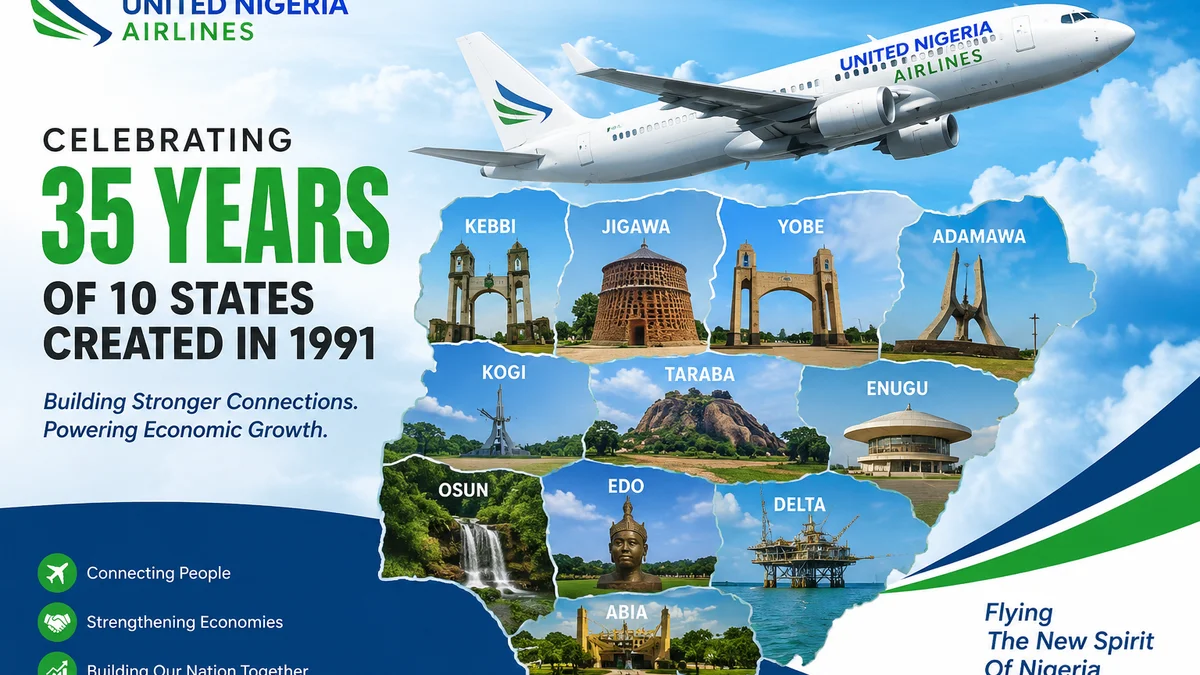
United Nigeria Airlines (UNA) has joined Nigerians in commemorating the creation of 10 states in August 1991, describing the development as a significant milestone that reshaped the country’s administrative and economic landscape.
The states—Abia, Adamawa, Delta, Edo, Enugu, Jigawa, Kebbi, Kogi, Osun and Taraba—were created during the military administration of General Ibrahim Babangida. Taraba was established on August 1, 1991, while the other nine states were created on August 27, bringing Nigeria’s total number of states at the time from 21 to 30.
Speaking on the significance of the anniversary, UNA’s Chief Commercial Officer, Adedayo Olawuyi, said the creation of the states had helped bring government, economic opportunities and development closer to communities across the country.
According to him, the states have grown into important contributors to Nigeria’s economy, with each developing strengths in sectors ranging from agriculture and manufacturing to energy, trade and logistics.
He noted that Abia and Enugu have become important commercial and manufacturing centres in the Southeast, while Delta has established a major presence in Nigeria’s energy industry. Edo, he added, remains an important contributor to agriculture and the oil and gas sector.
Olawuyi also highlighted the agricultural importance of Taraba, Adamawa, Jigawa, Kebbi and Yobe, while pointing to Kogi’s strategic location as a major transportation and logistics corridor linking different parts of Nigeria.
He said aviation plays an important role in connecting these economic centres, facilitating the movement of business people, students, families and traders while creating stronger links between communities and markets.
Taraba, which was carved out of the former Gongola State with Jalingo as its capital, has developed significant agricultural and mineral resources. The state is increasingly important to food production and other economic activities.
Abia was created from Imo State, with Umuahia as its capital, and has grown into a major manufacturing and commercial centre. Adamawa, also carved out of Gongola State, has developed a strong agricultural base and contributes substantially to the national food supply.
Delta State, created from the former Bendel State, has Asaba as its capital and Warri as one of its major cities. Its oil and gas resources make it a major contributor to Nigeria’s energy economy.
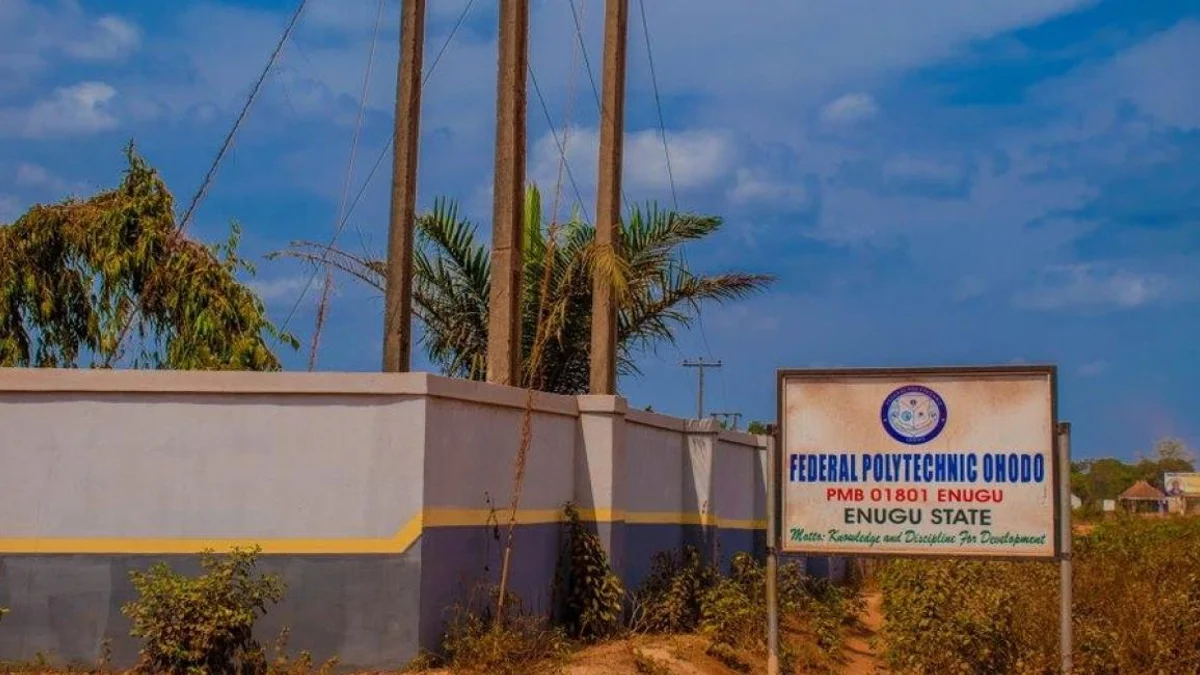
Edo, also created from Bendel State, has Benin City as its capital and remains an important player in agriculture, oil and gas, and commerce. Enugu, created from the old Anambra State, has likewise grown into a major business and industrial centre in the Southeast.
Jigawa, created from Kano State with Dutse as its capital, is predominantly agricultural and supplies produce to markets within and outside Nigeria. Kebbi, carved out of Sokoto State, has built a strong reputation for agriculture and cross-border commerce.
Kogi was formed from parts of Kwara and Benue states, with Lokoja as its capital. Its location around the confluence of the Niger and Benue rivers has given it strategic importance as a transportation and logistics link between northern and southern Nigeria.
Osun, created from Oyo State and headquartered in Osogbo, is noted for its cultural heritage, commercial activities and growing economic base. Yobe, carved out of Borno State with Damaturu as its capital, has also developed agriculture as a key component of its economy.
UNA said the anniversary provides an opportunity to recognise the progress recorded by the states over the past 35 years and the role they continue to play in Nigeria’s economic development.