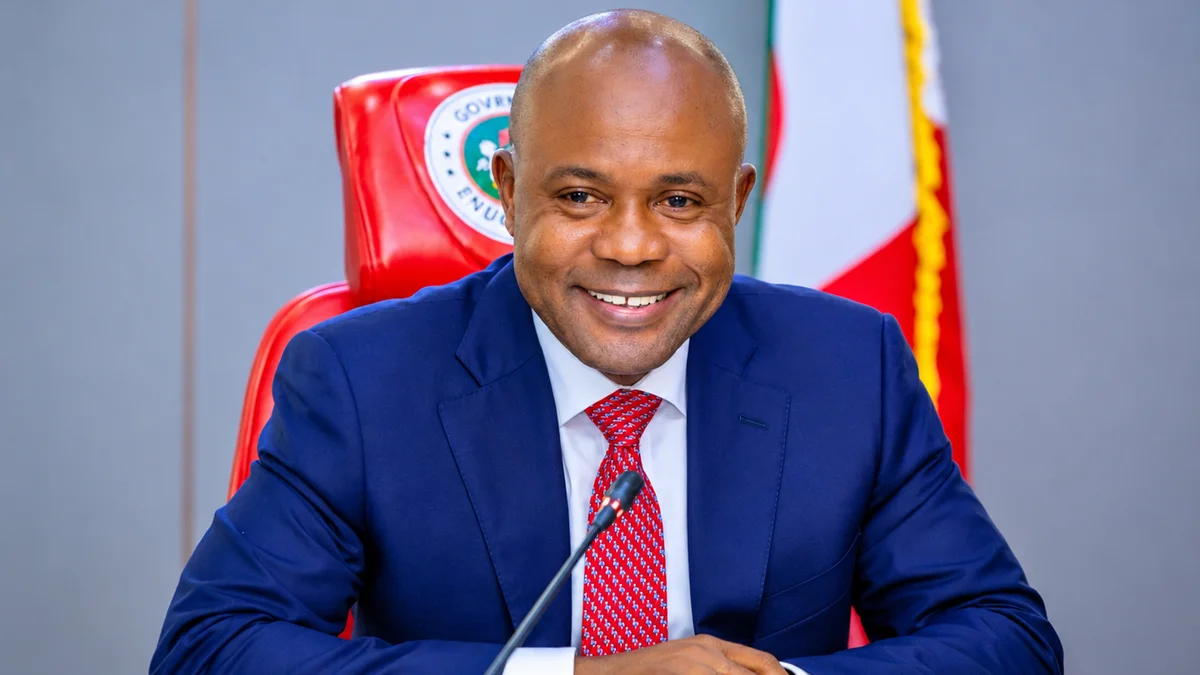















Governor Peter Mbah’s administration in Enugu State may have created a strong political advantage for itself ahead of the 2027 governorship election, with supporters arguing that the governor’s development record could translate into what they describe as “thank-you votes.”
In a commentary, Dr. Ifeanyichukwu Jaja said the pace of development under Mbah had changed public perceptions of governance in the state, pointing to projects across infrastructure, education, healthcare, agriculture, transportation and urban renewal.
Jaja argued that Mbah’s administration had moved beyond campaign promises to projects that residents could see and use, describing the governor’s approach as a deliberate attempt to reshape Enugu’s economy and public institutions.
One of the administration’s major objectives, he noted, is the expansion of Enugu’s economy from an estimated $4 billion to $30 billion. According to him, the government’s investment in infrastructure and human capital is intended to create the foundation for achieving that target.
Among the projects highlighted were 262 Smart Green Schools across the state’s 17 local government areas, upgraded rural roads and a modern transport network comprising five bus terminals and more than 100 compressed natural gas-powered buses.
The writer also pointed to the administration’s renewed focus on agriculture, including the establishment of a seed testing laboratory and seed gallery, as well as support for farmers through subsidised agricultural inputs.
Mbah has repeatedly described agriculture as a major component of his economic strategy. Jaja said the governor expects the sector to account for about 40 per cent of the proposed economic expansion, with greater emphasis on commercial farming, processing and exports.
The commentary also highlighted the government’s investments in healthcare and urban infrastructure, including the 300-bed Enugu International Hospital and the International Conference Centre, alongside associated hospitality facilities.
Jaja argued that these projects were part of a broader effort to reposition Enugu as an economic and tourism centre capable of attracting businesses, visitors and investors.
Another area cited was aviation. The writer described the establishment and development of Enugu Air as part of the governor’s plan to improve connectivity and strengthen Enugu’s position as a regional economic hub.
The airline recently gained membership of the African Airlines Association, a development Jaja presented as evidence that the state’s aviation ambitions were gaining wider recognition.
He quoted the association as describing Enugu Air as an example of locally driven investment capable of supporting stronger air connectivity across Africa.
Beyond physical projects, Jaja credited Mbah with assembling a team of aides and officials capable of implementing his administration’s policies. He argued that effective governance depends not only on the ideas of a leader but also on the quality of the people entrusted with executing them.
According to him, the governor’s approach has sought to combine economic development with improvements in security, healthcare, education and agriculture.
Jaja maintained that the significance of the administration’s projects should be judged by their effect on residents rather than by political rhetoric.
He also argued that Enugu’s development challenges were shaped by decades of neglected infrastructure and the disruptions associated with the state’s political and historical past. In his view, the current administration has attempted to replace ageing public infrastructure with modern facilities.
The writer said the changes could influence voter sentiment as the 2027 election approaches, arguing that residents who perceive tangible improvements in their communities may reward the administration politically.
He therefore suggested that Mbah’s performance could become a major factor in the next governorship contest, particularly if voters choose to support a continuation of what they regard as successful policies and projects.
Jaja concluded that the lesson from Enugu is that political office alone does not guarantee public support. Rather, he argued, sustained implementation, visible development and effective governance can strengthen a leader’s relationship with the electorate.
Dr. Jaja writes from Amoli, Awgu Local Government Area of Enugu State.
Mbah’s Projects Could Earn Him ‘Thank-You Votes’ in 2027, Says Jaja
Governor Peter Mbah’s administration in Enugu State may have created a strong political advantage for itself ahead of the 2027 governorship election, with supporters arguing that the governor’s development record could translate into what they describe as “thank-you votes.”
In a commentary, Dr. Ifeanyichukwu Jaja said the pace of development under Mbah had changed public perceptions of governance in the state, pointing to projects across infrastructure, education, healthcare, agriculture, transportation and urban renewal.
Jaja argued that Mbah’s administration had moved beyond campaign promises to projects that residents could see and use, describing the governor’s approach as a deliberate attempt to reshape Enugu’s economy and public institutions.
One of the administration’s major objectives, he noted, is the expansion of Enugu’s economy from an estimated $4 billion to $30 billion. According to him, the government’s investment in infrastructure and human capital is intended to create the foundation for achieving that target.
Among the projects highlighted were 262 Smart Green Schools across the state’s 17 local government areas, upgraded rural roads and a modern transport network comprising five bus terminals and more than 100 compressed natural gas-powered buses.
The writer also pointed to the administration’s renewed focus on agriculture, including the establishment of a seed testing laboratory and seed gallery, as well as support for farmers through subsidised agricultural inputs.
Mbah has repeatedly described agriculture as a major component of his economic strategy. Jaja said the governor expects the sector to account for about 40 per cent of the proposed economic expansion, with greater emphasis on commercial farming, processing and exports.
The commentary also highlighted the government’s investments in healthcare and urban infrastructure, including the 300-bed Enugu International Hospital and the International Conference Centre, alongside associated hospitality facilities.
Jaja argued that these projects were part of a broader effort to reposition Enugu as an economic and tourism centre capable of attracting businesses, visitors and investors.
Another area cited was aviation. The writer described the establishment and development of Enugu Air as part of the governor’s plan to improve connectivity and strengthen Enugu’s position as a regional economic hub.
The airline recently gained membership of the African Airlines Association, a development Jaja presented as evidence that the state’s aviation ambitions were gaining wider recognition.
He quoted the association as describing Enugu Air as an example of locally driven investment capable of supporting stronger air connectivity across Africa.
Beyond physical projects, Jaja credited Mbah with assembling a team of aides and officials capable of implementing his administration’s policies. He argued that effective governance depends not only on the ideas of a leader but also on the quality of the people entrusted with executing them.
According to him, the governor’s approach has sought to combine economic development with improvements in security, healthcare, education and agriculture.
Jaja maintained that the significance of the administration’s projects should be judged by their effect on residents rather than by political rhetoric.
He also argued that Enugu’s development challenges were shaped by decades of neglected infrastructure and the disruptions associated with the state’s political and historical past. In his view, the current administration has attempted to replace ageing public infrastructure with modern facilities.
The writer said the changes could influence voter sentiment as the 2027 election approaches, arguing that residents who perceive tangible improvements in their communities may reward the administration politically.
He therefore suggested that Mbah’s performance could become a major factor in the next governorship contest, particularly if voters choose to support a continuation of what they regard as successful policies and projects.
Jaja concluded that the lesson from Enugu is that political office alone does not guarantee public support. Rather, he argued, sustained implementation, visible development and effective governance can strengthen a leader’s relationship with the electorate.
Dr. Jaja writes from Amoli, Awgu Local Government Area of Enugu State.