




















By Isaac Mission
The Infrastructure Concession Regulatory Commission (ICRC) has declared that the era of Public-Private Partnership (PPP) projects being signed without subsequent implementation is coming to an end, citing stronger government commitment, improved project structuring and increased investor confidence.
Director-General and Chief Executive Officer of the ICRC, Dr Jobson Oseodion Ewalefoh, said the change was evident in the successful concession of the Akanu Ibiam International Airport, Enugu, which was previously regarded as commercially unattractive to investors.
According to Ewalefoh, previous attempts to concession major Nigerian airports, including those in Lagos, Abuja, Kano, Port Harcourt and Enugu, attracted little interest in Enugu and Port Harcourt.
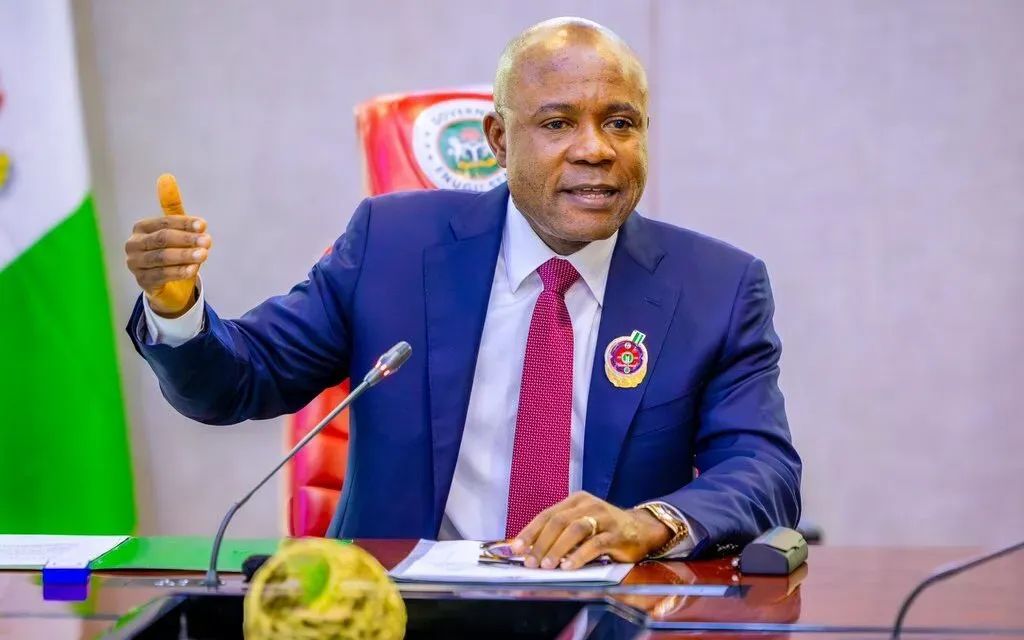
He attributed the turnaround in Enugu to the policies of the Federal Government, the efforts of the Minister of Aviation and Aerospace Development, Festus Keyamo, and the intervention of Enugu State Governor, Peter Mbah.
The ICRC boss explained that Mbah's administration helped improve the airport's commercial prospects through the establishment of Enugu Air and efforts to secure a direct air connection between Enugu and Guangzhou, China.
He said the airport concession no longer required waiting for an international investor, as a Nigerian investor eventually emerged and financing for the project was secured.
The Full Business Case for the concession was approved by the Federal Executive Council in July 2025, while the concession agreement was signed in January 2026.
Ewalefoh said the airport is expected to undergo full rehabilitation before the end of 2026, with the planned Guangzhou connection expected to strengthen its position as a regional aviation and logistics hub.
ICRC introduces stricter performance conditions
The ICRC DG said the commission had introduced time-bound performance requirements into concession agreements to prevent projects from remaining dormant after approval.
He explained that concessionaires are now required to meet clearly defined Conditions Precedent, including timelines for achieving financial close and completing successive stages of a project.
Failure to meet the agreed conditions could lead to termination of the concession unless an extension is mutually agreed by the relevant government agency and approved by the ICRC.
Beyond contractual milestones, the commission also monitors commitments contained in project business cases, including projected employment opportunities and expected revenue.
On the proposed handover of the Port Harcourt International Airport concession, Ewalefoh said the transaction was substantially concluded, with only administrative procedures remaining.
He said the ICRC had recently met with the Federal Airports Authority of Nigeria, the Ministry of Aviation and Aerospace Development and the concessionaire to resolve any outstanding issues ahead of the handover.
Hydropower projects receive fresh PPP attention
Ewalefoh also pointed to several abandoned power projects that are being revived through the PPP framework.
He cited the Ikere Gorge Dam, which originally had a six-megawatt capacity, saying private-sector intervention is expected to increase its capacity to more than 100 megawatts.
He also mentioned the Kashimbila hydropower plant, which he said is currently operating effectively, alongside other hydropower assets undergoing revival across the country.
According to him, the projects could eventually contribute significantly to electricity generation and agricultural development.
ICRC promises affordability in healthcare PPPs
Addressing concerns that private-sector participation could make healthcare services and medicines unaffordable, the ICRC chief said public interest remains a major consideration in the commission's regulatory process.
He said the commission evaluates project viability, value for money, procurement transparency and affordability before approving PPP arrangements.
Ewalefoh cited the MEDIPOOL initiative, which is designed to facilitate bulk procurement and distribution of medicines at lower costs while encouraging local production of pharmaceutical products currently imported into Nigeria.
He said the approach could reduce medicine prices, create employment and strengthen domestic manufacturing capacity.
Toll roads must provide value, says ICRC
On highway concessions, Ewalefoh defended tolling where improved infrastructure provides measurable benefits to road users.
He cited the 227-kilometre Akwanga-Makurdi corridor, which has four toll points, as an example of a road where motorists are paying for improved travel conditions.
He said the PPP model allows part of the toll revenue to be reserved for road maintenance, reducing the government's financial burden.
Under the concession arrangement, potholes are expected to be repaired within 48 hours, while major maintenance works are funded from toll proceeds.
Nigeria's PPP model gaining regional interest
Ewalefoh said Nigeria's PPP experience could also provide solutions for infrastructure development across Africa.
He disclosed that the country's Customs Modernisation Project, known as B'Odogwu, had been adopted as a model for a $3.1 billion, 20-year concession under the African Continental Free Trade Area framework.
He said the development demonstrated that Nigeria could export successful PPP models beyond its borders.
The ICRC boss also highlighted opportunities for regional infrastructure cooperation, including the use of Nigerian ports by landlocked West African countries and the development of transport links such as the Abidjan-Lagos Corridor.
He urged governments, investors and other stakeholders across West Africa to deepen cooperation around PPPs, arguing that the model can combine government oversight with private-sector capital, innovation and efficiency to accelerate infrastructure development.