













By Isaac Mission
The National Commission for Refugees, Migrants and Internally Displaced Persons has commended Abia State Governor Alex Otti for his efforts to promote responsible migration, protect vulnerable people and support the reintegration of Nigerians returning from abroad.
The Director-General of the commission, Aliyu Tijani-Ahmed, gave the commendation during the inaugural South-East Migration Dialogue 2026 held at the Banquet Hall of the Abia State Government House in Umuahia.
Tijani-Ahmed said Abia’s decision to host the regional dialogue reflected the state government’s willingness to strengthen migration governance and address the challenges confronting vulnerable migrants.
He specifically praised Governor Otti for providing ₦1 million each to Abia indigenes who recently returned from South Africa, describing the gesture as part of efforts to support sustainable reintegration.
The dialogue, themed “Partnership for Safe, Orderly and Regular Migration,” brought together government officials, migration specialists, development organisations, civil society groups and other stakeholders.
Participants examined migration trends across the South-East and discussed policy measures aimed at improving migrant protection, employment opportunities, regional cooperation and sustainable development.
The NCFRMI boss explained that decentralising migration governance was not an attempt to undermine federal authority. Rather, he said, it would help translate national migration policies into practical programmes at the state and local government levels.
He noted that the South-East has distinctive migration patterns, including significant movement within and outside Nigeria, a large diaspora population, irregular migration, human trafficking, migrant smuggling and the return of Nigerians from abroad.
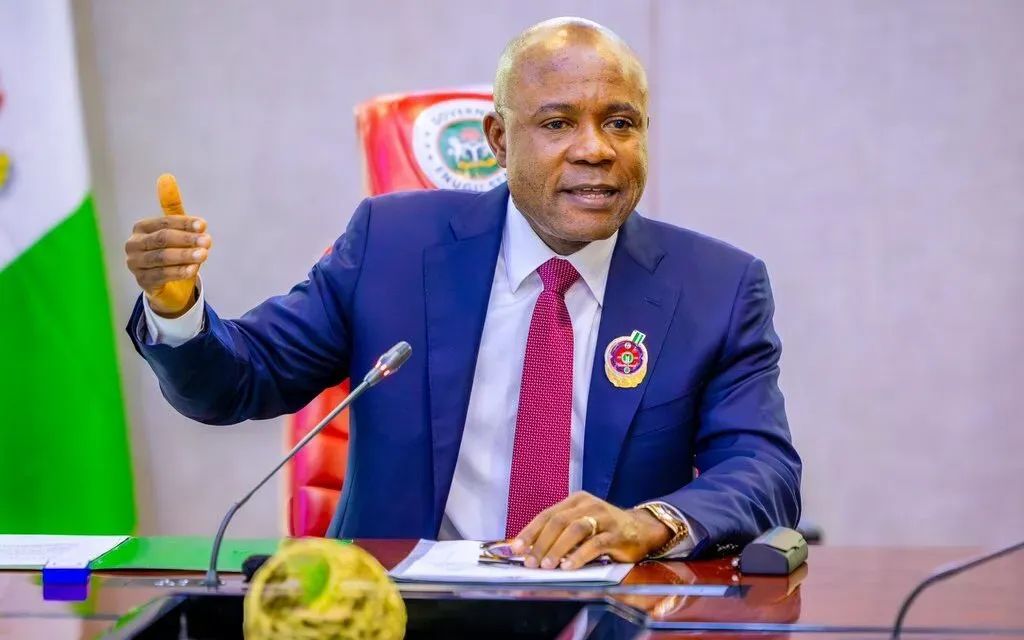
Representing Governor Otti at the event, the Deputy Governor, Ikechukwu Emetu, called for stronger cooperation between governments, development partners and other stakeholders to ensure that migration becomes safer, more orderly and beneficial to both migrants and their communities.
He urged participants to move beyond policy declarations and establish clear responsibilities, timelines, funding arrangements and measurable targets.
According to Otti, states in the region are not seeking to take over the constitutional responsibilities of the Federal Government in immigration and foreign affairs. Instead, they want to complement national policies through initiatives focused on skills development, data, investment, migrant protection, diaspora engagement and reintegration.
The governor identified five key areas for action: establishing a regional migration framework, expanding digital skills, promoting safe migration, strengthening diaspora engagement and protecting and reintegrating returnees.
He stressed that migration should be treated as more than the movement of people, describing it as an issue with implications for human capital, economic growth, security and international opportunities.
The governor’s wife, Priscilla Otti, also called for increased cooperation among governments, civil society organisations and development partners to protect the rights, safety and dignity of Nigerians travelling or living abroad.
Represented by the Commissioner for Tertiary Education, Uche Eme-Uche, Mrs Otti highlighted the dangers faced by Nigerians who fall victim to traffickers and fraudulent migration agents.
She recalled cases involving young people deceived into dangerous journeys, families losing their savings to illegal migration operators, and migrants facing detention, death in deserts and perilous crossings at sea.
She said the challenges made it necessary for stakeholders to develop stronger systems for providing reliable migration information and protecting vulnerable Nigerians.
Representatives of the International Organization for Migration, the International Returns and Reintegration Assistance and the Civil Society Network on Migration and Development also commended the Abia government for hosting the event.
They called for stronger partnerships to provide accurate migration information, expand skills and employment opportunities, protect migrants and improve support systems for returnees.
In his welcome address, the South-East Coordinator of CSoNetMADE, Jeto Nwadi, said migration should be viewed within the broader context of livelihoods, economic development, labour mobility, family welfare, climate change, human rights and the aspirations of people across different age groups.
The stakeholders agreed that sustained regional cooperation would be essential to ensuring that migration contributes positively to the development of the South-East while reducing the risks associated with irregular migration.