








By Isaac Mission
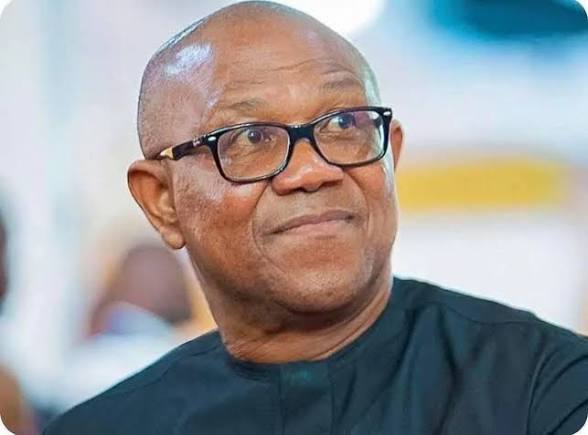
The disruption of Peter Obi’s planned visit to Yelwata in Benue State has renewed concerns about the increasingly hostile nature of political engagement ahead of the 2027 general elections.
Obi, the former Anambra State governor and presidential candidate, had travelled to Benue for what was presented as a humanitarian and condolence mission to Yelwata in Guma Local Government Area, where nearly 200 people were reportedly killed in an attack by armed herders last year.
However, the visit was halted after groups of youths blocked his convoy around the Nigerian Air Force Base airport junction in Makurdi. The protesters reportedly chanted anti-Obi slogans, creating a tense situation that lasted for several hours.
The incident quickly developed into a political confrontation, with Obi’s political camp accusing the Benue State Government and the All Progressives Congress (APC) of orchestrating the protest. The Benue APC rejected the allegation.
The controversy has also exposed the deep political divisions already emerging as parties and politicians position themselves for the 2027 elections.
Obi criticised what he described as “political rascality” and intolerance, insisting that his reason for travelling to Yelwata was humanitarian. He contrasted the experience with his recent visit to Plateau State, where he said he received a more cordial reception during a similar condolence mission.
Government’s position
The Benue State Government denied responsibility for the blockade but maintained that it could not guarantee Obi’s security if he proceeded without going through the appropriate administrative channels.
Government officials also questioned whether politicians should use humanitarian situations involving displaced persons and victims of violence as platforms for political engagement.
The disagreement generated reactions beyond Benue, with political groups and civil society voices condemning the obstruction of Obi’s movement.
The Inter-Party Advisory Council (IPAC) described the incident as a violation of citizens’ constitutional rights to freedom of movement and association. It also expressed concern that political disagreements were taking attention away from the serious security challenges facing the state.
Former Kano State Governor Rabiu Musa Kwankwaso and the Coalition of United Political Parties (CUPP) also criticised the development and raised concerns about the potential security implications.
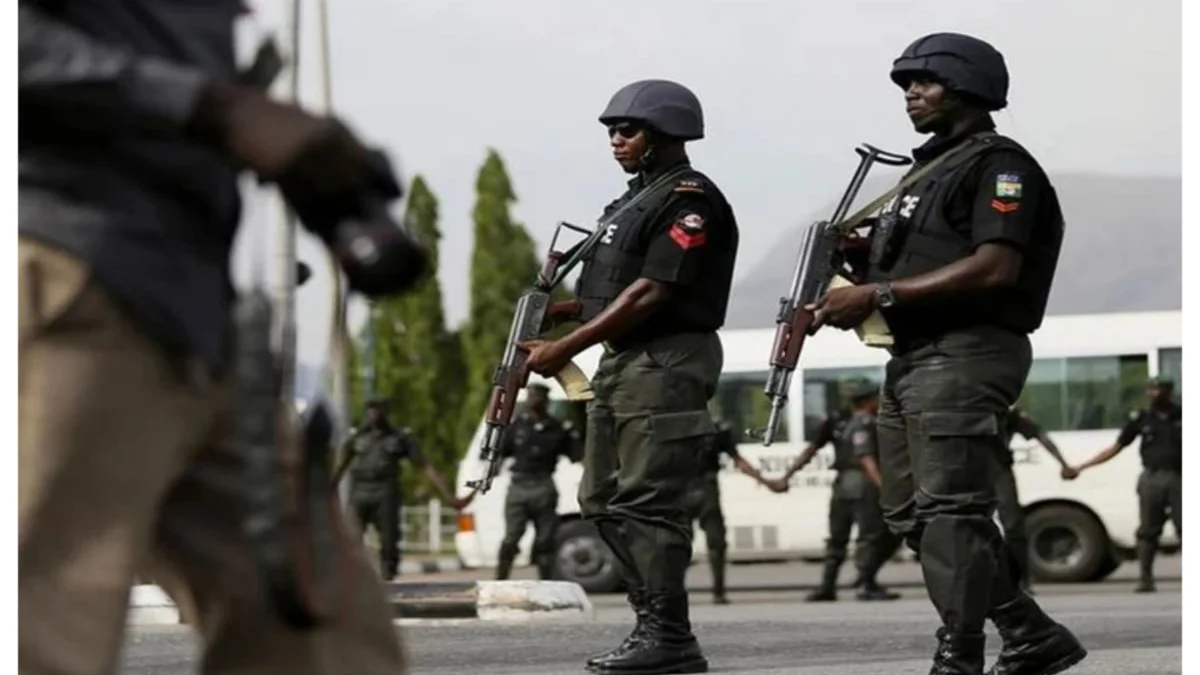
The Nigeria Police Force subsequently intervened and confirmed the arrest of 46 suspects allegedly connected to the blockade in Makurdi. The arrests have opened the way for further investigation into who organised the protest and the circumstances surrounding the incident.
A lesson from Buhari and Yakowa
The episode has been compared with a political encounter involving former military Head of State Muhammadu Buhari and then Kaduna State Governor Patrick Yakowa ahead of the 2011 presidential election.
Although Buhari was contesting the presidency on the platform of the Congress for Progressive Change (CPC), while Yakowa belonged to another political camp, Buhari reportedly paid a courtesy visit to the governor before commencing his campaign activities in Kaduna.
The interaction demonstrated that political competition did not necessarily have to translate into hostility.
Yakowa reportedly wished Buhari well as they parted, illustrating a period when politicians from opposing parties could maintain a degree of civility despite their differences.
The contrast with the events in Makurdi highlights the need for greater political restraint as Nigeria approaches another election cycle.
Avoiding another Makurdi
Political actors have been urged to avoid actions capable of escalating tensions, particularly in states already struggling with insecurity and displacement.
While political visitors should respect established security and administrative procedures, the responsibility of maintaining public order and protecting citizens and visitors ultimately remains a crucial duty of government.
The Makurdi incident, therefore, should serve as a warning to politicians, parties and government officials ahead of 2027.
Rather than allowing political rivalry to deepen divisions, stakeholders are expected to protect democratic freedoms, encourage peaceful engagement and ensure that humanitarian concerns are not overshadowed by electoral calculations.